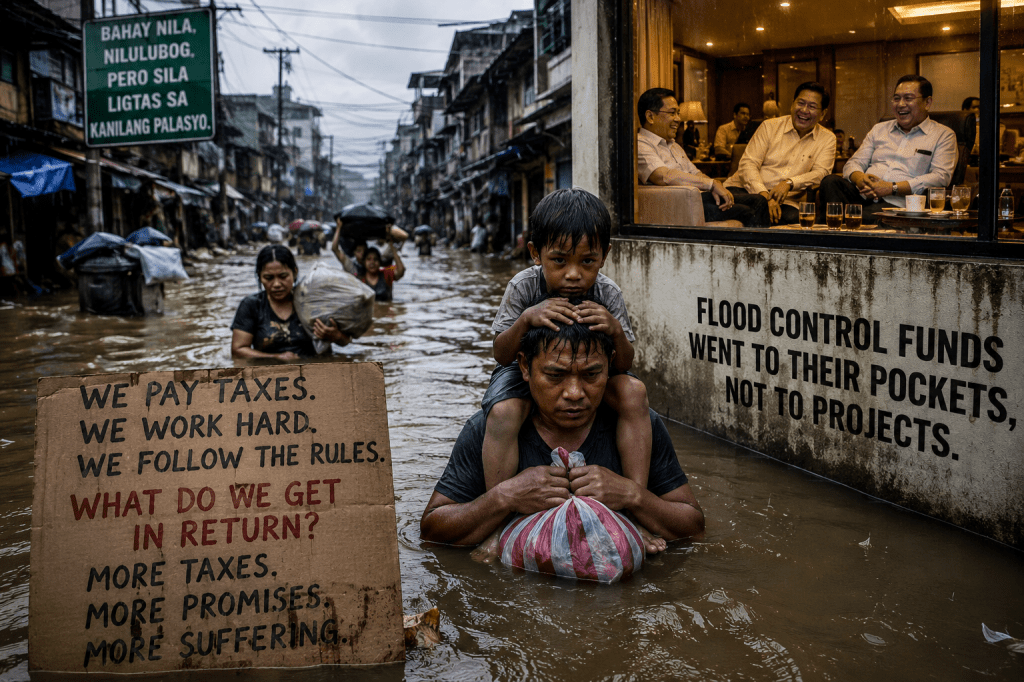
There is something deeply frustrating about watching ordinary Filipinos suffer from flooding year after year, especially when the same problems keep happening and the same people in power keep giving the same promises. People wake up early, work long hours, pay taxes, and do their best to provide for their families. Yet when heavy rain comes, many are left dealing with flooded streets, damaged homes, lost belongings, suspended work, and dangerous conditions just to get through the day.
This is not simply about rain.
The Philippines has always experienced strong rains, typhoons, and flooding. That is part of our reality as a country. But natural disasters become even more deadly when poor planning, corruption, neglect, and weak leadership make communities more vulnerable. We cannot stop the rain, but we can build proper drainage systems, maintain waterways, protect watersheds, stop illegal construction, and make sure flood control projects actually serve the people.
That is why people have every right to ask where their money went.
Billions can be allocated for flood control, drainage, infrastructure, and disaster preparedness, yet many communities still find themselves underwater after heavy rain. If projects were properly planned, honestly implemented, and maintained, why do we keep seeing the same places flood again and again? People are tired of announcements, ribbon-cuttings, and beautiful presentations. They want to see real results. A project is not successful because it was approved or because someone took a photo beside it. It is successful when it actually protects lives and communities.
One of the biggest problems is that corruption steals more than money. When public funds disappear into the wrong pockets, the consequences eventually appear in the streets. They appear as flooded homes, broken roads, unfinished projects, poor drainage, and families who have to evacuate with nothing but the clothes they are wearing. Money that should have gone into projects that could protect people may instead enrich those who already have comfortable lives.
Meanwhile, ordinary citizens are the ones who suffer the consequences.
It is also disappointing to see how selective some political supporters, influencers, and paid bloggers can be. When flooding happens in a place controlled by politicians they dislike, they are quick to criticize, blame local leaders, and demand accountability. But when the same or even worse problems happen in areas connected to politicians they support, suddenly they become quiet. The issue is no longer treated with the same urgency because speaking about it does not fit their political narrative.
This is not how accountability should work.
If we criticize Davao when it floods, then we should also criticize Luzon when similar failures happen. If we demand answers from one mayor, governor, or administration, then we should demand the same from everyone else. Accountability should not depend on political loyalty. Floodwater does not care who you voted for. A family trapped inside their home does not become less important because their province supports a different political group.
The sad truth is that the Philippines will struggle to move forward if people continue voting for the same corrupt politicians simply because of money, popularity, family connections, or political promises. Elections are not supposed to be transactions where voters sell their future for a small amount of cash.
If politicians offer money and people choose to accept it because of poverty or desperation, that does not automatically mean they should surrender their vote. Take care of your immediate needs if you have no choice, but when the time comes to vote, choose the person you honestly believe is capable, decent, and fit to lead. Your vote belongs to you. It should not be owned by a politician just because they handed you money before election day.
People need to look beyond campaign slogans, entertainment, social media propaganda, and paid personalities defending politicians no matter what they do. We should ask harder questions. What projects did they actually complete? Where did public funds go? Are their promises realistic? Do they have a history of corruption? Are they serving the people or protecting their own political interests?
The Philippines has hardworking people. That has never been the problem. Filipinos work, sacrifice, adapt, and help one another even during the worst disasters. But people should not have to rely only on resilience every time the government fails them. Resilience is not a substitute for honest leadership. Filipinos should not be expected to keep surviving disasters that could have been reduced through proper planning and responsible use of public money.
We cannot keep treating yearly flooding as something normal.
Every flood should be a reminder that leadership has consequences. Every peso stolen from public funds can become a road never repaired, a drainage system never built, a flood control project never completed, or a community left unprotected. The price of corruption is eventually paid by ordinary people.
And until we stop rewarding corrupt leaders with power, we may continue asking the same painful question every rainy season:
Hanggang kailan tayo lulubog?
The answer depends partly on whether we are finally willing to stop choosing the people who keep giving us reasons to drown.