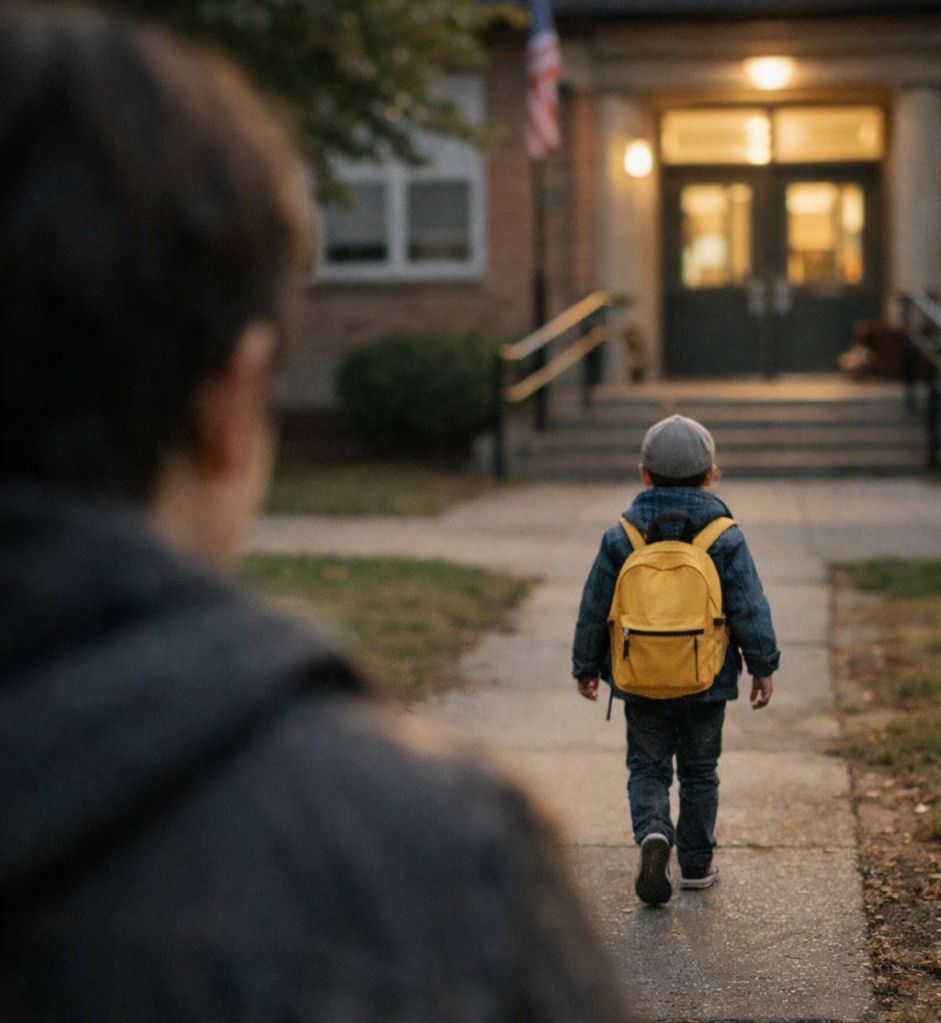
I hate the thought of ever having to tell my daughter this: if there is an active shooting, run as far as you can and as fast as you can. Do not panic. Just run. Get as far away from the danger as you can. I will come for you as fast as I can.
She is still a toddler, so thankfully, I do not have to have that conversation with her yet. But I think about it anyway.
I think about the kind of world she will grow up in. I think about the day she will start school, make friends, carry her little backpack through the school gates, and slowly become more independent from me. I want to imagine those years filled with learning, laughter, friendships, school plays, field trips, and ordinary childhood memories.
I do not want my first thoughts about her going to school to include how she should escape if someone brings a gun into the building.
But after hearing about another school shooting in the Philippines, it is hard not to think about these things. I live in Germany, but I have nephews and friends whose children are going to school there. Their safety matters to me. Their parents’ fears are understandable because, when it comes to children, distance does not make us care any less.
And the truth is, this fear is not something that belongs to one country.
There have also been violent incidents in Germany. They may happen under different circumstances and may not be as common as in some other places, but the reality remains that no country can honestly promise that nothing terrible will ever happen. No school, city, or community can give parents an absolute guarantee of safety.
That is perhaps one of the hardest things about being a parent.
We spend so much of our lives trying to protect our children. We choose what they eat, where they sleep, who they spend time with, and what they are exposed to. When they are small, we hold their hands crossing the street. We check that they are safely buckled into their car seat. We watch them closely at the playground.
Then one day, we have to let them walk through a school gate without us.
We have to trust other adults to look after them. We have to trust the school. We have to trust the systems that are supposed to protect them. And we have to accept that we cannot be beside them every minute of every day.
That loss of control is frightening.
A parent can understand that the chances of something terrible happening may be small and still feel afraid. Statistics do not make fear disappear when the person you are thinking about is your child.
We do not think, “What are the odds?”
We think, “What if it happens to my child?”
That is why stories about school violence stay with us. We see the children in those stories and imagine our own. We think of the parents waiting at home, expecting their child to walk through the door. We think about the ordinary morning that suddenly became something no family should ever have to experience.
And we wonder how we are supposed to prepare our children for a world that sometimes feels impossible to predict.
Of course, we should teach children what to do in an emergency. We should teach them to listen to trusted adults, stay as calm as possible, move away from danger, and follow established safety procedures. Schools should have clear emergency plans, trained staff, effective security measures, and systems that take threats seriously.
But preparation should never become an excuse to accept violence as normal.
Children should not have to grow up believing that going to school means preparing for the possibility that someone might hurt them.
Parents should not have to give their children survival instructions before they leave for class.
Teachers should not have to think about how they would protect a classroom from an armed attacker.
And children should be allowed to be children.
This is not about saying that schools in the Philippines are unsafe or that Germany is completely safe. It is about recognizing a much bigger reality. No place is completely free from violence. We can make schools safer. We can have stronger systems, better prevention, responsible security, and better emergency responses. But we cannot promise our children a world where nothing bad can ever happen.
As parents, that is an incredibly difficult truth to live with.
Sometimes I look at my daughter, still so little, and wonder what kind of world she will inherit. I want to protect her from everything. I want to believe that if I do everything right, I can keep her safe.
But I know I cannot.
What I can do is teach her courage without teaching her to live in fear. I can teach her awareness without making her suspicious of everyone. I can teach her what to do when something goes wrong while still allowing her to believe that the world is mostly a place filled with good people.
And I can use my voice as a parent to ask for better.
Better safety measures. Better prevention. Better support for schools and teachers. Better systems for recognizing threats before they become tragedies. And, most importantly, a culture that takes the safety of children seriously.
Because children should not have to carry the burden of protecting themselves from the failures of adults.
I think about my daughter and her future. I think about my nephews. I think about the children of my friends in the Philippines. I think about children growing up here in Germany and everywhere else.
They are all someone’s whole world.
They are someone’s reason for getting up every morning. Someone’s little person waiting at the school gate. Someone’s child whose shoes are left by the door, whose voice fills the house, whose absence would leave a silence that could never be replaced.
So when parents say, “I don’t feel safe sending my child to school,” we should not dismiss it as overprotectiveness.
That fear comes from love.
We may never be able to promise our children that they will be completely safe everywhere they go. But we should never stop trying to build a world where they can go to school without fear.
One day, when my daughter is old enough to walk through those school gates, I hope my goodbye will be simple.
Have a good day. Learn something. Have fun. I’ll see you when you get home.
I hope that is all she will ever need to hear.