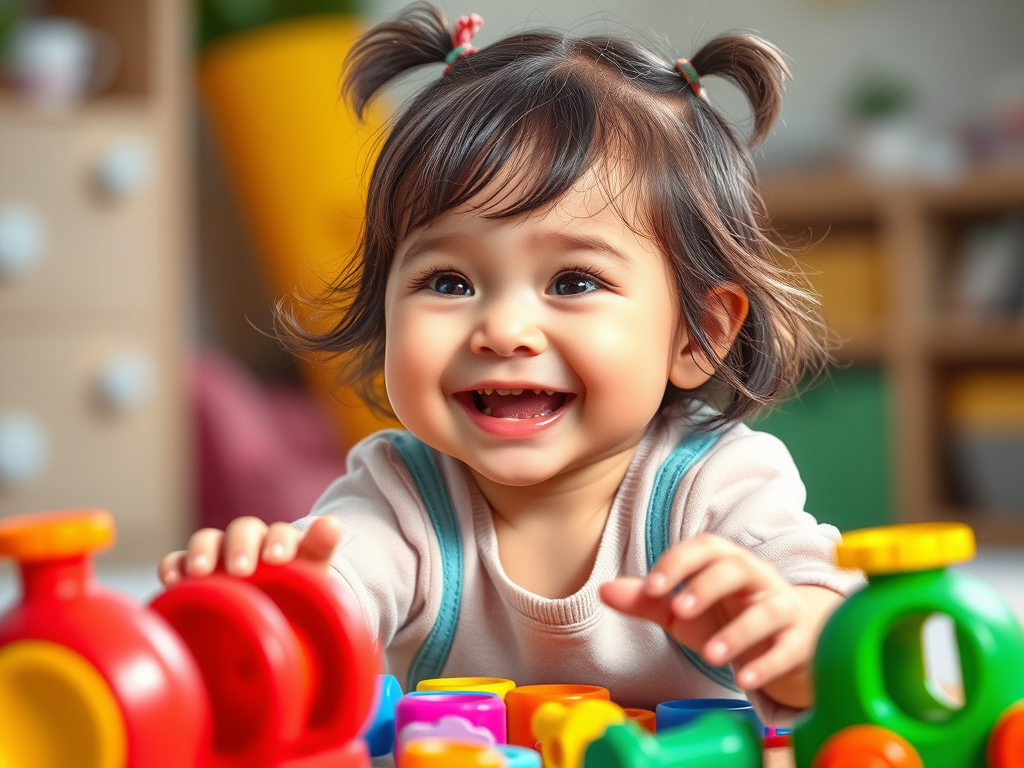
One of the most delightful things about watching a toddler grow is noticing the little details that adults often overlook in themselves. My husband and I are constantly amazed by how quick our daughter is to respond. She is only two years old, yet her reaction time feels almost superhuman. Whatever we ask, whatever we say, even if she is completely absorbed in her toys, she responds instantly. There is no pause, no hesitation, no moment of reflection. It is as though her mind and body are one, ready to meet the world without delay.
It makes us wonder whether this is something that belongs to all children, not just ours. When you watch toddlers at play, their energy is raw and unfiltered. Their senses are wide open. Their focus may look scattered to adult eyes, but in truth they are processing the world in ways that feel direct and immediate. Ask a child what color something is or where a toy has gone, and you get a quick answer before you can even finish the question. There is no inner debate or second guessing, just pure response.
As adults we tend to lose that instant quality. Our thoughts stretch longer. We weigh options, we think about how we sound, we filter our words. Even when a simple answer would do, we hesitate. Some of this change comes with maturity, with learning to be careful, polite, or strategic. Some of it also comes from the brain itself, which slows down in tiny increments as we age. Reaction time is something scientists measure, and it often peaks in youth. But there is also something emotional about it, something tied to the way children exist in the present moment without distraction from past or future.
Our daughter reminds us of that every day. When she is playing, she is fully there. When she hears her name, she turns at once. When we ask a question, her answer flows out like water, smooth and immediate. There is no sense of her getting “stuck” between thoughts. I sometimes wish I could borrow that same state of mind, one where life is met without hesitation, where answers are not clouded by worry about being right or wrong.
This quickness is more than just speed. It speaks to the natural confidence of children. They do not overthink. They do not run their choices through a dozen filters. They trust their first instinct. Sometimes the answer they give is funny or slightly off, but the beauty is in the clarity. They are not afraid to be wrong. Their voices come straight from their perception of the world. It is refreshing to witness, and it teaches us something about how much we complicate things as adults.
Of course, I know this won’t last forever. Children grow, their awareness widens, and soon enough they begin to carry the weight of self-consciousness. School introduces rules, peers introduce comparison, and the natural flow of quick responses slows as they start to wonder if their answer will be accepted. I wish I could protect my daughter from that. I wish her instant spark could remain untouched. Reality tells me it will change, but a small part of me hopes she will always carry that instinctive trust in herself.
Reaction time itself is not only about the brain’s speed. It is also about freedom from doubt. When you are not doubting yourself, you do not delay. That is what I think children show us most clearly. Their minds are uncluttered. They live in a world where every question deserves an immediate answer, not because they are rushing but because hesitation does not yet exist in their vocabulary. Watching that in action is a gift.
Sometimes, when I ask her something simple like where her toy is, she answers faster than I expect, faster than I could answer a similar question. It makes me reflect on how much hesitation I have picked up over time. Before I speak, I often pause to think about tone, about politeness, about clarity. She doesn’t. She speaks with honesty. Her quickness is not only about her reaction but about her openness.
I wonder if this is one of the reasons why time feels slower in childhood. Children do not pause or wait in their heads. They meet life immediately, moment after moment, without the dragging weight of overthinking. Perhaps that is why adults often miss the joy of now. Our responses are wrapped up in analysis, while theirs are pure and direct.
Seeing this difference has made me more mindful of my own delays. I have started to notice the moments when I overthink, when I hesitate instead of trusting my first thought. I will not regain the brain speed of a toddler, but maybe I can recover some of that childlike honesty in responding to life. My daughter does not plan her words, and yet they are often the truest.
What I want most is for her to keep that confidence as she grows. Even if her reaction time slows, even if life adds hesitation, I hope she remembers that her first instincts are worthy. I hope she trusts herself as much at twenty as she does at two. Watching her has shown me how beautiful it is to live without hesitation, to give an answer without fear, and to be present in the moment with full trust.
In the end, it may be natural for reaction time to change as we age, but the spirit behind it can still be nurtured. We can encourage children to stay confident in their answers, to value their own voices, and to respond without fear of judgment. And as adults, we can take inspiration from them, reminding ourselves that life is not always about the perfect answer but about being real and alive in the moment.
My daughter’s quick replies are more than just fast reactions. They are a reflection of her openness, her confidence, and her complete presence in the world. That is something I want to hold onto, something I hope she carries with her, and something I try to learn from every day.