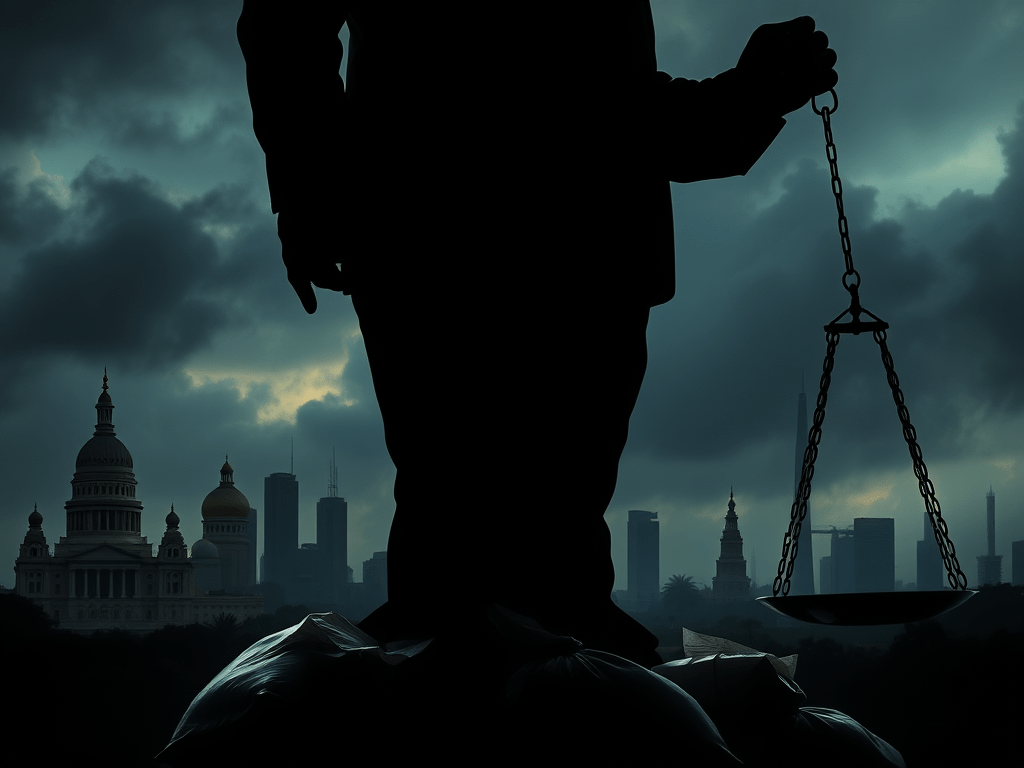
Former Supreme Court Justice Antonio Carpio recently called the flood control scam the biggest corruption scandal in Philippine history. Bigger than any scandal during Martial Law. Bigger than all the other stories of corruption that have angered Filipinos for decades. Hearing something like that makes you stop and wonder — how can something this massive happen right under everyone’s noses? And how can the people in power still act as if it’s just politics as usual?
Carpio explained that this mess involves around ₱450 billion in budget insertions for the Department of Public Works and Highways. Out of that amount, only ₱29 billion was vetoed. In other words, only a small slice of the problem was addressed, while about ₱421 billion worth of questionable projects still got approved. To make it clearer, Carpio used an example: it’s like rejecting a fake ₱20 bill but allowing ₱20,000 worth of fake bills to circulate. On the surface, it looks like action was taken, but in reality, nothing changed. The real issue stayed untouched, and the money is practically gone.
Think about that number for a moment. ₱421 billion. That kind of money could change the face of the Philippines. It could fund schools in every province, give proper equipment to public hospitals, repair unsafe roads, modernize transport, and yes, build real flood control systems that actually work. Instead, that money is tied to a scandal that shows once again how deep corruption runs in government. It is not just disappointing. It is enraging. Because while ordinary people wake up every day to work hard, pay taxes, and stretch what little they earn, some officials treat public funds as their own personal treasure chest.
It makes you ask the painful question: how did we get here? Why do scandals like this keep happening? One answer is right in front of us: the way we choose our leaders. For years, many Filipinos have accepted the culture of selling votes. A few hundred pesos, a grocery bag, a sack of rice, or promises of favors during election time. It may seem harmless at the moment. After all, some people think, “It’s my vote, I can do what I want with it.” But look at what happens later. That small amount is nothing compared to the billions stolen because of leaders who bought their way into power. That tiny short-term benefit turns into long-term suffering for the entire country.
Selling votes is like trading away the future for loose change. It gives corrupt politicians the license to say, “I paid for those votes, so now it’s my turn to get my money back.” And how do they get their money back? By stealing from the very people who voted for them. By inserting billions into projects that may not even exist. By prioritizing their pockets over the needs of the people. The saddest part is that those who sell their votes end up suffering the most — stuck in the same poverty that made them sell their vote in the first place. It becomes a cycle that never ends.
This flood control scandal should be a wake-up call. If this really is the biggest corruption scandal in our history, then we cannot afford to shrug it off as just another political controversy. It is not just about numbers on paper. It is about the hospitals that will not get built. The classrooms that will remain overcrowded. The farmers who will not get irrigation. The families who will keep losing their homes to floods because real flood control projects never happen. Every peso stolen is a peso taken away from the future of the Filipino people.
The frustrating part is that we always hear leaders talking about transparency, accountability, and good governance. Every election season, those words are thrown around like candy. But when the time comes to prove it, the promises disappear. What Carpio pointed out is proof that even when action is claimed, it is only for show. Vetoing a small portion of the problem while approving the rest is not leadership. It is window dressing. It is pretending to solve the problem while quietly letting it continue. And the people pay the price for that pretense.
The Philippines has so much potential. Our country is blessed with natural resources, hardworking citizens, and a young population full of energy and ideas. We are in a part of the world where economic growth is possible if managed well. But we keep stumbling because corruption is like a chain tied around our ankles. It drags us back every time we try to move forward. No matter how talented or resourceful Filipinos are, progress is stolen when leaders are corrupt.
What hurts the most is that this is not new. We have heard stories like this before. But when Carpio himself, a former Supreme Court Justice, calls this the biggest in history, it means something truly alarming is happening. It means that unless Filipinos wake up and demand real change, we are going to be stuck in the same cycle forever.
So what can be done? The truth is that change begins with every Filipino. It starts with refusing to sell votes, no matter how tempting the short-term gain may be. It starts with holding leaders accountable, asking questions, and not letting scandals fade away after a few weeks in the news. It starts with realizing that every election is not just a popularity contest but a serious choice about the future of the nation.
People deserve leaders who actually care about the country, not those who treat it like a business opportunity. Leaders who will say no to corruption not because they are forced to, but because they truly believe in honesty and service. And Filipinos deserve to live in a country where their taxes are used to make their lives better, not to make politicians richer.
The flood control scandal is not just about money. It is about trust. It is about whether Filipinos can still believe that their government works for them. And right now, that trust is at its weakest. Carpio’s words are a warning, but they should also be a call to action. If this is indeed the biggest corruption scandal in our history, then we cannot just complain. We must learn from it.
The Philippines can rise, but only if people decide they will no longer tolerate corruption. Only if voters refuse to be bought. Only if citizens demand leaders who are transparent, honest, and accountable. It will not be easy, but it is the only way forward.
This scandal shows what happens when thieves in government are allowed to thrive. It shows the cost of bad choices in elections. And it shows how billions that could have transformed the country were lost to greed. Filipinos deserve better. We owe it to ourselves, and to future generations, to make sure this never happens again.