There’s a stage in every toddler’s life where sleep becomes the enemy. Not because they don’t need it, but because their minds are bursting with curiosity and wonder. My daughter, now two and a half, has reached that stage. For the past few nights, bedtime has turned into a game of negotiation. She’s bright, playful, and clearly determined to stretch the day as long as possible. Each time I say it’s time to sleep, her small but firm voice replies with a big “No. Eat. Tummy is sad.”
At first, I thought she was genuinely hungry. But I noticed a pattern. I’d bring her food, and while she’d nibble a bit, she wasn’t really eating. She was just stalling. Her focus was still on her toys, her books, or whatever had caught her interest in that moment. She was trying to extend playtime, to delay the inevitable. She wasn’t ready to end her day.
Yesterday evening, her resistance peaked. When I carried her to bed, she burst into tears, insisting she wasn’t sleepy. “Eat. Downstairs. Baby not sleepy,” she cried over and over. The weather didn’t help either. It was stormy outside, the thunder loud enough to shake the windows a little. But in the middle of her tears, I had a small idea.
I asked, “Can you hear the thunder?”
She paused. Just for a moment, but it was enough. Her tears slowed, her eyes widened with curiosity. I grabbed the moment. I started explaining what thunder was, how it comes from clouds crashing together in the sky, how lightning forms, why rain falls. I didn’t think she’d understand every word, but she listened. Really listened.
It was beautiful. Her breathing calmed. She became still, as if trying to catch the next rumble. After a few minutes, she whispered, “Pillow. Pacifier.” Then just like that, she closed her eyes and drifted off.
I went to bed that night feeling amazed at how curiosity can be more powerful than frustration. I thought maybe this was the trick, maybe nature’s sounds and simple explanations could be our new bedtime routine. But of course, toddlers are never predictable. Tonight, when bedtime rolled around, there were no thunderstorms. No lightning. No background soundtrack from the sky. Just another quiet evening.
Still, I gave it a shot. This time I told her about the planets. I started with Mercury, then Venus. I described Mars as the red planet and Earth as our home. But she wasn’t having it. She cut me off. “No. Eat. Baby not sleepy.” Again with the “lugaw” (porridge), again with the tears. My heart ached for her because I knew she was tired, and she just didn’t know how to let go of the day.
I tried different tactics. Distraction, comfort, even humor. Then it hit me—music. Maybe it could help. I put on something upbeat, a little rap music. But she shook her head, still teary-eyed. “Not dancing,” she mumbled. So I said, “Let’s try slow music.”
She didn’t like the idea at first. “No. Not slow.” But I played a song anyway. The first track was Right Here Waiting by Richard Marx. She kept crying, still pushing back. I was about to turn it off when the next song began. I Don’t Want to Miss a Thing by Aerosmith.
The transformation was incredible.
As soon as the lyrics started — Don’t want to close my eyes, I don’t want to fall asleep — her breathing slowed. She stopped crying. Her body softened. She found her pacifier, hugged her pillow, and listened. By the third song, she was asleep.
It was one of those quiet parenting victories. The kind that doesn’t feel like a win in the moment because you’re exhausted and drained, but when you finally sit down and breathe, you realize it was a breakthrough.
I’ve learned that being a parent means adapting constantly. What works today might not work tomorrow. One night, it’s thunder and science. The next, it’s Aerosmith. It keeps you on your toes. It demands patience, creativity, and a lot of love.
But the real challenge isn’t just finding the right trick to get your toddler to sleep. The real work is in understanding their world. Their cries aren’t manipulation. Their resistance isn’t defiance. It’s emotion they haven’t figured out how to manage yet. It’s curiosity they haven’t learned to pause. It’s a love of the world that’s bigger than their tiny bodies know what to do with.
I could have lost my patience. I could have snapped, raised my voice, demanded silence. But I’m glad I didn’t. I’m learning that the calmer I stay, the more she trusts that I’m here, and I’ll wait with her until she’s ready. Some nights that means rocking her for an hour. Other nights, it means talking about clouds or planets or putting on a playlist full of soft ballads.
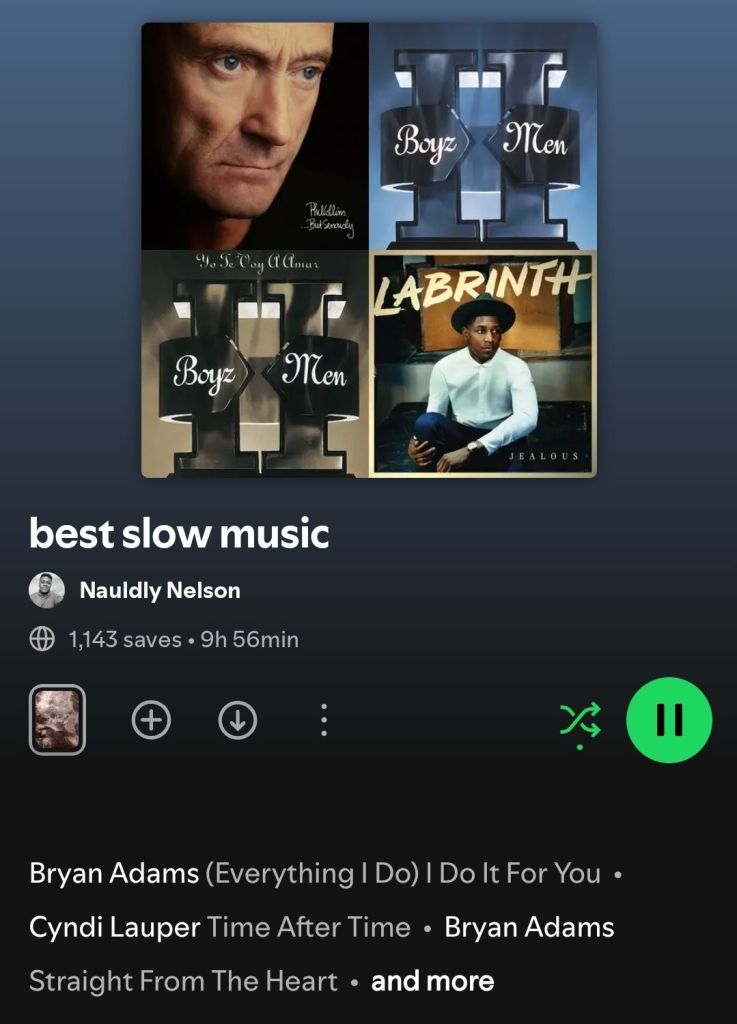
And that playlist? It’s gold now. A few more songs have been added, all slow, all calming. Bryan Adams, Cyndi Lauper, Boyz II Men. Songs that carry warmth and comfort, lyrics that feel like a hug, even to a toddler who can’t yet understand them fully.
Tonight, I sat by her bed as the music played. Her face relaxed, eyes slowly closing, breathing steady. I watched her sleep and thought of how many more nights like this we’ll have. Some will be easier, some harder. But in all of them, I want her to feel safe. Safe to cry, safe to resist, safe to need comfort. And most of all, safe to drift off knowing I’m right there.
There’s no manual for this kind of parenting. You try, you fail, you adjust. You love hard, and you learn fast. I’m not perfect. I don’t always have the right answer. But what I do have is a little girl who teaches me more every night than I ever expected to learn. About patience. About empathy. About slowing down and listening.
She’s growing, and so am I. And in between all the late nights, all the “eat lugaw” moments, all the tears and songs, I remind myself — this is the heart of it. This is what it means to be a parent.



I think that is one of the such a lot vital information for me. And i am satisfied reading your article. However should observation on some normal issues, The web site style is ideal, the articles is really nice : D. Good activity, cheers
LikeLike