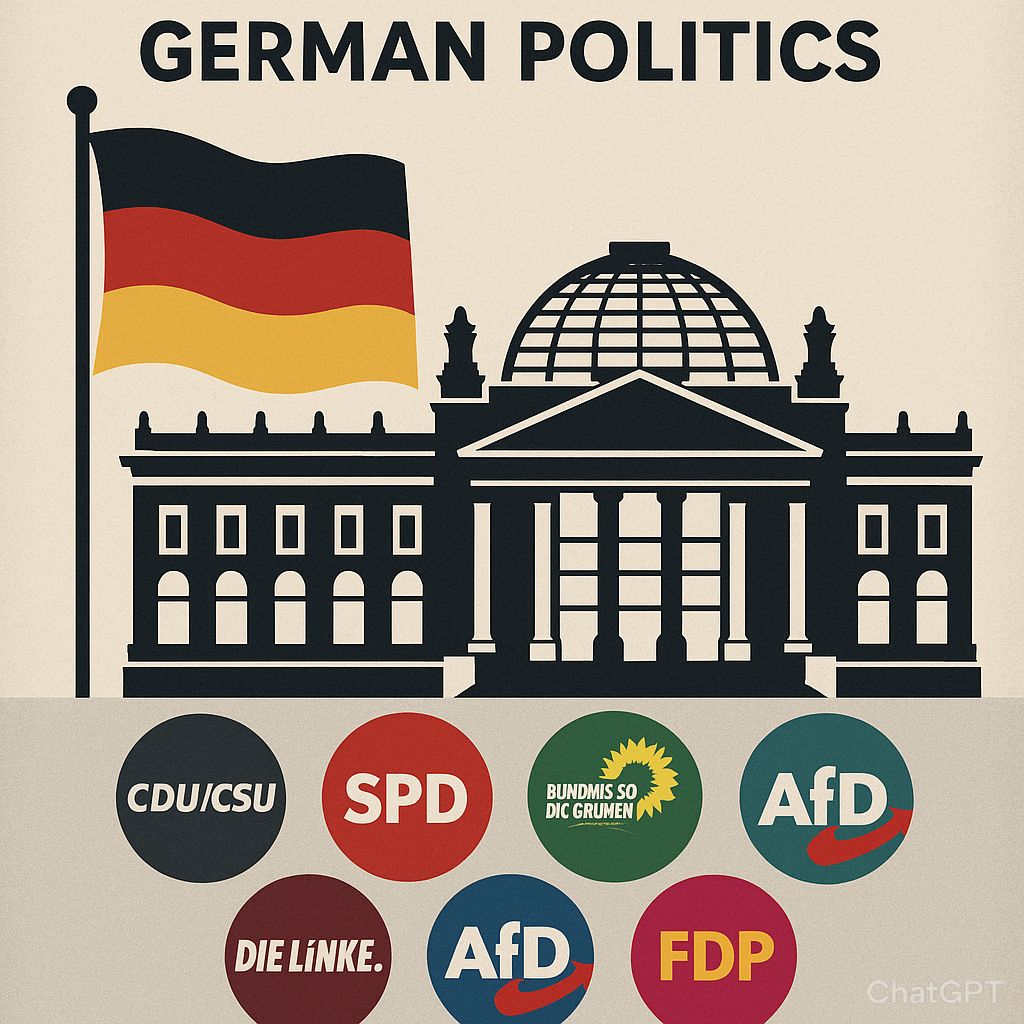
I have to admit, I’ve never really followed German politics closely. Most of the time, it feels complicated, filled with names and parties that don’t catch my interest. But lately, I’ve started to think more about it, especially when it comes to one topic that affects me directly: taxes. The tax rate here feels very high, and I keep asking myself if life could be easier if it were lower. That curiosity led me to take a closer look at how politics works in Germany, what different parties believe, and why things are the way they are.
Why I’m Suddenly Paying Attention
For me, the starting point was simple. Every month when I look at how much of my salary disappears in taxes, I wonder: could people save more, spend more, or live more comfortably if this number were lower? That thought pushed me to ask questions. Which parties want to lower taxes? Which ones want to raise them? And how much power do people like me really have in shaping that future?
I’ve also heard people say Germany is still paying money to other countries because of World War II. That made me even more curious. Is that true? And if not, what are we actually spending on abroad? These questions led me down the path of exploring politics for the first time with a more personal lens.
The Current State of Politics
Right now, Germany has a new chancellor, Friedrich Merz. He leads the CDU/CSU, which is a centre-right alliance. They became the largest party in the 2025 election, winning around 28.5 percent. It wasn’t a landslide, so Merz had to form a coalition with the SPD, the Social Democrats. Together, they focus on the economy, taxes, and infrastructure.
The election itself was eye-opening. The AfD, a far-right party, jumped to second place with about 20 percent. That shows that a lot of voters are frustrated with the status quo and are searching for alternatives. At the same time, the Greens and the Left also keep a strong presence, showing that Germany is politically diverse.
The economy is another key issue. Growth is weak, and people feel anxious. Merz has promised tax relief for businesses, heavy investment in defense, and better infrastructure. Whether that will make daily life better for ordinary people is something we’ll have to wait and see.
Breaking Down the Parties
Since I didn’t grow up memorising the differences between parties, I wanted to keep things simple. Here’s how I understand them:
- CDU/CSU (Centre-Right): They want lower taxes, stronger businesses, and more investment in defense. They care about economic stability and are not as strict on climate rules.
- SPD (Centre-Left): They focus on social programs, higher minimum wage, and protecting workers. They believe in fairness and social benefits.
- Greens (Centre-Left): They prioritise climate protection, renewable energy, and social justice. They often support higher taxes on the wealthy.
- The Left (Die Linke): They want more equality, lower retirement age, and rent caps. They attract people who are skeptical of capitalism.
- BSW (Wagenknecht Alliance): A newer party, critical of NATO, skeptical about aid to Ukraine, and focused on welfare for Germans with limits on immigration.
- AfD (Far-Right): They push against immigration, question climate science, and want stricter borders. They are also skeptical about the EU and NATO.
- FDP (Liberals): They support free markets, fewer regulations, lower taxes, and innovation in technology.
When I line them up like this, it’s easier to see where each one fits.
My Big Question: Taxes
Coming back to what first got my attention, taxes remain the central issue for me.
High taxes make it harder to save money. They also make it tough for small businesses. Parties like the CDU/CSU and the FDP speak about lowering taxes and cutting bureaucracy. On the other hand, parties like the SPD, the Greens, or The Left believe taxes are necessary for public services and fairness.
So, it really comes down to priorities. Do we want more money in our pockets right now, or do we want more social programs and public benefits in the long run? For someone like me, the idea of saving more money feels appealing.
About WWII Payments
One thing I discovered is that Germany is no longer paying reparations for World War II. Those officially ended in 2020. What we do now is more about humanitarian aid, development help, or contributions to international projects—not reparations. That gave me some clarity, because I had always assumed a part of my taxes might be going to that.
Why Germans Don’t Protest as Loudly
Another thought that often comes to mind is: why don’t Germans demonstrate more? In some countries, people fill the streets when they’re unhappy with their leaders. Here, it feels calmer.
I’ve read that part of it comes from trust in the system. People believe the political structure, while slow, still works. History also plays a role. After the experiences of the past, Germans are more cautious about radical moves. That doesn’t mean there are no protests—just last year, huge demonstrations took place against the rise of the far right. But overall, the style is more restrained and focused.
What Could Be Good for Germany
When I ask myself what would really help Germany, I don’t think there’s a single magic solution. It’s more like a set of practical steps that could move the country in a healthier direction. Here’s how I see it:
1. Lowering the Tax Burden on Ordinary People
For many, the monthly tax bite feels too heavy. Even a small cut could mean more breathing room to save, travel, or simply enjoy life without constantly calculating every expense. Some argue that tax relief for middle and lower income earners could also stimulate the economy, because when people have more money in their pockets, they tend to spend it locally.
2. Cutting Red Tape for Businesses
Germany is famous for bureaucracy. While rules create order, they often slow down innovation. If small businesses and startups had fewer hurdles, more jobs and creative solutions could emerge. That could mean easier registration, faster digital processes, and simpler tax rules.
3. Smarter Spending, Not Just More Spending
Throwing money at problems doesn’t always solve them. What could help is making sure that money is targeted. For example, investing in digital infrastructure so rural areas have proper internet, or repairing schools so children can learn in good conditions. Spending should feel visible in everyday life, not hidden in abstract budgets.
4. Affordable Climate Transition
Germany wants to lead in climate protection, but people worry about costs. A good solution would be to combine environmental goals with financial support. For example, subsidies for heat pumps or electric cars should be simple and generous enough that ordinary families can actually benefit. Otherwise, climate policy risks becoming something only the wealthy can afford.
5. A Real Housing Strategy
Housing is one of the biggest concerns. Rents in big cities keep rising, and buying property feels out of reach for many. What could help Germany is a mix of more construction, easier approval processes for new housing, and perhaps tax incentives for affordable rentals.
6. Balance on Immigration
Germany needs workers, but it also needs social cohesion. A thoughtful immigration policy could focus on skills that the country lacks, while also supporting proper integration—language training, community programs, and fair rules for everyone. That way, immigration becomes an asset rather than a source of division.
7. Education and Innovation
The future depends on skills. A stronger investment in schools, universities, and technology hubs could prepare Germany for the next generation of challenges. This could also mean making education more flexible and modern, so young people are ready for jobs that don’t even exist yet.
8. Political Transparency and Trust
Finally, trust is everything. If people understood more clearly where money goes and why, they might feel less cynical about politics. Clearer communication and more open debate could help reconnect citizens with leaders.
Looking Beyond Taxes: Where the Money Goes
When I think about taxes, I always come back to the question: where does all this money actually go? Of course, it funds schools, hospitals, pensions, and infrastructure. But there are also big chunks set aside for defense, EU contributions, and international aid.
Sometimes it feels like money is being sent abroad while people here struggle with high living costs. That can be frustrating. At the same time, Germany is a wealthy country that benefits from trade, stability in Europe, and partnerships around the world. So perhaps the spending is also a way of protecting our own interests, even if it doesn’t feel that way when looking at a payslip.
Still, I think there could be a middle ground. Imagine if the government was stricter about prioritising—making sure funds first and foremost ease the lives of people here, while still meeting international obligations. That balance could create more trust.
Germany’s Place in Europe
Another thing I realised is that German politics can’t be separated from Europe. Because Germany is part of the European Union, many laws and regulations are shaped in Brussels as much as in Berlin. This is one reason taxes are structured the way they are.
Germany also pays a significant share into the EU budget. Supporters argue that this ensures stability, open markets, and stronger global influence. Critics argue it adds to the burden while other countries benefit more. Personally, I find myself torn. I like the idea of solidarity in Europe, but I also can’t help but think: shouldn’t the focus be on making life here more affordable first?
Security and Defense: A New Priority
It’s impossible to ignore what’s happening in the world. The war in Ukraine has made security a bigger issue in German politics. The government has pledged close to a trillion euros over time for defense and infrastructure combined. For some people, this feels like the right move—especially with NATO expecting more contribution. For others, it feels like too much money being spent on weapons instead of lowering everyday costs.
I personally lean toward wanting safety, of course, but I also hope defense spending does not come at the expense of ordinary citizens who are already struggling with bills, rent, and energy prices.
Climate: Urgency vs. Reality
One thing that stands out in German politics is how central the climate issue is. The Greens have pushed hard for renewable energy, net-zero emissions, and even restrictions on cars. While I agree with the importance of protecting the planet, I also understand why people get frustrated. A heat pump might be better for the environment, but what if you simply cannot afford one?
I think the future of climate policy in Germany will depend on whether solutions are made affordable. If the government can provide support without creating new financial pressure, people may be more willing to go along with green policies. Otherwise, frustration will grow, and it may push voters further toward protest parties.
Immigration and Identity
Another sensitive topic is immigration. The AfD has gained much of its support from opposing immigration and calling for stricter border controls. They argue that Germany cannot handle the social costs of large inflows. On the other side, parties like the Greens and the SPD support more open policies, pointing to labor shortages and humanitarian obligations.
Personally, I see both sides. Germany does need workers, especially in healthcare and technology. At the same time, integration is a real challenge, and costs are not small. For me, the key is balance—welcoming people we genuinely need and can integrate successfully, while being realistic about limits.
Why Politics Feels Stuck
As I look at all these issues—taxes, defense, climate, immigration—I notice something that explains why many people feel frustrated. German politics often feels stuck in compromises. Because no party wins outright, coalitions are always necessary. That means promises are watered down. It’s no wonder people feel like nothing really changes.
This system does protect against extremes, which is valuable. But it can also leave voters feeling like their concerns are being lost in endless negotiations. Perhaps this is another reason why protests in Germany are more muted: people expect compromise and slow progress as part of the system.
Why I Still Believe Change is Possible
Even though politics often feels slow, I don’t think it’s hopeless. Germany has strong institutions, a well-informed population, and a culture of stability. That foundation makes big shocks less likely, but it also means gradual changes do happen over time.
For example, tax reform is being talked about more openly now than in the past. Infrastructure investments are finally being prioritised. And discussions about the EU’s role are louder than before. These might not sound dramatic, but they are signs that the political conversation is shifting.
What I Would Like to See
If I could write a wish list for German politics, it would look something like this:
- Tax relief for individuals – even a small reduction would make a difference to everyday life.
- Simpler taxes for small businesses – so more people feel encouraged to start something new.
- Smart spending – making sure money for climate and defense does not overshadow support for ordinary citizens.
- Stronger housing policy – rents are climbing, and many people feel trapped.
- Balanced immigration policy – realistic but also humane.
- More transparency – politicians should communicate clearly where money goes and why.
These aren’t revolutionary ideas, but they are practical. And sometimes practical is exactly what a country needs.
Final Reflection
Starting this post, I admitted I was never that interested in politics. But as I went deeper, I realised politics is not something distant. It affects how much money we take home, how much we pay for rent or electricity, and how much freedom we feel in shaping our future.
For me, the main frustration remains the high tax rate. That is the everyday reminder that something feels unfair. But beyond that, I’ve started to see how taxes connect to wider debates: Europe, climate, defense, immigration. It all links together.
I don’t think one single party has the magic solution. Each one reflects a different vision of what Germany should be. My hope is that whichever direction we take, we remember the people at the center—ordinary citizens who just want a fair chance to save, to grow, and to feel secure in their own country.
And maybe that’s the simple truth: politics doesn’t have to be about ideology. It can just be about making life a little easier for everyone.
Disclaimer:
I am not a political analyst or expert. This blog reflects my personal thoughts and understanding of German politics as I try to make sense of the system and what it means for everyday life. While I’ve tried to be accurate, readers should double-check facts and form their own opinions.