Lately, I’ve found myself thinking a lot about how prices have changed. It’s not just in my head — everything really is more expensive than it used to be. Inflation is a word we hear all the time, but for many people it sounds like something distant or abstract. In reality, though, it’s one of those quiet forces that affects almost every part of our daily lives. Especially here in Germany, the last few years have made that clearer than ever.
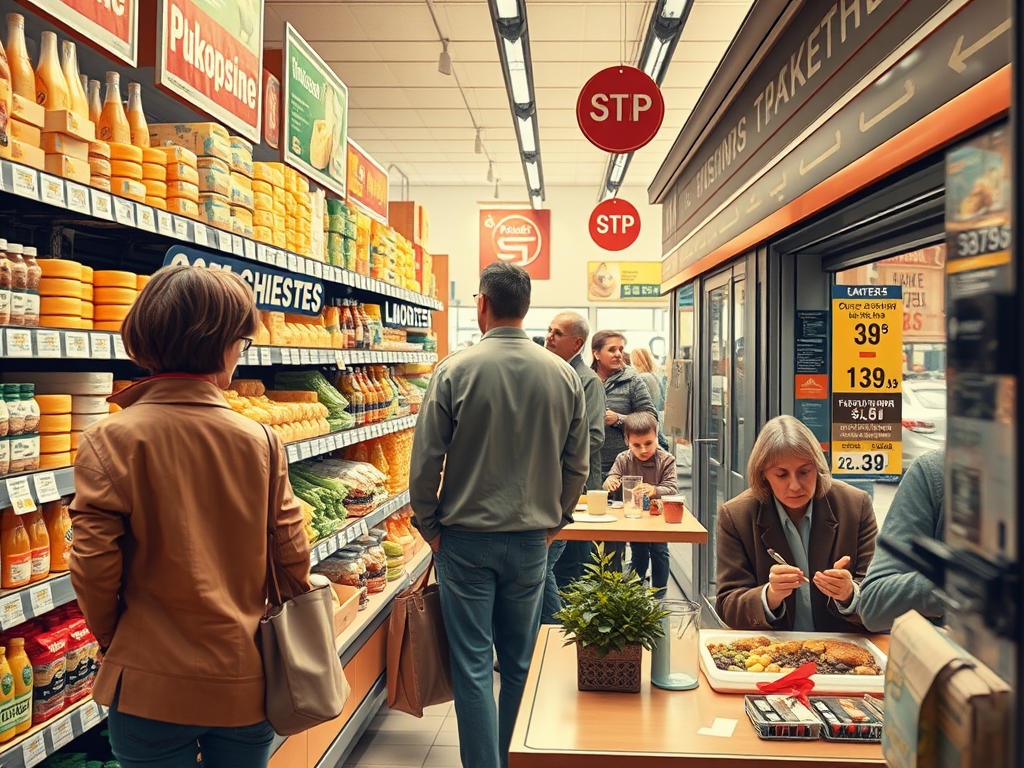
I’ve noticed the shift first and foremost at the supermarket. It used to be easy to do a weekly grocery run without overthinking every item on the list. These days, I often pause before picking up basics like cheese, butter or even potatoes. Prices have climbed steadily, and it’s not always clear why. Sometimes I find myself comparing brands more than I used to, or waiting for discounts on things I would have just bought before. Even the good old Brötchen from the bakery costs more, and while it’s still part of daily life, it’s no longer as casual of an expense as it once was.
It’s not just groceries. Eating out, something I used to enjoy fairly often, now feels like a small luxury. A simple lunch with my family or a tea and cake in the afternoon or dinner in a Japanese or Chinese restaurant adds up quickly. I’ve become more conscious of prices on menus, and sometimes even rethink spontaneous outings because of the cost. It’s not that I can’t afford these things, but the mental shift inflation brings changes how we view value. Something as simple as a Döner suddenly costing close to ten euros makes you stop and think. Wasn’t it almost half that not too long ago?
Transport is another place where inflation shows up quietly but consistently. Public transportation tickets have gone up over time, and while Germany made an attempt to offset this with things like the 49-euro Deutschlandticket, even that can feel like a stretch if you don’t travel enough to justify it. Meanwhile, fuel prices remain unpredictable. Driving becomes more expensive not only because of gasoline but also due to rising insurance, maintenance, and even parking fees in cities. It adds up, and for many families who rely on their cars for work or school, this becomes a major concern.
Housing has always been a tricky topic in Germany, especially in cities like Berlin, Munich or Hamburg. But with inflation, rents and utility bills have started to climb faster than incomes. Heating costs in winter have become a real stress point, particularly after energy prices shot up. Some people now think twice before turning on the heat or using the dryer. There are people who’ve even started calculating what it costs to cook a warm meal compared to eating cold food just to save on electricity. That level of awareness around every euro is new for many of us.
What’s also worrying is how inflation affects people who were already living close to the edge financially. It’s one thing to cut back on a coffee habit or skip a restaurant meal, but another to struggle with rent, basic food or medication. Social benefits do adjust, but often not fast enough. For pensioners, students, and single parents, this situation can be particularly harsh. The inflation might be labeled at 3 or 4 percent officially, but when your personal basket of goods — the things you actually buy — increases much more than that, it doesn’t feel like a statistic. It feels like your money simply doesn’t stretch as far.
Even in the workplace, inflation plays a quiet but persistent role. Salary increases don’t always match rising costs, and that gap creates a feeling that no matter how hard you work, you’re just treading water. I’ve had conversations with colleagues where we compare our expenses now versus just a few years ago, and it’s shocking how much more we pay for the same life. It affects motivation, planning, even our sense of financial security. Things like saving for a house, going on holiday or investing in a course suddenly feel out of reach or at least delayed.
That’s the tricky part about inflation — it doesn’t hit all at once. It creeps in. First, it’s just a few cents more for milk. Then your favorite chocolate bar gets smaller. Eventually, you realize you’re spending more but getting less. And while some people might adapt quickly, not everyone has the same flexibility or safety net. The psychological toll shouldn’t be underestimated either. When prices keep changing, it becomes harder to plan. Budgeting starts to feel like a guessing game. And uncertainty, especially long-term, can be incredibly draining.
Inflation also has a subtle way of changing our social habits. I’ve noticed fewer spontaneous gatherings, fewer birthday dinners out, more potlucks and home-based get-togethers. There’s something beautiful about that shift — returning to simpler ways of spending time together — but it’s also a sign of how financial pressure influences even our relationships. When everyone is quietly managing their own costs, there’s an unspoken understanding. We don’t talk about it directly, but we all feel it.
There’s also this strange contradiction I’ve noticed. On one hand, people are clearly cutting back. On the other, shopping centers are full and people still travel. It’s a reminder that inflation doesn’t hit everyone equally. Those with stable incomes or assets might be inconvenienced, but not deeply affected. Others have to make hard choices about every euro. The divide becomes clearer when prices rise — who can still afford what, who changes habits and who doesn’t. And that growing gap can create tension in a society that usually prides itself on balance and fairness.
Another aspect that concerns me is how inflation can shape the future. When everything costs more today, we invest less in tomorrow. People might delay having children, buying a home or starting a business. Saving becomes harder, especially when interest rates on savings accounts still don’t feel rewarding. The irony is that to fight inflation, central banks raise interest rates, but then loans become more expensive. That affects everyone trying to finance a house, renovate or even invest in education. It’s a complicated dance between policy and reality, and we’re all stuck in the middle.
In Germany, we’re lucky in many ways. There’s a strong safety net, and public discourse around these topics is active. But even so, inflation is a force that makes its presence felt in our daily decisions, small and large. It’s not something we can ignore or avoid. Even if we don’t talk about it every day, we live it. It’s in the way we shop, how we plan, what we give up, and what we still hold on to.
At the end of the day, inflation is more than just numbers. It’s about quality of life. It’s about the silent trade-offs we make. Skipping that extra coffee or tea, walking instead of taking the train, putting off a small purchase. None of these things are dramatic on their own. But together, they paint a picture of a society adjusting, recalibrating, adapting — not always because it wants to, but because it has to.
For me, it’s a reminder to be more mindful, to rethink what I truly need, and to stay connected with others who are going through the same thing. Because if inflation teaches us anything, it’s that even though we might be spending more, we should never lose sight of what really has value — not just in money, but in time, connection and resilience.