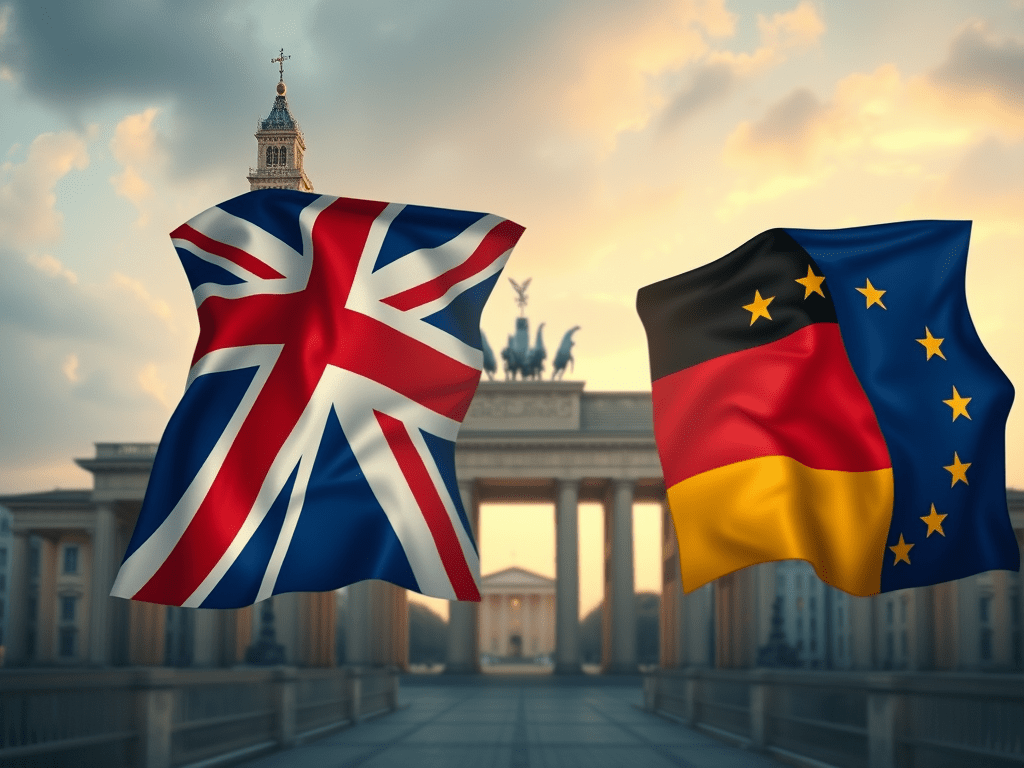
When Brexit first became more than just a political debate and turned into reality, I remember feeling like the ground in Europe shifted. For decades the idea of Europe had been one of unity, cooperation, and shared prosperity. Then suddenly, the United Kingdom decided to walk away from the European Union, ending nearly half a century of membership. To me it felt like watching a family lose one of its members. Not necessarily a breakup full of anger, but certainly one with confusion, disappointment, and long-term consequences. Now that some time has passed, I keep asking myself whether it was a good move for the British and how it has shaped life for Germans, for the rest of Europe, and for the United Kingdom itself.
From the German perspective, Brexit was not only about losing a strong economic partner but also about losing a voice that often balanced out European debates. The UK was never shy about pushing back against certain EU policies, which sometimes annoyed other members but also prevented Europe from becoming too centralized too quickly. Without Britain, Germany now finds itself in a more exposed position. It has to shoulder even more responsibility for steering the EU, especially when it comes to economic stability and foreign policy. At first glance that sounds like an opportunity, but in reality it makes Germany more vulnerable. The costs of holding the European project together are higher, and Germany often gets painted as the dominant force even when it does not want to be.
For ordinary Germans, Brexit has been less dramatic than for businesses. Travel is still possible, but it is not as smooth as it once was. Students who once looked at studying in the UK as a relatively straightforward option now face higher fees and stricter rules. Small companies that relied on British suppliers or customers have had to rethink logistics, because customs paperwork and new trade barriers make things slower and more expensive. The impact is felt not just in Berlin or Frankfurt but also in smaller towns where mid-sized companies used to have seamless trade ties with Britain.
Across Europe more broadly, Brexit shook confidence. It raised questions about whether the EU was as solid as it appeared. While no other country has followed Britain out the door, nationalist voices in places like Hungary, Poland, and even Italy have used Brexit as an example of defiance, even if they stop short of advocating for leaving themselves. On the other side, Brexit also forced the EU to tighten ranks. France and Germany have taken on a stronger leadership role, and many countries realized how much they actually valued the stability that EU membership offers. In a strange way, Britain’s departure may have made the rest of Europe more determined to stay together.
Now the real question that nags at me is whether Brexit was a good move for the British themselves. On the surface, leaving gave the UK control over its borders, its trade policies, and its laws. This was the central promise of the Leave campaign: taking back sovereignty. In some ways, this has been delivered. Britain can sign its own trade deals, set its own immigration rules, and craft policies without needing to negotiate with Brussels. For many who voted Leave, that sense of control was priceless, and they feel vindicated by it.
But when I look at the economic data and the lived experience of many in the UK, I struggle to see how the benefits have outweighed the costs. Trade with the EU, which is Britain’s largest partner, has become more complicated. Exports face more paperwork, delays, and higher costs. Many small businesses that depended on smooth EU trade have struggled, and some gave up altogether. Large financial firms have shifted parts of their operations to Frankfurt, Paris, and Dublin. The City of London is still powerful, but it no longer feels quite as central to European finance as it once did.
Immigration control was a huge driver of Brexit, and it is true that the UK can now set its own rules. Yet the irony is that Britain still faces labor shortages, especially in sectors like healthcare, hospitality, and agriculture. The EU once provided a steady flow of workers, and many of them left or chose not to come back because of the new rules. This has created pressure on wages but also strains on services. The NHS, already stretched, has found it harder to recruit nurses and doctors from abroad. For me, this is where the gap between political promises and reality becomes most visible.
On the cultural level, I sense that Britain has lost some of its influence. Before Brexit, the UK had a powerful voice inside the EU, shaping policies, pushing for free markets, and often acting as a bridge between the United States and continental Europe. Now Britain still tries to project itself globally, but it is harder without the weight of EU membership behind it. The so-called Global Britain vision sounds ambitious, but so far it has struggled to deliver the same scale of influence. Trade deals with countries outside Europe exist, but they rarely compensate for the lost access to the EU single market.
The pros and cons therefore seem mixed, depending on perspective. For the British government, the pro side is that it can act independently. For businesses and many citizens, the con side is that this independence has come with higher costs and fewer opportunities. For Germany, the pro side might be that its leadership role in Europe has grown, but the con side is that this role brings heavier burdens. For the EU, the pro side is unity among remaining members, but the con side is losing one of its largest economies and strongest military powers.
Looking back, I cannot help but feel that Brexit was more emotional than rational. The campaign was framed around identity, pride, and a sense of regaining control. These are powerful motivators, but they do not always translate into long-term prosperity. I understand why many British people voted the way they did, and I do not dismiss their concerns. Still, when I weigh the outcomes, I feel the UK has ended up more isolated and less prosperous than it might have been had it stayed.
For Germans and other Europeans, the lesson of Brexit is sobering. It reminds us that integration cannot be taken for granted. People need to feel that the EU works for them, not just for elites or big corporations. If they feel ignored, they will turn away, and Brexit showed that leaving is possible. Yet it also showed that leaving is messy, costly, and full of unintended consequences. That reality has probably discouraged other exits, at least for now.
In the end, was Brexit a good move for the British? In my opinion, no. It gave them political sovereignty on paper but at the cost of economic strength, cultural influence, and easy cooperation with their closest neighbors. For Germany and the rest of Europe, it was a loss too, but one that forced the EU to reflect and adapt. The scars of Brexit will remain for a long time, and I think historians will look back on it as a moment when Britain chose pride over partnership. Time will tell whether that pride can sustain them through the challenges still ahead.