Last weekend we decided to make a little trip to Detmold. My husband’s relatives live nearby, and another relative with her family was visiting them for a sleepover. It had been a while since we spent a whole day together. We knew it would be a good chance not only to catch up but also to enjoy one of the most famous landmarks in the area, the Hermann Denkmal. Before heading out, we stopped by their house to drop off some food we had brought along for later. My husband had prepared potato salad and currywurst the night before, and we tucked them into the fridge since we planned to stay until dinner. The plan was to grill in the evening, so everyone was looking forward to it. With that settled, we piled into the cars and set off for the monument.
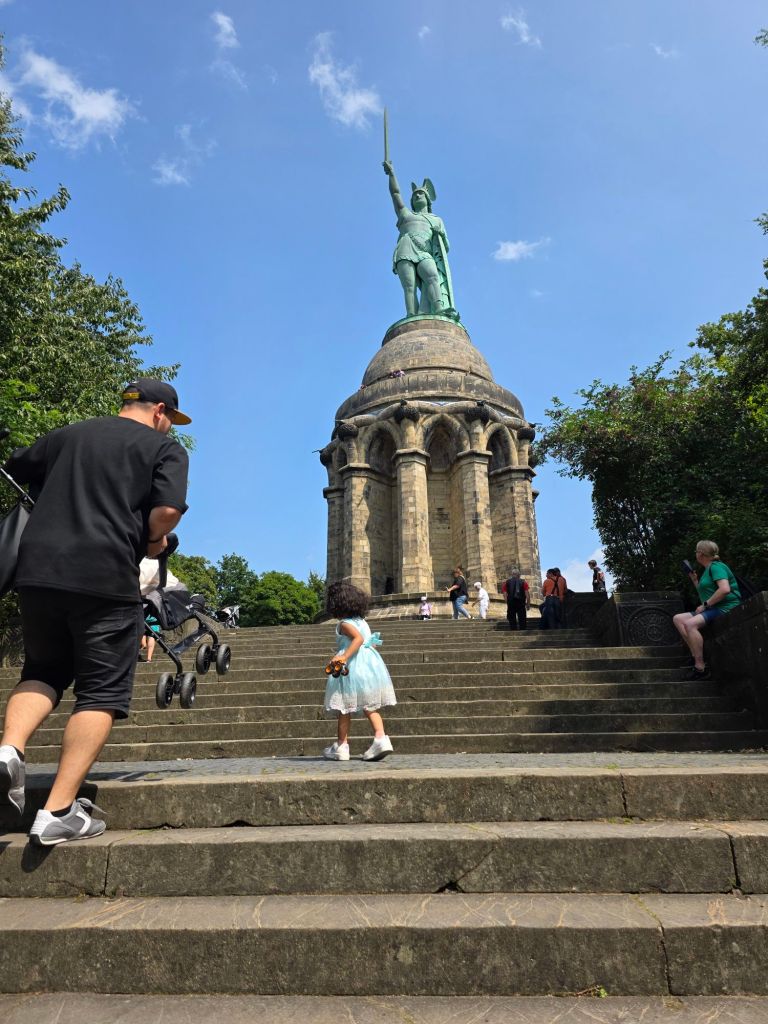
The drive itself was pleasant, winding through green hills and forests, and soon the statue of Hermann appeared high above the trees. Even from a distance it looked enormous. When we arrived at the site, we joined the crowd of visitors making their way up the broad stone stairs. Tourists and locals alike were scattered around, snapping photos and pointing upward at the colossal figure.
Before exploring further, we found a quiet corner with benches where we could have a snack. The children were already hungry, so we unpacked the pancakes my husband had made the night before, along with crisp apples that the other family had brought. Sitting together in the shade, sharing simple food, felt just right. The kids’ laughter and chatter filled the air, while Hermann stood tall above us, as if silently guarding the scene.
The Hermann Denkmal itself stands tall above the trees. The statue depicts Arminius, known in German as Hermann, the chieftain of the Cherusci tribe. He is remembered for defeating the Romans in the Battle of the Teutoburg Forest around the year 9 AD, a battle that changed the course of European history. Seeing the monument makes you realize how much symbolism can be carried in stone and bronze. Hermann stands proudly with his sword lifted high toward the sky, a figure that is both fierce and inspiring. For centuries he has been remembered as a symbol of resistance and independence.
After eating, we headed down the steps again to see the monument from below. Standing there, we didn’t go up into the actual monument itself but stayed at the base to take in the view. That alone was impressive. The sheer size of the statue is breathtaking up close, with Hermann’s sword raised toward the sky and the stone base beneath him resembling a fortress. Looking at it from ground level gave us a sense of its scale and presence without needing to climb higher.
Then we headed to the small museum where we read some of the plaques and explanations about the history of the monument. What struck me most was how the story of Hermann has been told in so many different ways over the centuries. To the Romans, he was a rebel who betrayed them after training in their armies. To the Germanic tribes, he became a hero who defended their freedom. And in modern times, people see him as a reminder of identity and independence. It shows how history is not just about facts but about the meaning people give to events long after they happened.
Once we had taken our time to look around, we decided to treat ourselves to a short break at a nearby restaurant. The adults ordered French fries and cold drinks, which tasted even better after all the walking. The highlight for the kids, though, was the children’s play corner. It had toys and building blocks, and soon they were completely absorbed, leaving us grown-ups a few quiet minutes to sit and chat. It was a nice pause in the middle of the day, simple but relaxing.
Instead of ending the outing there, we drove to a nearby bird park. The children were thrilled the moment we arrived. The park was alive with color and sound, with birds fluttering overhead and calling from the trees. Walking along the paths felt like stepping into a completely different world after the stone monument and crowded stairs. The kids pointed excitedly at every bird, trying to guess their names and imitating their calls. For the adults, it was a calm and refreshing walk, a way to enjoy nature together while the children were fully entertained.
By the time we made our way back to the relatives’ house, the day already felt full of good memories, and yet it wasn’t over. The smell of the grill was waiting for us, and the potato salad and currywurst from the night before would soon make their appearance at the table. We sat down to dinner as the sun began to set, feeling tired in the best way, the kind of tiredness that comes only after a full day of walking, laughing, and sharing moments together.
Looking back, the Hermann Denkmal was more than just a monument to us that day. It was the reason we set out, but the true heart of the trip was the time spent with family. The statue stands as a symbol of history, of independence and strength, but for us it also became the backdrop to a day of simple joys: children racing up stairs, snacks on a bench, fries at a restaurant, and bright feathers in a bird park. In its own way, that combination of history, family, and play was just as memorable as anything carved in stone.