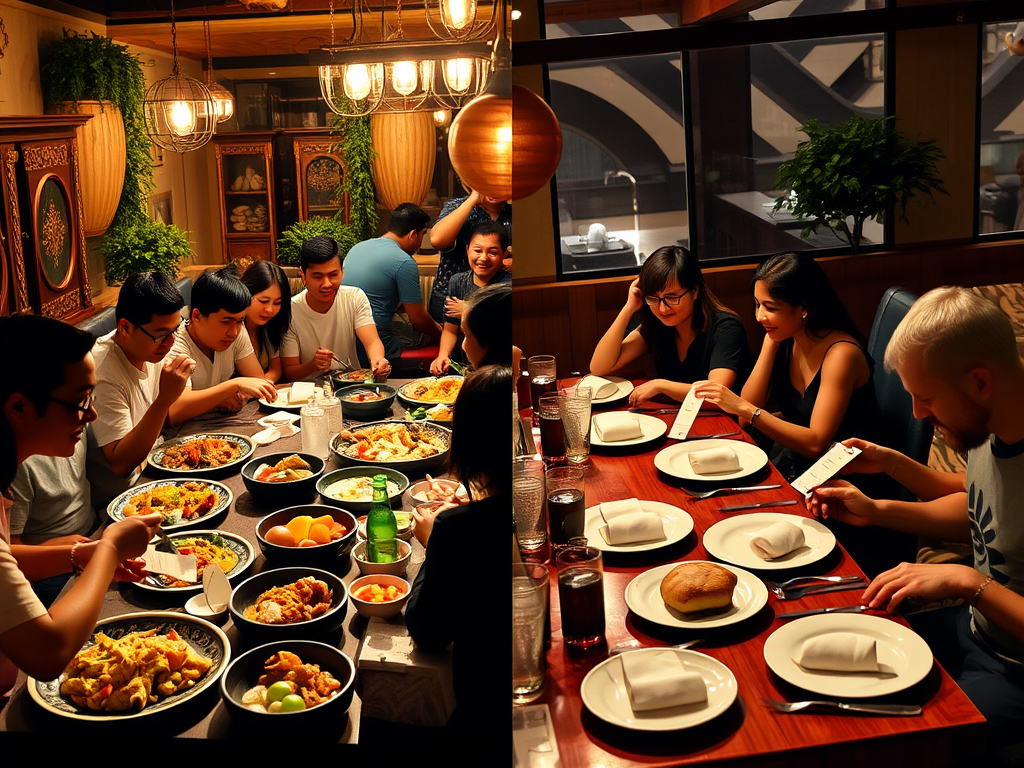
Back home in the Philippines, there’s a word for treating your friends, family, or colleagues when you eat out: manglibre. It’s more than just picking up the bill. It’s an act of generosity, a way of saying you care, and sometimes, it’s an unspoken expectation—especially if you’ve just returned from abroad or a big city. People assume you’re doing well and that you’ll gladly cover the table’s food and drinks.
Growing up, I saw manglibre as a natural part of social life. If you could afford it, you did it. When someone else did it for you, it was seen as warm and kind. It made meals feel more connected. Nobody had to think about how much their food cost or who ordered what. The bill would arrive, and one person would simply take care of it.
But that also meant there were times when someone—often the one earning more—felt pressure to pay even when it wasn’t convenient. For many Overseas Filipino Workers, it’s even tougher. Imagine working long hours doing physically demanding jobs abroad, saving for years, then coming home for a short vacation. In that short time, you might be expected to feed an entire army of relatives or friends or classmates, sometimes more than once. If you decline, people might label you hikawan or kuripot, meaning stingy or tight-fisted. It’s not just about money—it’s about reputation.
When I moved to Germany, I saw the complete opposite approach. The first time I went out with friends, I watched the waiter walked around the table, taking note of what each person had ordered and handing each their own bill. At first, I thought it felt cold. Where I came from, that would have seemed unfriendly. But here, it was normal—and not a sign of being selfish.
I had actually been introduced to this system by my husband, so I wasn’t shocked. In Germany, paying for your own food is simply how things are done, even when you go out as a group. You eat together, laugh together, and at the end, everyone pays their own way. It’s not about avoiding generosity—it’s about keeping relationships fair and free from financial obligations.
Over time, I came to appreciate this. There’s a certain freedom in knowing you don’t owe anyone and no one owes you. You can meet friends as often as you like without worrying that someone’s budget will take a hit. And because you’re paying for yourself, you choose what fits your own wallet.
When I visit the Philippines, I still treat people to meals. Food is cheaper there compared to Germany, so paying for a group doesn’t feel like a huge financial sacrifice. And honestly, I’m used to being the one who pays—it feels natural. It’s nice to share our blessings.
But something has changed in me. I’m no longer used to having someone else pay for me. Back in college, it was normal for me to accept a treat from a friend. Now, it feels a little embarrassing. When someone picks up my bill, my instinct is to find a way to give something back. Years of paying for myself in Germany have made financial independence at the table feel like part of my personal dignity.
Both systems have their beauty and their downsides.
The good side of manglibre:
- Creates a warm, generous atmosphere.
- Strengthens friendships and family bonds.
- Makes dining simple—no splitting bills or awkward math.
- Leaves the payer feeling proud and appreciated.
- Encourages a culture of sharing blessings.
The challenges of manglibre:
- Can drain the payer’s savings if done often.
- Creates unspoken pressure, especially for those seen as “better off.”
- May lead to relationships where giving is one-sided.
- Can be taken advantage of by people who never offer to return the favor.
- Might make the payer avoid gatherings to escape the expectation.
The good side of paying your own:
- Fair—everyone covers what they ordered.
- No feelings of debt or obligation.
- Keeps friendships on equal footing.
- Encourages people to meet more often without budget worries.
- Makes it easy to stick to your personal spending limits.
The challenges of paying your own:
- Can feel less warm to people from treating cultures.
- May seem unfriendly to visitors from abroad.
- Splitting the bill can take time if not done efficiently.
- Less likely for people to order dishes to share.
- Can come across as overly strict in casual gatherings.
Living between these two systems has taught me there’s no “one-size-fits-all” answer. In the Philippines, treating people isn’t just about money—it’s about generosity, pride, and the joy of giving. In Germany, paying for yourself isn’t about refusing kindness—it’s about respecting each person’s independence and keeping relationships free of hidden obligations.
Sometimes, I miss the feeling in the Philippines when someone announces, “I’ll take care of it,” and everyone smiles. Other times, I’m grateful for the German way, where friendship isn’t tied to who paid last.
Now, I use both styles depending on where I am and who I’m with. In the Philippines, I still enjoy treating people when I can. In Germany, I appreciate the ease of splitting the bill. From the Philippines, I learned the value of giving without expecting anything in return. From Germany, I learned the importance of protecting my finances and respecting other people’s autonomy.
In the end, both approaches are about connection. Whether you’re treating everyone or just paying for yourself, the goal is the same—to share a meal and enjoy each other’s company. The way you settle the bill is simply a reflection of the culture around you. And when you’ve lived in both worlds, you get to carry a little of each wherever you go.