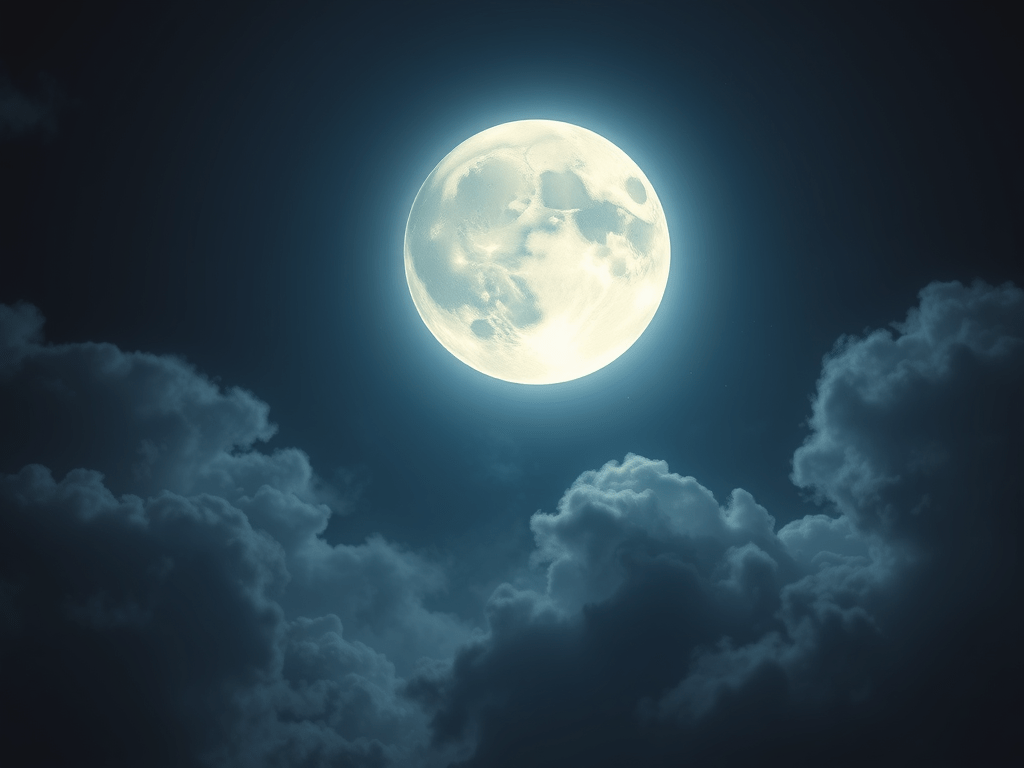
The moon holds a quiet kind of strength. It doesn’t scream, sparkle, or compete for attention—yet its presence is undeniable. Whether it’s just a thin crescent or shining in full, the moon reminds us that change is a natural part of life, and that true beauty doesn’t rely on being flawless. The phrase “Even the moon had to go through phases to be whole” is more than just poetic—it speaks to a deeper truth we often need during times of doubt, transition, or growth.
In life, we’re often taught to chase completeness. We strive to have it all together, to be consistently productive, confident, happy, or successful. But rarely do we pause to ask: is being whole the same as being full all the time? The moon says otherwise. Some nights it’s barely there, a quiet whisper of light. Other nights, it’s loud with its glow, impossible to ignore. But no matter what phase it’s in, it’s still the moon. Still itself. Still whole in its own process.
We tend to believe that our value is highest when we’re at our fullest. That being “on” all the time is the mark of strength. But the moon’s story gently challenges that. It reminds us that life moves in cycles. That darkness, dimness, growth, pause, and fullness are all just parts of the same rhythm. We’re not broken because we feel lost. We’re not weak because we’re tired. We’re just in a phase.
The irony is, we accept nature’s seasons with ease. No one gets mad at the trees for shedding their leaves or scolds the sky for a cloudy day. We understand that spring can’t exist without winter, and that the soil needs rest before it can bloom. But we rarely offer ourselves that same compassion. We resist our own winters, ashamed of our emotional clouds, fearing that a dip in energy or motivation means something is wrong with us. In truth, it just means we’re human.
The moon doesn’t apologize for hiding. It doesn’t rush to become full. It simply shows up as it is, trusting that the process will bring it back around. We could learn from that. There’s a strange kind of courage in showing up in your lesser phases. When you’re not at your best, when you’re unsure, when you’re healing—those moments still count. They’re not detours from your path; they are your path.
It’s easy to look at someone else’s full moon and compare it to your current shadow. We scroll through curated lives on screens and forget that we’re only seeing them in one phase. Social media rarely shows the waxing or the waning—the confusion, the rebuilding, the inner work. So when we’re in our own “new moon” moments, where everything feels dark or unclear, we start to believe we’re alone in it. But we’re not. Everyone is cycling through something. Everyone has parts of themselves they’re still figuring out.
There’s also beauty in knowing that we’re never stuck. Just as the moon keeps moving, so do we. What feels like an end might just be a pause. What feels like falling apart might be a quiet reorganization, a new shape forming in the shadows. Sometimes the most significant growth doesn’t happen under the spotlight—it happens when no one’s watching, when you’re quietly sitting with your truth, rearranging your inner world.
One of the most underrated skills in life is learning how to be with yourself during your own phases. To stay curious when you’re uncertain. To stay kind when you feel fragile. To stay rooted when you’re changing. Most people look outward for reassurance, hoping someone else will confirm that they’re okay. But the moon doesn’t wait for permission to shine or to disappear—it just follows its nature. So should we.
Our culture tends to worship the idea of being “whole” as if it’s a final destination. A state you arrive at after reading enough books, checking enough boxes, or achieving enough milestones. But wholeness isn’t something you achieve—it’s something you carry. It’s not about being perfect or finished. It’s about embracing all of you, even the parts that are still forming. It’s about accepting your phases, not just surviving them.
Think back to a time when you felt like you were falling behind. Maybe you were emotionally drained, questioning everything, or just feeling invisible. At that moment, it probably felt like something was missing. But looking back, you can see the quiet strength that was growing. The resilience that was forming. The clarity that came not from knowing, but from sitting in the unknown. That version of you was not broken—it was becoming. You were simply in a phase.
Healing works the same way. It’s not linear, and it rarely looks impressive. Some days you’ll feel clear, focused, hopeful. Other days, it’ll feel like you’re back where you started. That’s okay. That’s how the process moves. We loop back to old wounds not because we failed, but because there’s more to learn. Sometimes what we call a setback is really a second look, a deeper layer being revealed. You’re still healing, still moving, still whole—even in your wobble.
We could be gentler with ourselves if we remembered how natural phases really are. Growth doesn’t mean never hurting again. It means learning how to live with more presence, more intention, even in the hard moments. It means not needing to rush through the dark to reach the light, because you trust that the light always returns. Just like the moon.
This mindset shift changes the way we relate to others too. When we recognize our own phases, we stop expecting other people to be in their “full moon” selves all the time. We become more patient, more understanding, less reactive. We give them space to be in process, just as we are. Relationships become less about performance and more about presence.
Even in our creative work, this truth holds up. Inspiration doesn’t flow on command. Ideas need time to gather, to shape, to rest. There’s a phase where nothing feels inspired, where the page stays blank, and frustration builds. But that isn’t failure—that’s incubation. That’s part of the cycle. If you trust the process and stay open, the spark returns. The page fills. The full moon comes.
None of this means we should stop striving. It’s human to want to grow, evolve, and reach for our best. But when that desire is fueled by shame over where we are now, it becomes toxic. It turns self-improvement into self-rejection. Real growth happens when you can look at your current phase—no matter how messy—and say: this, too, belongs. I am enough, even in transition.
The moon’s phases don’t make it any less the moon. And your changing emotions, moods, energy levels, or progress don’t make you any less you. You’re allowed to dim and still be brilliant. You’re allowed to pause and still be purposeful. You’re allowed to be a work-in-progress and still be whole.
So if you’re in a low moment right now—mentally, emotionally, creatively—don’t rush yourself out of it. Don’t shame yourself for not being “there” yet. Let this be what it is: a phase. One part of your becoming. You’re not lost, and you’re not failing. You’re cycling through. Trust that the light will come back, just as surely as the moon returns in full.
And when it does, it won’t be because you forced it. It’ll be because you honored your phases, stayed with yourself, and let time do its quiet work. That is the art of becoming. That is the quiet revolution of wholeness.
Just like the moon, you’re always complete—even when you’re not fully visible.