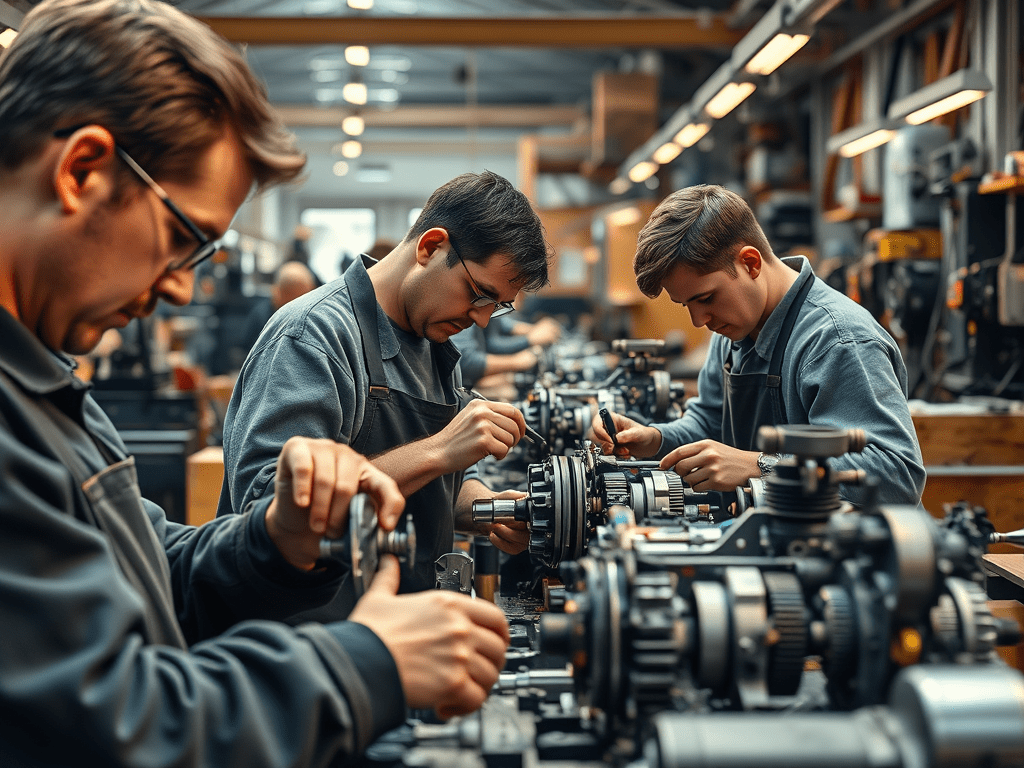
If you’ve ever wondered what really keeps the German economy running—not just the flashy cars or the big-name multinationals—you have to look a bit deeper, into towns and regions far away from Berlin or Frankfurt. Tucked into smaller cities and even rural communities, you’ll find a unique group of businesses known collectively as the Mittelstand. They don’t always make global headlines, but together, they’re the quiet engine of Germany’s economic success—and have been for decades.
The term Mittelstand doesn’t have a perfect English translation. It’s often used to describe small and medium-sized enterprises (SMEs), but in here, it means something more specific. It refers not just to the size of a business, but to its character and values. Mittelstand companies are often family-owned, passed down through generations, and deeply rooted in their local communities. They’re the manufacturers, suppliers, precision toolmakers, and high-tech specialists that produce components many people don’t even know they rely on every day.
While big corporations like Volkswagen, Siemens, and BASF get much of the attention, the Mittelstand is where the heartbeat of German industry really lies. These companies make up more than 99% of all firms in Germany. They employ over half of the country’s workforce and contribute a major share of its GDP. That’s not a side note—it’s the foundation.
What makes the Mittelstand so effective is a mix of tradition and innovation. These businesses tend to focus on doing one thing extremely well. Whether it’s a small factory that builds world-class industrial valves or a company that produces custom parts for medical devices, Mittelstand firms are known for deep specialization. Many of them are global leaders in their niche markets—so much so that Germans even have a name for them: hidden champions. You might not recognize their names, but companies like Festo, Trumpf, or Kärcher are world leaders in what they do.
The secret behind this strength lies partly in their long-term mindset. Because many Mittelstand companies are family-owned, they don’t chase quarterly profits or stock prices. They invest in people, research, and equipment with an eye on the next ten or twenty years. That kind of patience is rare in today’s fast-paced corporate world, but in here, it has created resilience. These companies don’t just survive economic downturns—they often come out stronger.
Another key to the Mittelstand’s success is the German apprenticeship system, known as dual education. Young people split their time between classroom learning and hands-on training at a real company. This system is deeply intertwined with the Mittelstand, which provides the real-world work experience. It creates a skilled workforce that’s not just educated but also trained in the specific needs of their industry. The result is a pipeline of talent that fits the demands of the company from day one.
This close connection between education and industry builds loyalty too. Employees at Mittelstand companies often stay for decades. They know the company, its values, its mission. And the company, in turn, invests in their development, not just as workers but as long-term team members. That kind of relationship helps build not only a skilled labor force but also a sense of pride in craftsmanship—something Germany is globally admired for.
Despite their size, Mittelstand companies are far from provincial. Many of them export to dozens of countries and maintain offices abroad. Their international presence is often quiet, but highly effective. What’s remarkable is that they achieve this global reach without losing their local roots. It’s not uncommon for a high-tech factory in a Bavarian village to be supplying components for Japanese robots or wind turbines in Canada, all while remaining a cornerstone of its small community.
Of course, the Mittelstand faces challenges. Globalization, digital transformation, and demographic change all present real pressure points. Some of these companies are still navigating the shift toward digital business models or automation. Others are dealing with succession issues—many are family-run, and as the older generation retires, not every firm has a clear successor in place. Add to that Germany’s aging population and a growing shortage of skilled labor, and it becomes clear that maintaining the strength of the Mittelstand isn’t automatic.
Then there’s the issue of bureaucracy and regulation. Mittelstand firms often operate on thin margins and don’t have the legal or administrative departments that big corporations rely on. Complying with EU rules or adapting to tax reforms can be a significant burden. While many business owners appreciate Germany’s stability and infrastructure, they also call for more flexibility and less red tape.
Yet, the Mittelstand continues to adapt. In recent years, many of these companies have embraced sustainability, digital tools, and international cooperation. Others are focusing on attracting younger workers through modern branding, better work-life balance, and transparent leadership. Despite their reputation for being traditional, the Mittelstand is anything but stuck in the past. They’re evolving, quietly but steadily—just as they always have.
In times of economic uncertainty, Germany’s Mittelstand has proven to be a stabilizing force. During the 2008 financial crisis and again during the COVID-19 pandemic, many of these firms kept their employees, found creative ways to adjust production, and continued to fulfill international contracts even when others were scaling back. That resilience doesn’t come from luck. It comes from values—pragmatism, discipline, innovation, and a belief that business is not just about profit, but about responsibility to employees, families, and communities.
The Mittelstand is not just an economic model—it’s a mindset. It reflects a belief in doing things well, not just fast. In building relationships, not just transactions. In aiming for excellence, even if nobody is watching. For Germany, this means stability, innovation, and global competitiveness rooted in local expertise. For the rest of the world, it’s a case study in how small and medium-sized enterprises, when given the right environment, can punch far above their weight.
In the end, the Mittelstand tells a story of quiet strength. It’s not flashy, but it’s deeply effective. It might not make the headlines, but it drives the economy. And for anyone looking to understand what makes Germany’s industrial engine run so smoothly, that story is worth listening to.



I am really loving the theme/design of your website. Do you ever run into any browser compatibility problems? A small number of my blog audience have complained about my site not operating correctly in Explorer but looks great in Opera. Do you have any recommendations to help fix this issue?
LikeLiked by 1 person