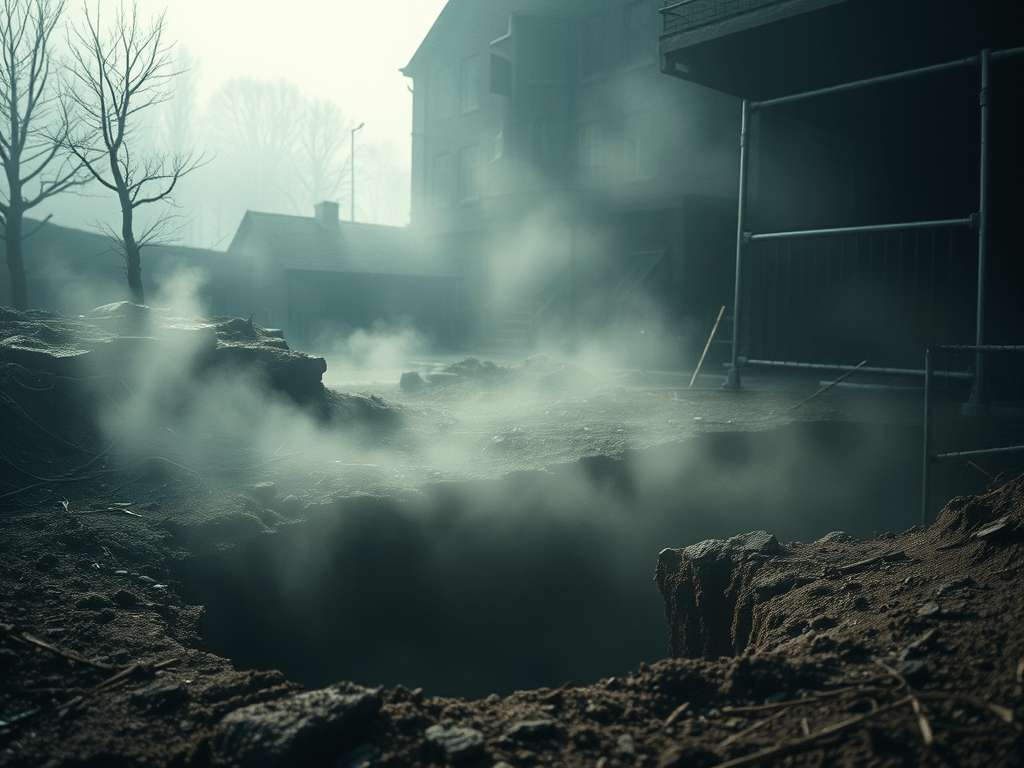
Reading the article on Sky News about the excavation at the former mother and baby home in Tuam, Ireland, shook me to my core. As a mother, it’s hard to even type this without my chest tightening. Nearly 800 infants — tiny, innocent babies — buried in a sewage system. No graves. No headstones. No dignity. Just hidden away, like they never mattered.
It’s disheartening. It’s enraging. It’s devastating.
These weren’t ancient times. This wasn’t some medieval punishment. This was happening in the 20th century, in what many considered a modern, civil society. From 1925 to 1961, the Bon Secours mother and baby home operated in Tuam, County Galway. Unmarried pregnant women were sent there — not for support, not for care, but for containment and control. Their pregnancies marked them with shame, and their babies were born into a world that already rejected them.
And when they died — often from malnutrition, neglect, or disease — they were buried in what’s now known as “the pit.” In reality, it was a defunct sewage tank. Let that sink in. A sewage tank. That’s where they put them.
The news that forensic excavation is finally starting at the site — almost a decade after the truth first came to light — gives me hope, but also raises painful questions. Why did it take so long? Why were families forced to beg and campaign just to recover the remains of their loved ones? Why was the truth buried for so long, even after the physical burial ended?
It’s hard to think about the mothers. So many of them were young girls, scared, cast out by their families and communities. They weren’t criminals. They weren’t evil. They were just pregnant. Many were sent away to avoid “shame,” some after being victims of abuse or assault. And instead of receiving compassion, they were punished. Emotionally, physically, spiritually. They were told they were unworthy. Their children were treated like proof of their failure.
One story from the article especially haunted me. A woman named Annette O’Connor is still searching for the remains of her sister, born at Tuam in 1942. Her mother, Margaret, had been raped as a teenager and gave birth there at just 17 years old. That baby lived six months, and then vanished. A nun told Margaret her daughter was “the child of your sin.” That’s what was said to a grieving teenage mother. As a mother myself, I can’t even fathom the cruelty of those words.
Annette just wants to find even a piece of her sister. “Even if it’s only a thimbleful,” she said — a heartbreaking expression of how deep and long this grief has run. For decades, people like her have waited for recognition, for answers, for even a shred of justice.
It all started to unravel thanks to one woman, Catherine Corless, a local historian who refused to look the other way. She combed through death records, paying for each certificate out of her own pocket, and discovered that nearly 800 children had died at Tuam. But there were no burial records for all but two. Her research led to the horrifying realization that the rest had likely been discarded underground, beneath a children’s playground, no less.
The truth shocked the world — but it didn’t lead to immediate action. There was denial, deflection, delay. Only now, in 2025, are forensic teams beginning to exhume the site. This isn’t just a recovery effort; it’s a national reckoning. A quiet corner of Galway now holds the focus of a country trying to make sense of how something so inhumane was allowed to happen — and go unacknowledged — for so long.
This isn’t just about Tuam. Similar institutions existed across Ireland, often run by religious orders with the complicity of the state. These were not isolated cases of neglect — they were systemic. In 2021, the Irish government issued an official apology to the survivors of mother and baby homes, acknowledging the pain inflicted and the failures of the state. The Bon Secours Sisters, who ran the Tuam home, also apologized. But apologies, while important, can’t undo the silence that was forced on so many for so long.
The excavation team, led by Daniel MacSweeney, will work under strict forensic guidelines over the next two years. The hope is to identify as many remains as possible using DNA and burial data, and to give each child a respectful burial. It’s a monumental task. It’s the least that can be done.
Being a mother changes everything. You feel every child’s pain, even when it isn’t yours. Reading this, I felt like I couldn’t breathe. These weren’t statistics. They were someone’s baby. They were meant to be held, named, nurtured — not forgotten in concrete. I looked at my own child and felt an ache that’s hard to describe. The thought that any mother could have her baby taken, disposed of, and erased — it’s unbearable.
I think about how long this silence lasted. I think about how many people knew — or suspected — and said nothing. I think about the shame women were made to carry, when the shame should have belonged to the institutions and the society that failed them.
We have to remember these children. We have to say their names when we can. We have to keep talking about this, no matter how uncomfortable it is. Because silence is what allowed this to happen in the first place. And silence will only allow it to happen again.
This excavation isn’t just about bones and evidence. It’s about memory. It’s about justice. It’s about finally saying: these lives mattered.
If nothing else, I hope this brings peace to the families who’ve carried this grief alone for so long. And I hope we, as a global community, listen — really listen — so history doesn’t repeat itself in other forms, in other places, under other names.
This isn’t just Ireland’s story. It’s all of ours. Because anytime we allow cruelty to hide behind authority, or shame to silence truth, we become complicit.
Let the pit be opened. Let the truth be unearthed. Let the children be found — and never forgotten.


Usually I don’t read article on blogs, but I would like to say that this write-up very forced me to try and do it! Your writing style has been amazed me. Thanks, very nice article.
LikeLiked by 1 person