In today’s dynamic business environment, clarity often comes from simplicity. One such simple yet incredibly powerful tool that helps individuals, businesses, and teams assess their current standing and plan ahead with confidence is the SWOT Analysis. It’s not just a buzzword you’ll hear in a business meeting or find in a textbook; it’s a real-world approach to making informed decisions, setting strategies, and identifying challenges before they become problems. If you’ve ever felt overwhelmed by choices or uncertain about a direction, SWOT Analysis offers a framework to untangle complexity and see the situation with fresh eyes.
What Is SWOT Analysis?
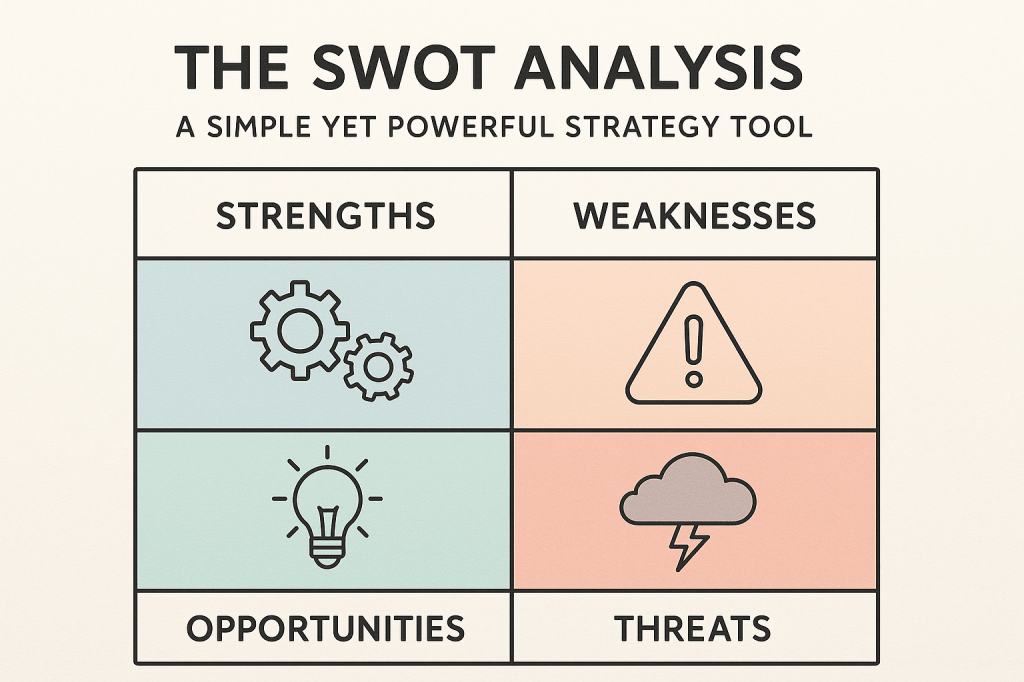
SWOT stands for Strengths, Weaknesses, Opportunities, and Threats. Each element of the SWOT matrix plays a specific role in helping you understand both internal and external factors that could influence your project, business, or decision.
Strengths and weaknesses are internal—they relate to what you or your organization already possess. Opportunities and threats are external—they exist outside of your immediate control but can impact your outcomes significantly. By examining all four areas thoughtfully, you can form a well-rounded perspective and make smarter, more confident decisions.
Understanding Strengths
Strengths are the positive internal attributes that give you an edge. These are the things that are already working in your favor. If you’re a company, strengths might include brand loyalty, skilled staff, a patented product, cost efficiency, or great customer service. For an individual, strengths could be creativity, strong communication, a wide network, or specialized expertise.
Recognizing your strengths allows you to double down on what’s already working. It helps you build strategies that lean into your advantages. When you know what you do best, you can position yourself more clearly and confidently in the market or in your personal journey. This clarity creates focus, and focus is what drives results.
The key here is honesty. Overestimating your strengths might lead to misplaced confidence, while underestimating them could make you miss opportunities. Ask yourself what others praise you for, where you consistently deliver results, and which areas give you a competitive advantage. If you’re evaluating a team or business, gather feedback from multiple perspectives to ensure you see the full picture.
Acknowledging Weaknesses
Weaknesses are the flip side of strengths. These are internal limitations that hinder performance or success. It might be limited resources, outdated systems, poor branding, inconsistent leadership, or low morale in an organization. On a personal level, it could be lack of experience, procrastination, communication gaps, or time management struggles.
Identifying weaknesses is not about being negative—it’s about being realistic. You can’t improve what you don’t acknowledge. The beauty of spotting a weakness early is that you can begin addressing it before it becomes a major obstacle. Sometimes, the act of recognizing a weakness already begins to solve it. For instance, knowing that your customer support system is slow means you can prioritize it in your next planning cycle.
Self-awareness is a strength in itself. Companies and individuals who regularly examine their weak spots tend to grow faster and with fewer setbacks. Just like strengths, the most valuable insights often come from listening to others. Encourage feedback and be open to hearing uncomfortable truths. These truths, when acted on, become stepping stones to growth.
Spotting Opportunities
Opportunities are the external chances you can capitalize on to improve or grow. They often emerge from market trends, changing customer preferences, new technologies, or even changes in regulation. For a business, an opportunity might be expanding into a new market, leveraging social media trends, or forming a strategic partnership. For individuals, it could mean gaining a new certification, shifting careers to a growing industry, or building a personal brand online.
What makes opportunities powerful is that they often exist for a limited time. Spotting them early gives you a head start. But you have to look outward regularly to see them. While internal analysis is important, growth often comes from connecting with the world around you and identifying needs that haven’t yet been fully met.
You also want to consider how your strengths align with available opportunities. That intersection is where magic happens. If you’re great at something and there’s growing demand for it in the market, it’s a sign to act. That’s why SWOT Analysis isn’t just about listing ideas—it’s about connecting dots to form strategic moves. Stay curious, informed, and proactive, and opportunities will often reveal themselves more clearly than you expect.
Recognizing Threats
Threats are the external challenges or risks that could hurt your progress. They’re not always obvious, and some can emerge suddenly. Common threats include increasing competition, market saturation, rising costs, changing laws, or economic downturns. For individuals, threats might involve job insecurity, emerging skills gaps, or shifts in industry demands.
While threats can’t always be eliminated, being aware of them allows you to prepare and adapt. A team that knows a competitor is launching a similar product can speed up innovation. A person who senses their industry becoming automated can start learning new skills early. Awareness is a form of defense.
The goal isn’t to be paranoid but prepared. Think of it like weather forecasting—if you see a storm coming, you grab an umbrella. You don’t panic; you prepare. By identifying threats during the SWOT Analysis, you create space to plan counter-strategies, build resilience, and stay grounded even when the environment gets tough.
Making It Practical
SWOT Analysis is simple in structure, but its power comes from how you use it. Writing your SWOT down helps clarify your thoughts. Create a four-quadrant grid with one box each for strengths, weaknesses, opportunities, and threats. Fill each section with honest, specific points. Don’t aim for long lists—aim for meaningful insights.
Once you’ve listed everything, look for connections. How can you use a strength to take advantage of an opportunity? How can you turn a weakness into a strength over time? What strengths can help you minimize a threat? What opportunities might help fix a weakness? These links turn your SWOT from a list into a strategy.
Don’t be afraid to repeat the exercise over time. Businesses and people change, markets evolve, and new information becomes available. A SWOT you did six months ago might look very different today. Make it part of your regular planning process. It’s especially helpful when starting something new, making a major decision, or facing uncertainty.
SWOT Analysis also works well in teams. Each person brings a different perspective, and the group discussion often uncovers blind spots or ideas that wouldn’t surface in isolation. When everyone contributes, the resulting plan is more informed and more likely to succeed. Just ensure the environment encourages honesty and openness—no idea is too small or silly if it contributes to better awareness.
Applying SWOT Beyond Business
While SWOT is often used in business strategy, it’s just as powerful in personal development. Looking for a career change? Use SWOT to evaluate your current job versus your ideal role. Want to improve your health or finances? Break down what’s working, what’s not, what could help, and what might get in the way. Even relationships, projects, and creative pursuits can benefit from this structured reflection.
The beauty of SWOT is its flexibility. You don’t need a background in strategy to use it. You just need a willingness to reflect, observe, and plan. It transforms scattered thoughts into structured insight. It brings clarity where there is confusion and direction where there is drift.
Ultimately SWOT Analysis is more than a framework—it’s a mindset. It encourages curiosity about the world around you, honesty about your current situation, and clarity about your next move. It reminds you that every strength has value, every weakness can be improved, every opportunity is worth exploring, and every threat can be faced with preparation.
Whether you’re launching a new product, shifting careers, building a team, or simply trying to understand your path forward, SWOT gives you a calm, focused way to assess and act. It’s strategic thinking made simple, practical, and human. You don’t have to have all the answers—you just need to be willing to ask the right questions.
And with SWOT, those questions are always within reach.