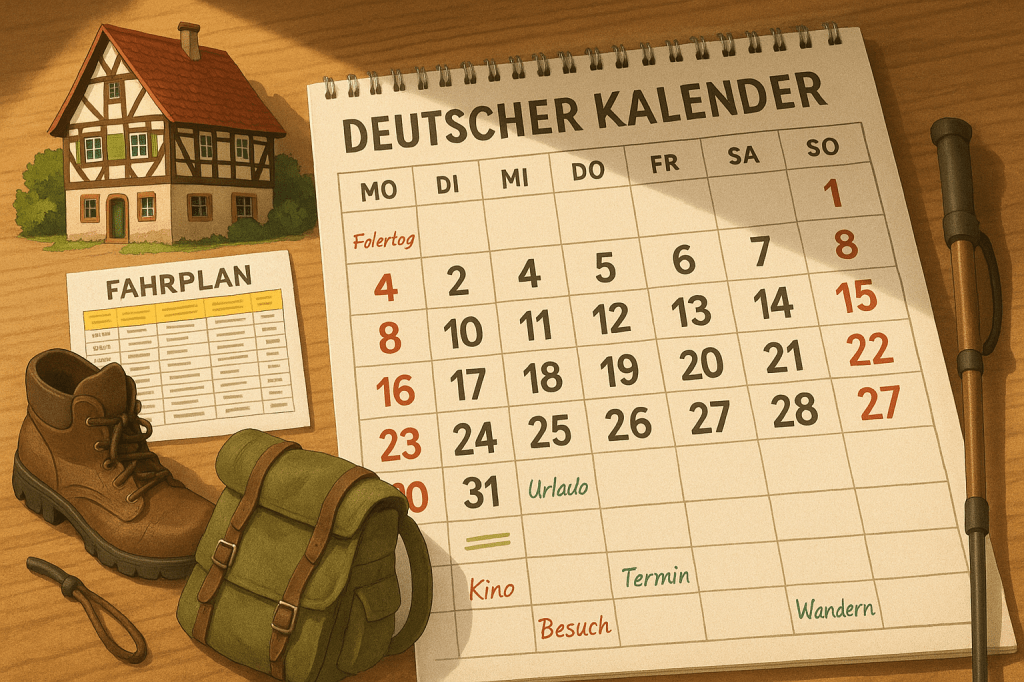
If you’ve ever tried to plan a last-minute dinner with German friends or invited someone out on the fly in Germany, you might have been met with a surprised look, a polite decline, or a reply that sounds something like, “Let me check my calendar and get back to you.” For many visitors or newcomers, this can feel frustrating or overly formal. Why does everything need to be planned so far in advance? Why does spontaneity often feel foreign or even unwelcome?
To understand this, you need to understand something core to German culture: a deep, almost universal love for planning. Here, planning is not just a personal habit—it’s a way of life. It’s how people create structure, reduce stress, respect others’ time, and make life more predictable. Germans believe that good planning leads to good outcomes. And this mindset is visible everywhere, from the workplace and public transport to holidays, social events, and even daily routines.
From an early age, Germans are taught to be organized. School schedules are detailed, extracurriculars are booked in advance, and punctuality is seen as a basic social expectation. Being late without a good reason is often viewed as disrespectful or inconsiderate. Planning ahead is seen as a sign of responsibility. Whether it’s a business meeting or a coffee catch-up, it’s normal to agree on a time days or even weeks in advance—and to stick to it.
This structured way of living can be a shock for people from more spontaneous cultures. In some places, plans are flexible, invitations are casual, and schedules are open to last-minute changes. Here, however, the default setting is: make a plan, commit to it, and don’t cancel unless you really have to. Last-minute invitations can seem intrusive, not because people are unfriendly, but because their calendars are already full or their mindset doesn’t include space for the unexpected.
Even in leisure time, planning plays a huge role. Germans often book vacations months in advance. Weekend hikes, family dinners, or visits to the theater are all penciled in well ahead of time. If you ask a German friend what they’re doing next Saturday, don’t be surprised if they already have plans—or even if they know what they’re doing three Saturdays from now. The calendar is their compass.
This emphasis on planning also shows in how Germans manage their homes. Tasks like grocery shopping, laundry, and cleaning are often done on set days. Sundays are usually reserved for rest or time with family, and many shops are closed. People know when to take care of what, and routines are important. It’s not unusual for someone to plan their meals for the week or to create a to-do list for the weekend. There’s a satisfaction in crossing things off and knowing what’s ahead.
So what’s behind this preference for planning?
Part of it comes from a historical and cultural context. Germany has long valued order, structure, and precision. From engineering and industry to public administration, systems are designed to be efficient and logical. This mindset filters into everyday life. There’s a strong belief that planning prevents chaos, and that being well-prepared helps avoid unnecessary stress. Many Germans feel more relaxed knowing they’ve thought things through.
Another reason is social respect. Planning in advance shows consideration for others’ time. It tells the other person: “I value you enough to make space for you in my schedule.” Dropping in unannounced or expecting someone to be free at short notice can seem inconsiderate. People protect their time and expect others to do the same. That doesn’t mean they don’t want to spend time with you—it just means they want to do it in a way that works for both sides.
This doesn’t mean Germans are rigid or joyless. They enjoy fun, leisure, and good company. But they often prefer to do these things with intention. A group hike on Sunday morning might be planned a week ahead, complete with a route, meeting point, and lunch stop. A dinner with friends might involve a Doodle poll to find a date that suits everyone. The event can be lively and enjoyable—but the structure helps it go smoothly.
Still, this love for planning can feel limiting to those who thrive on spontaneity. If you’re used to texting a friend at 5 p.m. to grab drinks at 6, you might be surprised when your German friends are already booked. You might feel lonely or excluded—not because people don’t like you, but because they simply weren’t expecting to make plans today. This isn’t personal; it’s cultural.
So how can you navigate this as someone new to Germany—or even just trying to understand German friends or coworkers better?
The first step is to embrace the calendar. Don’t wait for spontaneous moments to connect. Be proactive. If you want to hang out, suggest a time a few days ahead. If you’re planning an event, send invites early. If you want to meet for coffee, propose a date and time that’s at least a few days in the future. The earlier, the better. Even casual plans are often more successful when they’re made in advance.
Second, be punctual. If you agree to meet at 3 p.m., don’t show up at 3:10. Germans see time as a commitment. Being late without a reason isn’t just seen as sloppy—it can come across as disrespectful. Set an alarm if you need to. Being on time (or even five minutes early) makes a strong, positive impression.
Third, respect routines. If someone says they’re not free on Sunday because it’s their family time, believe them. If your colleague says they don’t check work emails on the weekend, don’t expect a reply. People in here take their work-life balance seriously. Trying to change or interrupt that balance can backfire.
At the same time, it’s okay to express your own cultural background. If you’re from a more spontaneous culture, you can explain that. Share how you usually do things, while also showing a willingness to adapt. Over time, you might find a middle ground. Some Germans do appreciate spontaneity once they’re more comfortable with you. With close friends, last-minute plans may become more welcome. Trust and familiarity can open that door.
And yes—Germans can be spontaneous, too. It’s just not their default mode. Some may even admire or envy how others can live in the moment. But cultural habits run deep, and structure offers a sense of security that many people find calming. It helps manage time, stress, and responsibilities.
Interestingly, this planning mindset is also reflected in German society at large. Public transport runs on a schedule. Doctor appointments are set well in advance. Bureaucratic processes are structured and time-bound. It’s all part of the same belief system: with good planning, life works better.
In the workplace, this can be especially noticeable. Meetings are planned with agendas. Projects are broken down into steps. Deadlines matter. Decisions often take time, not because people are slow, but because they want to think things through carefully. Planning is part of quality control. It ensures that things are done properly, not just quickly.
So the next time you find yourself wishing things could be a little more spontaneous in Germany, remember that for many Germans, planning isn’t boring—it’s comforting. It allows people to be present, focused, and prepared. And in a way, it’s their own form of hospitality. When someone makes plans with you, it means they’ve made space for you in their carefully structured life. That’s a compliment.
You may never fully share the same need for structure. But understanding it helps you work with it—and maybe even appreciate it. Over time, you might find that planning ahead doesn’t kill spontaneity. Instead, it creates room for moments to unfold more smoothly, without stress or confusion.
And who knows? Maybe one day, you’ll catch yourself opening your calendar to plan dinner a week in advance—and smiling when you do.