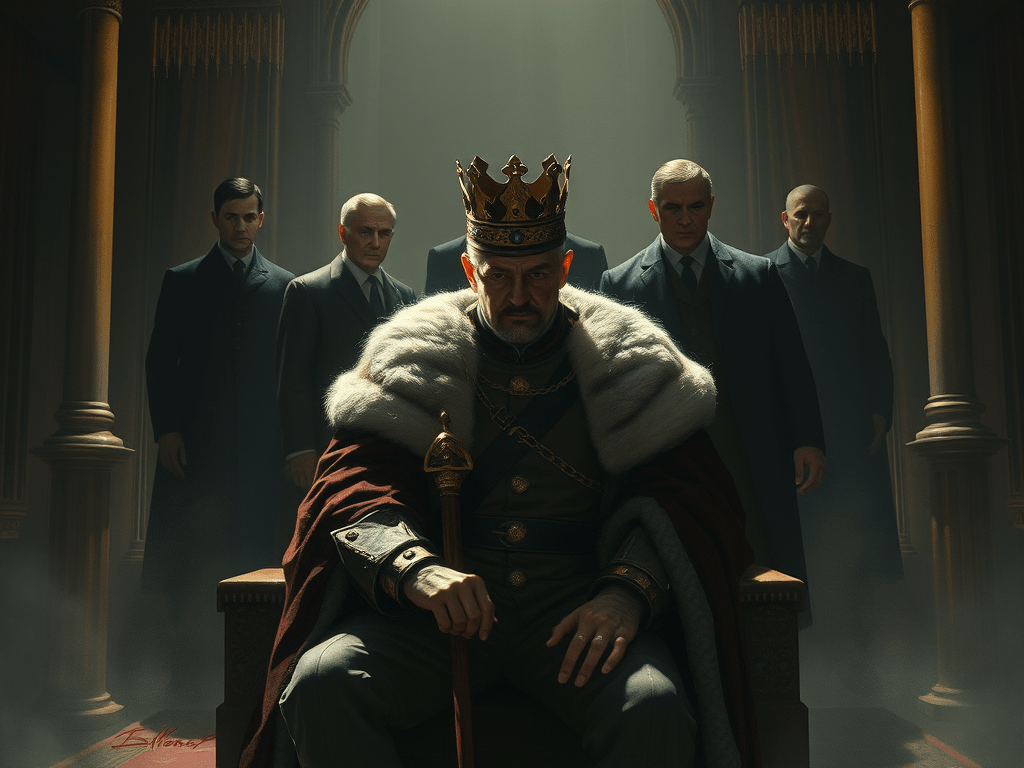
After watching enough period dramas, especially the historical kind, I started noticing something that goes beyond the love stories and palace rivalries. It’s this quiet, unsettling truth that keeps repeating in every story: the king may wear the crown, the president may give the speech, but they’re rarely the ones actually running things. It’s always someone behind them. An advisor, a minister, a strategist, sometimes a friend or lover—someone just close enough to whisper in their ear, someone who doesn’t take the spotlight but controls where it shines. Once I saw the pattern, I couldn’t unsee it. It started to feel less like fiction and more like a reflection of how power really works.
What struck me most wasn’t just the plotting or the court drama, but how often these background characters are the true decision-makers. The ruler is often isolated—trapped behind rules, rituals, public expectations. They’re supposed to appear strong and wise, but they don’t always know what’s going on in their own country. So they rely on others. And that reliance turns into dependence. That’s where the real power starts to shift. A king can give an order, but if it was carefully planted in his mind by someone trusted, whose idea was it really?
I found myself thinking about modern politics, and the pattern doesn’t just live in history. In real governments, presidents and prime ministers have entire teams behind them. Cabinets, chiefs of staff, senior aides, speechwriters, foreign policy experts, press secretaries—they’re the ones preparing the decisions. They read the reports. They analyze the risks. They sometimes even decide what information the leader does and doesn’t see. Leaders are busy being the face of the nation, meeting people, giving speeches, shaking hands. Meanwhile, the real decisions get shaped behind closed doors by people whose names we might never know.
What really pulls you in is how subtle it all is. These aren’t always evil characters with dramatic schemes. Many of them are brilliant, well-intentioned, even loyal. But it’s still them holding the country together, steering it left or right when the figurehead is frozen in the middle. The ruler becomes more of a symbol, a voice delivering lines someone else wrote. You start to realize: it’s not just the one who rules that matters, but the ones they listen to.
The most fascinating scenes, in both dramas and in the real world, are often the quiet ones—when the advisor leans in with a suggestion, or when a general disagrees in private and convinces the king to change course. There’s no shouting. Just a look, a phrase, a nod. It’s so ordinary that it feels more powerful than any throne room outburst. Because that’s how real power moves—quietly, invisibly.
And once you notice that, you start seeing it everywhere. In news stories. In biographies. In documentaries. There are always these names in the background. Political consultants who shaped election campaigns. Economic advisors who influenced financial policies. Foreign policy experts who drew the outlines of war and peace. Often, these people are not elected. They’re not answerable to the public. But they hold incredible influence. Sometimes more than the actual leaders themselves.
It’s not always sinister. There are good advisors, wise ones, who keep unstable rulers from ruining everything. Who give voice to the poor, or reason to an angry king. A skilled advisor can be the reason a country survives famine or avoids war. But they can also be the reason for corruption, betrayal, and oppression. It’s not about the title they hold—it’s about how much trust they’re given, how much access they have, and how cleverly they use it.
It makes you wonder what power really means. Is it being the one in the public eye? Or is it being the one who shapes what that person sees, says, and does? When a president gives a speech, we clap for the delivery. But who wrote it? Who chose those words? Who calculated their effect on the public? That person might never be seen, but their fingerprints are on every syllable.
And this is true even in places we think of as strong democracies. In some ways, modern systems just hide these power dynamics better. In a kingdom, you can see the court and its ministers. In a democracy, the power is buried under layers of committees, advisors, think tanks, lobbyists. The idea is that no one person should have too much control—but sometimes that just means the real control spreads to people we never elected, people who never appear on the ballot. Still, they shape policies, influence leaders, control narratives.
Even in real history, it’s been like this. You read about kings who ruled in name only while a regent or chancellor made all the decisions. Some of the most famous rulers barely ruled at all. Their reigns were shaped by generals, scholars, spouses, or power-hungry advisors. These hidden figures often knew more about the politics and pressures of the world than the ruler did. Some ruled from behind the curtain for decades, across multiple reigns, outlasting everyone except the system itself.
Sometimes it’s not even one person. It’s a whole web. A group of elite families, military leaders, or religious institutions. They whisper, lobby, threaten, fund. And if the ruler doesn’t play along, they’re replaced—through scandal, coup, or quiet resignation. History books talk about the change in leadership, but the people really running things? They often stay the same.
Even when I think of more recent leaders, I wonder how much of what they do is really theirs. Every decision is shaped by meetings, polls, advisors, security briefings, rehearsals. Every message is filtered through teams. Every crisis is managed by layers of professionals. The leader gets the spotlight, but the work is a group effort. And that group might be the one with the real power.
And yet we keep pretending the ruler is all-powerful. Maybe because it’s simpler that way. It’s easier to focus on one face, one name. To love or blame a single person. But that’s not how leadership really works. The ruler might give the order, but someone else wrote it, someone else advised it, someone else made it happen. And sometimes, someone else benefits from it more than the ruler ever will.
What makes it more complicated is that rulers need these people. No one can run a country alone. They need people who understand law, trade, diplomacy, military strategy. They need people who can navigate systems too complex for one person to manage. So they depend on them. And with that dependence comes influence. Influence becomes control. And control becomes power.
So now when I watch these stories, I’m not just watching the king or president. I’m watching the people around them. The advisor who always seems to know more than they say. The strategist who works behind the curtain. The loyal friend who’s always two steps ahead. The one who doesn’t want the crown—but somehow ends up shaping the kingdom anyway.
Because power doesn’t always wear a crown. Sometimes it wears silence. Sometimes it walks in shadows. Sometimes it sits just to the side, where no one is looking—but everyone listens. And once you see that, it’s impossible not to keep looking for it. In dramas, in history, in the world around us.
It’s never just the person on the throne. It’s the ones who keep them there.