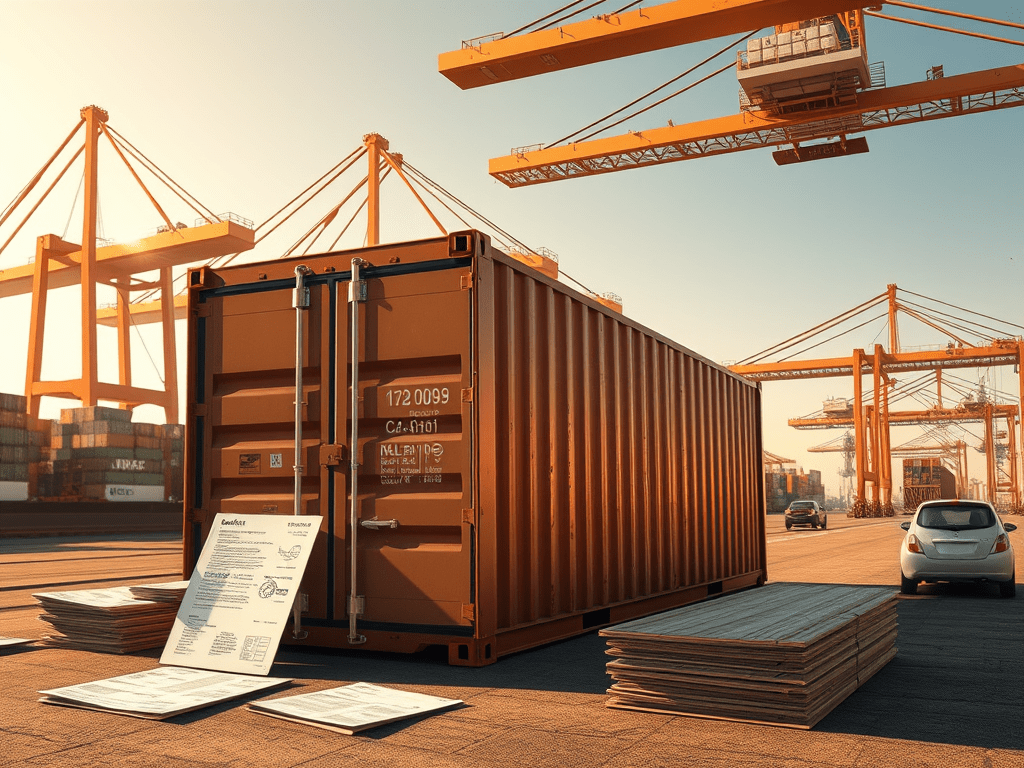
In international trade, doing business across borders brings both opportunity and risk. One of the biggest concerns for exporters is getting paid, especially when dealing with buyers in new markets. At the same time, buyers don’t want to pay before goods are shipped. A practical solution that balances both sides is Cash Against Documents (CAD).
CAD is a payment method where the seller ships the goods and submits the shipping documents to their bank. The bank then sends these documents to the buyer’s bank with instructions to release them only after the buyer makes payment. Without these documents, the buyer can’t take delivery of the goods at the destination port. It’s a system built on trust, but backed by control.
For exporters around the world—whether they’re shipping machinery, garments, electronics, or food products—CAD provides a way to offer fair terms without exposing themselves to unnecessary risk. And for importers, it allows them to inspect the documentation before making payment, often while the goods are still in transit. This makes it particularly appealing for companies that need to manage their cash flow carefully.
Take, for example, a manufacturer shipping consumer electronics to a distributor in another continent. The goods leave the port, and at the same time, the documents—commercial invoice, bill of lading, packing list—are sent to the seller’s bank. The bank forwards them to the buyer’s bank. The buyer is notified and must make payment to receive the documents and clear the goods through customs. If payment isn’t made, the buyer doesn’t get access, and the seller retains control—at least on paper.
CAD works best when there’s a degree of trust and ongoing business. It’s not quite as secure as a letter of credit, where a bank guarantees payment under set conditions. But it’s simpler, less expensive, and easier to manage. That makes it popular in situations where both parties want a smoother transaction without the extra paperwork or banking fees of more complex trade finance instruments.
In many parts of the world—Asia, Africa, Eastern Europe, Middle East, Latin America—CAD is used regularly in industries like textiles, construction materials, chemicals, medical products, and even foodstuffs. It’s especially common in medium-sized transactions, where the volume is high enough to need structure but not so large that it requires maximum protection.
The key advantage of CAD is balance. The seller takes some risk by shipping the goods before receiving payment, but holds onto the essential shipping documents until payment is made. The buyer doesn’t have to pay upfront and knows the goods are on the way before they part with their money. It’s not perfect protection for either party, but it works well when the business relationship is growing and both sides want to move forward without delay.
Of course, there are challenges. If the buyer refuses to pay or delays payment, the goods might sit at the port, racking up storage charges. In some countries, recovering or reselling undelivered goods can be difficult or expensive. That’s why many sellers using CAD prefer to work with buyers they’ve dealt with before—or at least those who have shown good faith in negotiations.
Reliable banks on both sides help reduce problems. Clear instructions, accurate documentation, and fast communication between banks make the CAD process smooth. Errors in paperwork can cause delays or confusion, so working with experienced logistics partners or freight forwarders can be valuable.
CAD is also often used as a stepping stone. Many business relationships begin with this method. If things go well, sellers might later offer more open terms or shift to letters of credit for larger deals. Others stick with CAD because it works—it’s predictable, efficient, and provides just enough protection to keep trade flowing.
For importers, CAD shows that they are serious and capable of managing international transactions. It gives them flexibility and avoids locking up funds weeks before the goods even ship. For exporters, it offers control over documentation, giving them a way to secure payment without the overhead of credit insurance or financing guarantees.
In global trade, no method is one-size-fits-all. But CAD continues to be a reliable tool, particularly when trust is building and both parties want to avoid unnecessary complexity. It’s a system built not just on documents, but on mutual interest, shared timelines, and clear communication. And when it’s used well, it keeps goods moving, payments flowing, and relationships growing—exactly what good business needs.