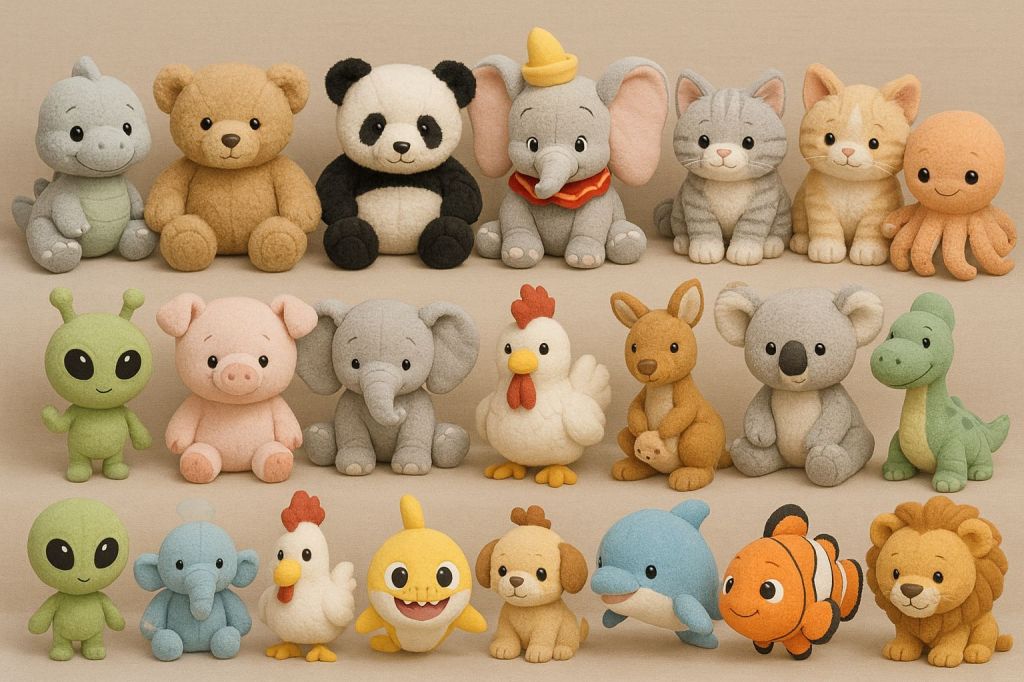
There’s a kind of quiet magic in watching a child form attachments. Not just to people, but to the things around them—objects that somehow become more than just what they are. For my two-year-old daughter, this magic started with a small and soft gray stuffed dinosaur. We called it Baby Dino. To her, it wasn’t a toy. It was a companion.
Baby Dino has been with her since she was one. It traveled with us everywhere—to the Philippines, Amsterdam or Berlin, to the daycare, to the store, to the pediatrician. It sat next to her during lunch, waited patiently while she played, and laid beside her every night as she fell asleep.
If she was upset, Baby Dino was there. If she was proud or excited, it was right by her side. She would never leave it behind. I think she got so attached to it because her Daddy made sure it was always around during her early days, especially when she was adjusting to new things. It became her comfort in a world that’s sometimes too big and too new.
For a long time, her bond with Baby Dino was strong—and exclusive. She had other stuffed toys. Plenty of them, actually. Two teddy bears, two pandas, Dumbo the elephant, Bingo the dog, two cats, an octopus, a couple of aliens, pigs, another elephant, Baby Shark, a white rooster, a kangaroo, a koala, a mommy and daddy dinosaur, a baby dog, a dolphin, a clown fish, and a lion.
Some were gifts, others picked up just because they were soft and sweet. But they were more like decoration than playmates. She would sometimes give them a glance or a quick squeeze, but nothing lasted longer than a few minutes. They were just there. Background friends. Only Baby Dino had her full heart.
But lately, something beautiful has happened. Something changed.
Maybe it was her growing awareness of relationships—of the idea that everything has a place and a role. Maybe it was her developing imagination. Or maybe it was just time.
She’s started to notice the others. Not just see them, but know them. Name them. Remember them. And not just in passing—she’s begun to love them in her own two-year-old way. Slowly, quietly, her world has opened up.
Now she knows who is “baby,” who is “mommy,” who is “daddy.” She’s assigned roles like they’re part of a little stuffed family. The baby dog—her new favorite after Baby Dino—makes a sound when you press it. It barks, and she laughs every time. She’ll run around with it, clutching it close, proud of the sound it makes. The white rooster, although silent, is special too. She carries it around and tucks it into blankets. It doesn’t need to make noise—it just needs to be near.
Watching her form bonds with the rest of her stuffed animals has felt like watching her heart grow. It’s not just play anymore. It’s connection. She sits with her toys in little groups, talks to them, scolds them, hugs them. Sometimes she pretends to feed them. Other times, she gently puts them to bed. She gives each one a place in her world, no longer leaving them behind on shelves or in corners. She remembers who they are. She knows who belongs where.
The dino family—Mommy, Daddy, and Baby Dino—are usually kept together. Baby Dino still goes with her everywhere, the original best friend, but now it often has company. The baby dog often tags along too, especially when we leave the house. And when she’s choosing toys to nap with or take in the car, the rooster is sometimes tucked in beside the others, right under her arm. She even whispers to it as if it might answer.
What’s amazing is how naturally she understands how they all fit. She groups the animals that seem alike—dogs with dogs, cats with lions, sea animals like the clown fish and dolphin swim together across her room’s floor. The kangaroo is always a “mommy,” just like the koala. The pandas cuddle together. The teddy bears are her little friends, or maybe her babies, sitting quietly while she plays “caregiver” and tucks them in. The aliens—quiet and strange—are sometimes given special tasks or left out for later, as if she hasn’t figured them out yet. But they’re still part of her circle. Still remembered.
And it all feels natural. She doesn’t need instruction or suggestion. She creates these tiny social scenes all on her own. She mimics how we talk to her, how her caregivers speak gently at daycare, how we respond to her feelings.
If she’s being silly, her toys are silly. If she’s serious, they’re all lined up, listening. Sometimes she scolds a bear for “throwing” something. Other times, she hugs the octopus because it’s “sad.” She’s learning how to understand emotion, how to give care, how to play out everyday moments safely through her toys.
There’s something special in how deeply she already understands the comfort of familiarity. Each toy, in its own way, gives her a sense of security and imagination. And though Baby Dino is still the one she reaches for in moments of tiredness or stress, the others are slowly gaining equal space in her routine. They’re not just background anymore. They’re participants.
And I’ve started to see that it’s not about the toys themselves—not really. It’s about what they represent. These stuffed friends are helping her build her inner world. Each one is a comfort, a story, a small reflection of the way she sees the world and the people around her. They give her space to practice empathy, to create order, to explore her emotions safely. They’re soft, familiar pieces of her emotional growth, helping her navigate the many changes that come with being two.
Some days, all the toys are tucked in rows like a classroom. Other days, they’re passengers on an imaginary bus or gathered for a pretend tea party. She gives them pieces of her day, her voice, her moods. She leads them around, and they follow quietly, waiting for their next role.
I find myself smiling when I see the rooster poking out of her backpack or the baby dog perched next to her high chair. These things were once just gifts or cute toys picked out of love, sitting unnoticed in her room. Now, they’re part of our family rhythm. They have names, roles, meaning.
There’s something deeply moving about that. This phase may not last forever—one day she’ll outgrow these toys, one by one. They’ll sit quietly again, this time for good, maybe passed on or tucked away in memory boxes. But for now, they are everything to her.
And for me, they are daily reminders that a child’s love doesn’t just appear—it grows. It spreads. It makes room for new things, new names, new stories. Watching her world expand beyond Baby Dino, seeing her welcome the white rooster and barking baby dog and the rest of the stuffed crew—it’s been one of the most honest joys of parenting.
Because in those quiet moments, surrounded by a dozen soft animals and a whole lot of pretend, she’s building something real—attachment, kindness, imagination, and heart.