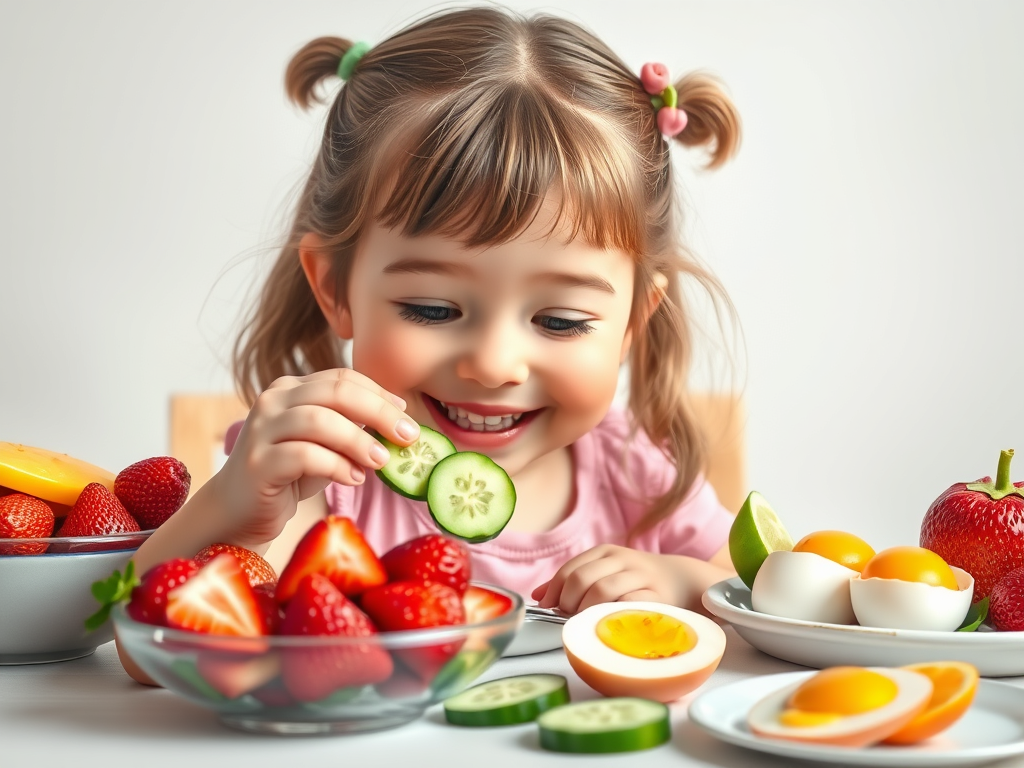
It’s funny how much you can learn about your own child by just watching what happens when you’re not around. For the longest time, I thought I knew my daughter’s preferences like the back of my hand. Sweet things were always her favorite—watermelon, mandarin, strawberries, mangoes, apples, blueberries. If it was colorful, juicy, and sweet, she was all in. So you can imagine my surprise the day she asked for cucumber. Not once, but again and again. She likes to eat it plain, or with a little sprinkle of salt. Sometimes, she asks for a few drops of olive oil, a splash of water, and a dash of salad seasoning. It’s almost like she’s developing her own little recipe for it.
At first, I was a bit confused. I kept thinking, “Cucumber? Really?” Because let’s be honest, cucumbers aren’t exactly known for being flavorful. They’re fresh, crisp, and hydrating, sure—but in the flavor department, they don’t compete with mangoes or strawberries. I wondered what sparked this new craving. And then it clicked: daycare.
Turns out, cucumbers are a part of their breakfast routine. Along with fruit, cereal, and bread, the kids are offered cucumber slices. Maybe it’s the repetition. Maybe it’s peer influence. Maybe it’s just seeing it presented every morning like it’s the most normal thing in the world. Whatever the reason, my daughter started reaching for cucumber at home, too. No fuss, no pushing, just a quiet curiosity and then, a steady love for it.
That’s not where the changes stopped. For the longest time, eggs were a complete no-go. I don’t mean she didn’t like them—I mean she would literally gag if we offered her a boiled egg or scrambled eggs or even a sunny side up. The smell, the texture, something about it completely turned her off. We tried it all. We told her about the protein, how it’s good for her muscles, how eggs help you grow strong. We made smiley faces out of them, tried to disguise them in rice, even mashed them into her favorite toast. Nothing worked. She would always end up pushing it away or worse, throwing up.
So we gave up for a while. It felt like a lost cause. Until one day, out of nowhere, she ate the whites of a boiled egg. No drama. No complaints. Just a calm, casual bite. My jaw nearly dropped. She didn’t touch the yolk, of course—some lines are still drawn—but she happily ate the white part. A few days later, she asked for a fried egg. Again, no yolk. Just the white. But still, this was progress. Huge progress. And again, the answer came back to daycare.
Apparently, eggs are served there too. Not every day, but often enough. And when they are, they’re just part of the routine. No one’s making a big deal about it. No one’s pushing. The kids are just eating them because they’re there. And that slow, quiet exposure seems to have worked better than all our convincing ever could.
It’s not that I expected daycare to change her diet. That was never even something I thought about. But watching her try and enjoy foods she once hated has made me realize how much of eating is not about taste. It’s about environment. It’s about habits and what feels normal. If cucumbers are always part of the breakfast table, and if other kids are munching on them happily, then maybe they don’t feel strange or boring anymore. Maybe eggs don’t seem threatening when everyone around you is cracking them open and digging in.
Of course, not everything has changed. There’s still avocado. That one’s a dealbreaker. She won’t even let it near her mouth without turning green herself. We’ve tried hiding it in smoothies, mixing it into rice, spreading a thin layer under something she loves. Every time, it ends the same way—with a quick gag or a rushed trip to the sink. It’s just a no. For now, at least.
But that’s okay. Watching her evolve with food has taught me a kind of patience I didn’t have before. I used to think food preferences were fixed early. That if a child said no to something once, it was a done deal. But I’ve come to realize how flexible and open kids really are—especially when the pressure is off and the setting is right. Food doesn’t have to be a battle. Sometimes it just has to be there, quietly, consistently, without too much attention drawn to it. And eventually, curiosity might do the rest.
I’ve also started to shift how I present food at home. Instead of focusing on what she “should” eat or trying to talk up the health benefits of certain things, I’ve taken a more relaxed approach. I put the food on the table, and that’s it. No pleading, no bargaining. Just offering. And surprisingly, that’s when I see the most progress. When she feels like it’s her choice, not mine.
The influence of daycare has reminded me how important community and routine can be. It’s not just about what we feed our kids—it’s about the world we create around food. It’s about making a plate of sliced cucumber feel as comforting as a bowl of cereal. It’s about showing, not telling. About making space for trying and rejecting and trying again.
The change in my daughter’s eating habits hasn’t just been about food. It’s been about independence. About confidence. About watching her discover her own preferences, in her own time, in her own way. It’s been about realizing that sometimes, letting go a little gives your child the space to grow in ways you didn’t expect. She may never like avocado—and that’s okay. But she now reaches for a boiled egg and cucumber, and that’s more than I ever hoped for.
If there’s one thing I’ve learned, it’s this: kids are full of surprises. Give them space, give them options, and watch what happens. You might find yourself one day serving a plate of sliced cucumber with a little olive oil and seasoning, smiling to yourself at how something so small can feel like such a big step forward.