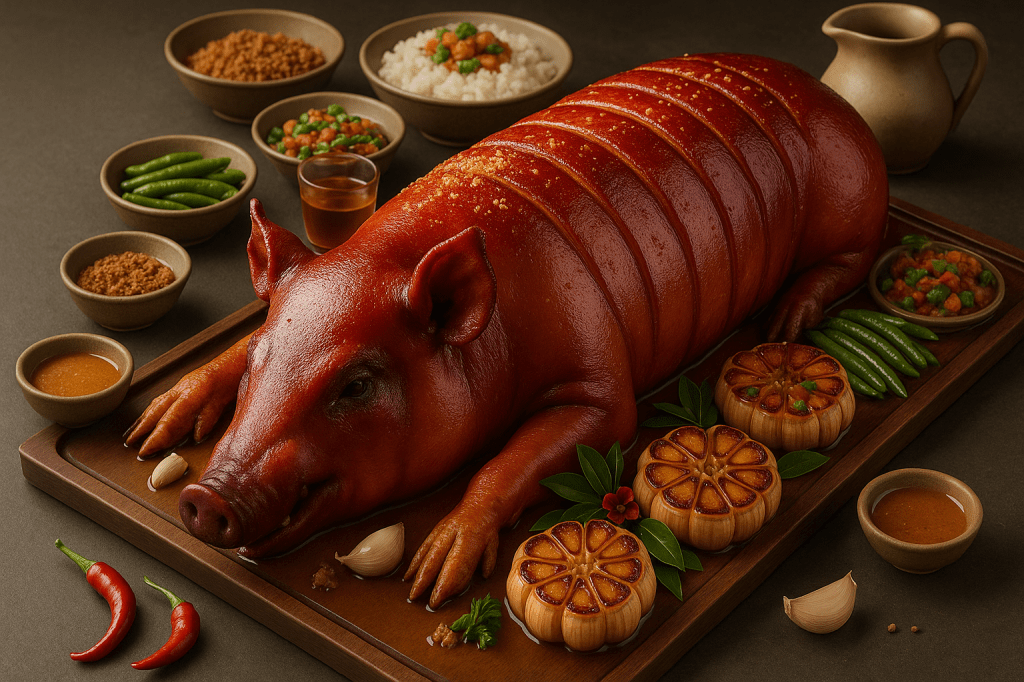
Lechon baboy is more than just food in the Philippines. It’s an experience, a tradition, a symbol of joy, and a taste of home. For many Filipinos, it’s not truly a celebration unless there’s a lechon sitting proudly at the center of the table. The golden, crispy skin and the juicy, tender meat beneath it are enough to bring people together, no matter their background or beliefs. It’s a dish that means something more than satisfying hunger—it means family, festivity, and Filipino identity.
Lechon baboy, simply put, is a whole pig roasted over charcoal for several hours. The pig is cleaned, seasoned inside and out, usually stuffed with lemongrass, garlic, onions, and other herbs, then slowly turned over an open flame until the skin becomes crisp and the meat is cooked to perfection. It takes time, patience, and a lot of effort to prepare, which is part of why it’s so special. You don’t just cook lechon on an ordinary day. It’s reserved for moments that matter—those rare occasions when people gather in numbers, when laughter is louder, and memories are made.
From weddings to birthdays, graduations to fiestas, lechon is always there, often stealing the spotlight from all other dishes. It doesn’t matter if the venue is a small backyard or a grand function hall—the presence of lechon instantly lifts the mood. Even before it’s carved, people are already circling around, cameras flashing, mouths watering. The crackle of the knife breaking through that perfectly roasted skin is like music to the ears of every Filipino who grew up around this tradition.
But lechon isn’t just about taste. It’s about what it represents. It brings people together in a way few other dishes can. In rural barangays and urban neighborhoods alike, the preparation of lechon is often a community effort. Someone preps the pig, another sets up the fire, someone else keeps the spit turning. Neighbors come to watch, to chat, to share a drink while waiting. Even the act of waiting becomes part of the celebration. It builds anticipation. It gives time for stories, for bonding, for laughter to fill the air long before the first bite is taken.
When the lechon is finally served, it’s never just about who gets the first slice or the crunchiest skin. It’s about sharing. Plates are passed, sauces are poured, and everyone gets a taste. There’s no room for division at a lechon table. Whether you’re rich or poor, young or old, everyone eats the same dish, and often from the same serving tray. There’s something deeply Filipino in that simple act of communal eating, and lechon baboy embodies it perfectly.
For those living abroad, lechon becomes even more than a dish. It turns into a symbol of home. Filipinos scattered around the world often speak of craving lechon when they miss the Philippines. It’s a longing that hits not just the stomach but the heart. No matter how good the food is in another country, there’s something about lechon that just can’t be replaced. It’s tied to childhood memories, to hometown fiestas, to loud family gatherings where everyone talks over each other but still understands one another.
Some overseas Filipinos go as far as organizing their own lechon feasts, even in places where it’s hard to find whole pigs or get permits for open-fire cooking. Others wait until they can fly home, with one eye already imagining the lechon that will be waiting at their welcome party. It’s not just about flavor—it’s about reconnecting with roots, with identity, with the people and the culture that shaped who they are.
Still, as much as we love lechon, it’s important to remember that it’s a treat meant for special occasions. It’s rich, fatty, and indulgent—exactly what makes it delicious, but also what makes it something to be enjoyed in moderation. Health professionals often warn against eating too much lechon, especially for those who have or are at risk of high blood pressure, high cholesterol, or heart problems. The crispy skin, often everyone’s favorite part, is packed with fat. The meat, while tasty, can also be heavy on the system if eaten too often.
There’s a saying that too much of a good thing can be bad, and that applies here. Part of what makes lechon special is that it’s rare. It’s not something you should have every week. Keeping it for those big celebrations not only makes it healthier for the body but keeps the spirit of the tradition alive. If we had lechon every day, would it still feel as magical?
Eating it occasionally allows us to treasure it more. It keeps the excitement alive. And when we do indulge, we can do so with more joy and less guilt. It’s about balance—enjoying life’s flavors, celebrating culture, but also taking care of ourselves and our families. Lechon teaches us that the best things take time, are meant to be shared, and are most meaningful when they’re part of something bigger than just eating.
In many ways, lechon baboy is the heart of Filipino culture. It’s food, yes, but also tradition, unity, and memory. It’s the laughter of cousins gathered around a long table, the warmth of coming home after years abroad, the pride of showing foreign friends a true taste of the Philippines. It’s the slow roast that fills the air with delicious smells, the crunch that brings smiles, and the shared meal that reminds us that we belong to something deeply rooted and beautifully shared.
So, the next time you see a lechon, take a moment to appreciate everything it represents. Take a bite, share a story, and remember—this isn’t just food. It’s home, it’s heritage, and it’s one crispy-skinned reminder of how food can unite a people, across oceans and generations.