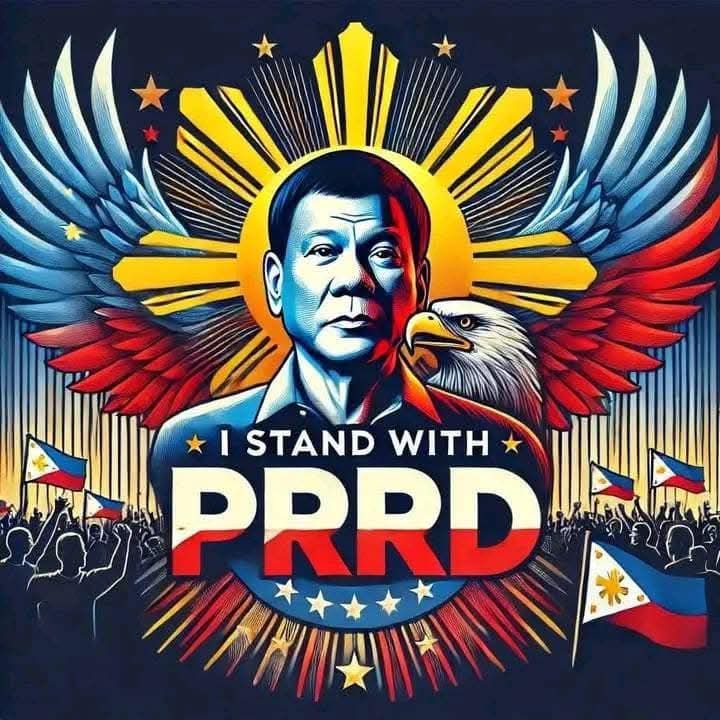
After reading about the birthday celebration of former Philippine President Rodrigo Roa Duterte, or PRRD as many call him, I couldn’t help but reflect on the whole situation. Seeing how people gathered outside his detention center, bringing food, music, and smiles, turning it into almost a picnic rally, made something very clear: sending him to The Hague did not break his spirit, and it certainly did not break the connection he has with his people. If anything, it seems to have only made his supporters stronger, louder, and even more united than before.
When the opposition pushed for his case to be brought internationally, maybe they thought it would weaken his image. Maybe they thought Filipinos would turn away from him, embarrassed or angry. But the exact opposite happened. It showed just how loved PRRD still is, not only in the Philippines but also among Filipinos living abroad. People everywhere are sending support messages, holding small gatherings, wearing shirts and carrying posters, and even putting up signs in their businesses and homes. The energy is powerful. It shows that the bond between PRRD and many Filipinos is built on something real and not easily shaken by political moves.
It’s hard to deny the reality now. Trust ratings of the opposition have plummeted sharply after this move. It’s not hard to understand why. Instead of making people doubt PRRD, it made people doubt the intentions of those who wanted him tried outside the country. Many ordinary Filipinos began asking questions: Why take him out of the Philippines? Why not let the Filipino justice system handle its own leaders? Was it really about justice, or was it about weakening someone who still holds massive influence and respect?
Respect for sovereignty is important, more than many realize. No matter who is in power, no matter who the leader is, there’s something deeply wrong about outsiders deciding what happens to your own. It feels like an insult to a nation’s ability to manage itself. Many Filipinos are proud people. They may disagree with their leaders at times, but they do not easily allow foreigners to dictate their country’s future. Sending PRRD to The Hague touched a nerve about national pride, about standing tall as a sovereign country that can solve its own problems without being treated like a child by more powerful international bodies.
The opposition underestimated that feeling. They underestimated how deep nationalism runs in the hearts of ordinary citizens. They underestimated how many people remember what PRRD stood for — strength, independence, fearlessness. Whether people agreed with every decision he made during his presidency or not, there is a common respect for the way he protected the country’s dignity, how he spoke for the “masa,” the common Filipino. Many people felt seen and heard during his time, especially those who felt ignored by elites for so long. That connection doesn’t break easily. No court or opposition campaign can erase that emotional bond.
Watching the videos of his birthday rally outside the detention center was emotional. It was not about sadness or defeat. It was about solidarity. It was about standing up and saying, “We still believe in you.” People laughing, eating, waving flags, wearing shirts with his image — it didn’t look like a scene of broken supporters. It looked like a celebration of loyalty and love. That’s something you cannot force or fake. It comes from real experience, real gratitude.
For many, PRRD represented a leader who wasn’t afraid to get his hands dirty if it meant protecting his people. He wasn’t polished like the traditional politicians. He spoke the language of the streets. Some hated him for it, but even more loved him for being real. For years, he stood up against powerful enemies, both local and international, without blinking. To his supporters, seeing him now in a foreign court feels wrong, unjust, and insulting. It doesn’t matter what the opposition says; the image that remains is of a man who fought for his people and now needs his people to fight for him.
The world watched, and maybe they didn’t understand. Maybe outsiders saw only the surface — the controversies, the headlines, the criticisms. But for Filipinos, especially those who lived through the changes he brought, there is another side to the story. Safer streets, stronger national pride, a feeling that the government was not just for the rich and powerful but also for the ordinary man. That kind of impact is not easily erased by charges or courtrooms.
It’s funny, in a way, how the opposition didn’t seem to predict this reaction. They thought the image of PRRD in detention would cause embarrassment. But instead, it caused anger, sadness, and, most of all, determination among his supporters. People are saying, “If they can do this to him, what else will they do to us?” It created fear, but also strength. It made many realize that politics isn’t just about policies and programs — it’s about identity, about choosing who you trust to represent your hopes and dreams.
Looking at it now, it’s clear that sending PRRD to The Hague created more problems for the opposition than it solved. Trust ratings don’t lie. Public opinion doesn’t lie. Trying to destroy a person’s image only strengthened the emotional loyalty many feel towards him. And that loyalty is not just a passing thing; it is rooted in years of leadership that, for many, changed their lives in real ways.
It’s also a lesson for politicians everywhere: never underestimate the love of the people for someone who they believe fought for them. Never underestimate the deep connection between a leader and the masses, especially when that leader made them feel heard. You can argue policies all day, you can point fingers, you can write long accusations — but at the end of the day, the people’s hearts are not so easily swayed by political games.
Of course, not everyone supports PRRD. There are critics, there are people who disagree, and that is their right. No leader will ever be loved by absolutely everyone. But the opposition made a mistake in thinking that making him look guilty in international eyes would make his people turn against him. It showed a deep misunderstanding of Filipino pride, of the value of sovereignty, and of the emotional bond that PRRD built over the years.
Respecting a country’s sovereignty is not just about law and politics; it’s about respecting its people’s right to choose, to believe, to love their leaders, flaws and all. No country wants to be treated like it cannot handle its own affairs. Filipinos are a proud people, and any attempt to humiliate them by humiliating their leaders will almost always backfire. That’s exactly what happened here.
Instead of weakening PRRD’s base, it awakened it. Instead of isolating him, it surrounded him with even more visible, powerful support. Instead of destroying his image, it reminded people why they admired him in the first place. That’s something the opposition clearly did not expect.
Seeing all the support from Pinoys all over the world is moving. From small communities in Europe, to groups in the Middle East, to gatherings in the U.S. and Canada — it shows that love for PRRD is not confined within the Philippine borders. It crossed oceans. It crossed languages. It crossed political divisions. It reminds everyone that true leadership is not about titles or courts; it’s about the connection you leave behind with the people you serve.
At the end of the day, sending PRRD to The Hague will be remembered not as a triumph of justice by the opposition, but as a mistake that only fueled the fire of loyalty and love among the people. It will be remembered as a miscalculation that woke up a silent majority who now feel even more determined to stand by their leader.
History will decide many things, but one thing is already clear: PRRD’s place in the hearts of many Filipinos is secure. No courtroom can erase it. No opposition campaign can destroy it. His story is now part of the fabric of Filipino identity — complicated, controversial maybe, but real, strong, and enduring.
And in the end, that’s what truly matters.