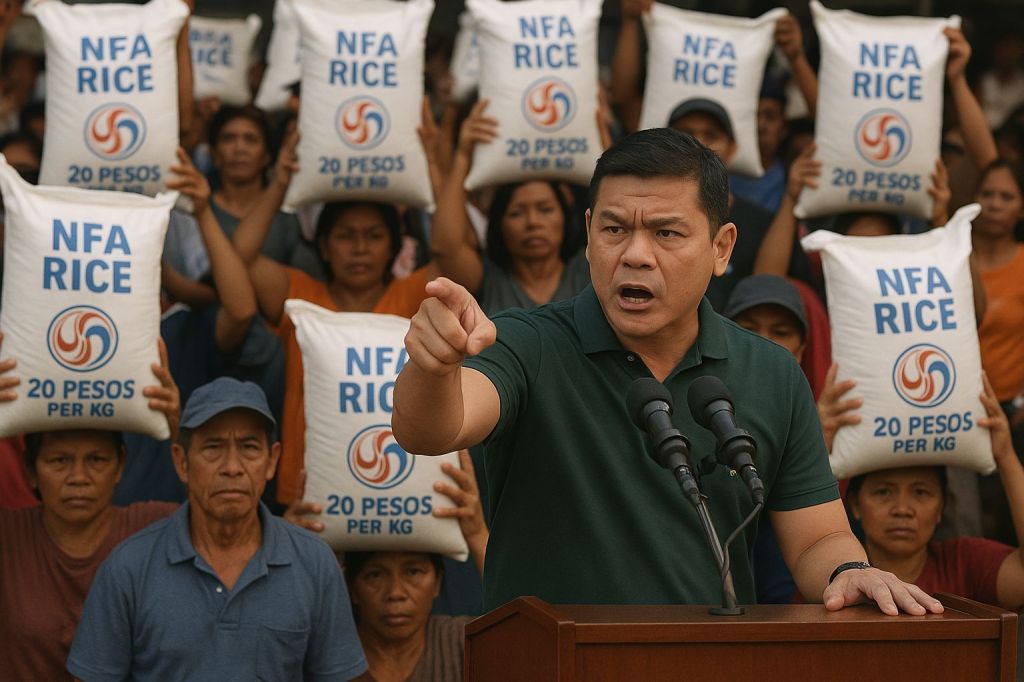
Lately, I can’t help but notice how desperate the Philippine government looks with this sudden move to offer rice at 20 pesos per kilo, just a few weeks before the May elections. Strangely, it’s not a nationwide offer. It’s only happening in Visayas, where it seems like they’re struggling to gain support. You don’t have to be a political expert to see what’s going on here. When something smells fishy, it probably is. And right now, this smells like the strongest scent of vote buying — just done in a way that they think they can defend legally.
I heard Congressman Paolo Duterte himself express his opposition to this move, calling it out for what it truly is — a legal form of vote-buying. He made it clear that while the government may try to justify it by saying they are “helping” the people by lowering the price of rice, the timing and selective targeting of the Visayas tell a different story. If this initiative were genuinely meant to help the people, it should have been rolled out long before the election season, and it should have been offered to everyone, not just a specific region. The fact that it is happening now and only in certain areas raises too many questions about the true motivations behind it.
What’s even worse is the quality of the rice being offered. From what I hear and what many are posting online, the rice is almost unedible. People are calling it “pakabuhi” rice — something you eat just to survive, but not something you would actually choose if you had any other option. It’s dry, old, and has a weird smell when cooked. Some say it’s like eating rubbery grains. It’s sad to think that the people who need help the most are being given the lowest quality food, all so that certain politicians can parade around pretending to care.
This isn’t real compassion. This isn’t real public service. This is a show, a desperate attempt to win votes from a region that they know is already slipping away from them. And the worst part? Some might actually fall for it, not because they believe in the people offering the rice, but because survival sometimes leaves you with no choice. When you are hungry, when your family is hungry, and someone offers you even bad rice for cheap, you might just accept it — not out of gratitude, but out of necessity.
It’s insulting, really. It shows what they think of the Visayan people. That they can be easily bought with a few kilos of cheap, bad rice. That they don’t deserve better. That their votes are something to be purchased with crumbs instead of earned with real governance, real programs, real solutions. They are underestimating the Visayans’ intelligence, pride, and memory. People remember who was there for them when they weren’t desperate for votes. People remember who only shows up when they need something in return.
The fact that this rice stunt is happening now, right before the elections, shows just how afraid they are of losing. If they were confident, they wouldn’t need to scramble like this. They wouldn’t have to suddenly roll out a half-baked program offering rice that even pigs might hesitate to eat. Real leadership plans ahead. Real leadership doesn’t use food as bait. This is not leadership. This is survival mode for politicians who realize they no longer have the love and trust of the people.
It also exposes a bigger problem with our system. That vote buying — legal or not — is still the most effective weapon for many politicians. They don’t believe in debates. They don’t believe in explaining platforms. They believe in handing out goods and money and trusting that hunger and poverty will make people forget about their incompetence and corruption. And sadly, sometimes it works. Not because the people are stupid, but because poverty leaves them no room for idealism.
But I still have faith that the people, especially the Visayans, can see through this. No one who truly respects you will hand you spoiled food and expect your loyalty in return. No one who genuinely wants to serve you will wait until election season to suddenly pretend to care. The real heroes are the ones who work quietly and consistently, not the ones who show up with a grand circus every three years when their power is threatened.
The sad thing is, after the election, all this cheap rice will surely disappear. Mark my words. The price will go back up, and those responsible will shrug and say it was just a temporary program. The NFA warehouses will once again be full of inedible stock, and no one will be held accountable. Meanwhile, the people who were lured by the false promise will be left with nothing but regret and empty promises.
It’s frustrating because it doesn’t have to be this way. If only our leaders focused on real agricultural reform, on real support for farmers, on fixing the broken supply chain, rice prices could naturally go down to 20 pesos per kilo — good quality rice, not this pakabuhi type. But that would take real work, real dedication, and not just election-time gimmicks. It would mean caring about the country not just every three years, but every single day.
This 20-peso rice offer is not generosity. It’s not progress. It’s not reform. It’s desperation disguised as charity. It’s a thinly veiled attempt to cling to power at any cost, even if it means insulting the very people they claim to serve. I just hope more people realize that our dignity, our future, and our votes are worth more than a few kilos of bad rice.
Elections are a time to think bigger, not to settle for less. It’s about demanding more, expecting more, and refusing to be fooled by cheap tricks. We deserve real leaders, not ones who think throwing us leftovers is enough to earn our trust. And if we let them succeed with these kinds of tactics, we are only encouraging them to keep treating us this way.
This coming May, I hope we all remember: Our future is not for sale. Not for 20 pesos, not for anything.