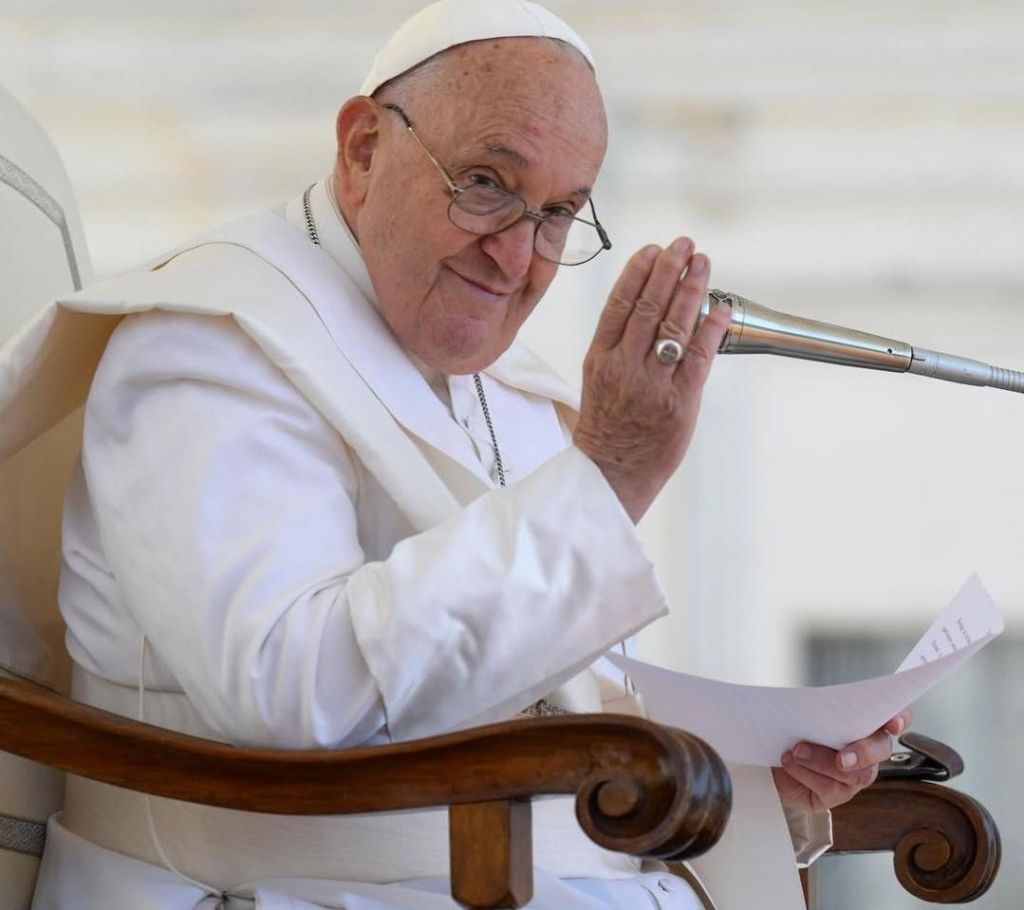
Today, with a heavy heart, I find myself reflecting on the life and passing of Pope Francis. The news of his death has traveled across the world like a wave of sorrow, touching the hearts of millions who admired, respected, and loved him deeply. He was not just a religious leader; he was a true shepherd, a man who carried the burdens of the world’s sorrows on his shoulders with grace and an open heart. As I sit here, I offer my humble prayers for his soul. May he rest in eternal peace, embraced by the love of the God he served so faithfully.
I hope with all my heart that Pope Francis’s soul finds the highest joy in heaven. He spent his earthly days striving to bring comfort to the suffering, hope to the hopeless, and light to those who walked in darkness. If there is any justice in this universe, surely his soul will now be wrapped in the eternal peace he so often spoke of. His life was a testament to goodness, to simplicity, and to mercy, and I believe he now sees, face to face, the love he spent a lifetime preaching about.
Pope Francis, born Jorge Mario Bergoglio, lived with extraordinary humility. From the very moment he was elected Pope, he chose the path of simplicity over grandeur. He rejected the lavish papal apartments, choosing instead a modest residence in the Vatican guesthouse. This was not a calculated act to win affection; it was simply who he was. He led by example, teaching us that leadership means service, not privilege. In a world so often dazzled by power and wealth, Pope Francis stood as a beacon of humility.
One of the most beautiful qualities about him was his deep concern for the poor. He never allowed the world to forget the faces of the homeless, the hungry, the migrants, and the marginalized. He once said, “You pray for the hungry. Then you feed them. That’s how prayer works.” This simple, yet profound statement captured his entire philosophy: faith is not a private matter; it is action. It is service. His life was a living sermon that loving God meant loving His people, especially the forgotten ones.
He carried out countless good deeds, though he never sought attention for them. He would often visit the sick, the prisoners, the disabled, embracing them with tenderness. His open-heartedness toward all people, regardless of their background or status, was revolutionary in its quiet power. When he washed the feet of refugees — Muslims, Christians, and non-believers alike — he showed the world that compassion knows no borders. In those moments, he wasn’t just acting out a ritual; he was living the Gospel in its rawest, most beautiful form.
Beyond his acts, Pope Francis was a fountain of wisdom. His words were often simple but carried deep meaning. One of his most famous quotes is, “Who am I to judge?” This question, spoken in a moment of sincerity, reflected his deep understanding of mercy. It reminded the world that judgment is God’s, not ours. It taught us to approach others with humility, to replace condemnation with compassion, and to seek understanding instead of division.
Another quote that stands tall among his teachings is, “A little bit of mercy makes the world less cold and more just.” Mercy, for Pope Francis, was not weakness. It was strength, courage, and wisdom combined. He believed that mercy had the power to heal the deepest wounds, not just between individuals but across nations. His entire papacy was infused with this spirit of mercy — from reforming the Church’s approach to annulments, to opening the Holy Doors during the Year of Mercy, inviting all to step into the limitless forgiveness of God.
Pope Francis also had a way of encouraging people not to lose hope, even in a dark world. He once said, “Let us not allow ourselves to be robbed of hope.” In times of political unrest, wars, pandemics, and economic despair, he urged us all to cling to hope like a lifeline. His voice was a steady hand, reminding us that despair is never the end of the story. There is always reason to hope, because God is always present, even when the night seems endless.
His commitment to caring for the environment was another mark of his legacy. In his groundbreaking encyclical Laudato Si’, he called the world to a “care for our common home.” He spoke of the earth as a gift, not a possession. His love for nature was not an isolated sentiment; it was connected to his profound respect for life itself. He saw the cries of the earth and the cries of the poor as one and the same. By urging humanity to change its ways, he pointed toward a more just, more compassionate future.
Pope Francis also had a special place in his heart for young people. He believed that the youth were not just the future of the Church but its present. He encouraged them to “make a mess” — to shake things up, to dream big, to not be afraid of causing change. He wanted them to challenge injustice, to build bridges where there were walls, and to trust that their energy and dreams could renew the world. His love for the youth was not a political move; it was a deep belief in their potential to lead with love, courage, and authenticity.
He had an ability to make complex theological truths accessible to ordinary people. He spoke plainly, from the heart, without pretense or scholarly pride. “The Lord never tires of forgiving. It is we who tire of asking for forgiveness,” he would say, smiling gently. His words felt like an open door for anyone carrying the weight of guilt. Through his gentle speech, he made it clear that no one needed to feel too broken to come home to God. His way of speaking was never judgmental; it was always tender, like a father reassuring his child.
One of the most beautiful parts of his vision was how he saw the Church — not as an exclusive club for the perfect, but as a “field hospital” for the wounded. He saw faith not as a badge of pride but as a source of healing. His vision invited everyone, saints and sinners alike, to encounter the mercy of God. He constantly encouraged the Church to go out into the streets, to meet people where they are, to love first and worry about rules later. In doing so, he restored for many the simple, stunning beauty of what it means to be part of a living, breathing faith community.
One of the lessons he returned to often was the dignity of every human being, especially the vulnerable. He once said, “The measure of the greatness of a society is found in the way it treats those most in need.” These words were not just moral advice; they were a call to action. Pope Francis constantly urged the world to look beyond personal comfort and profits, to recognize the sacredness in the lives of the poor, the marginalized, and the forgotten. His voice was often challenging for the powerful but comforting for the powerless, a reminder that a truly just society lifts up its weakest members.
As I think about his passing, I also think about the seeds he planted. His legacy is not just in the changes he made or the statements he issued; it’s in the hearts he touched, the lives he changed by simply being who he was. Millions across the globe found in him a father, a friend, a guide. Even those who were not Catholic often found comfort in his words and actions. He showed that love and goodness speak a universal language.
There are other quotes that continue to ring in my ears, like soft bells in the soul. “Rivers do not drink their own water; trees do not eat their own fruit. The sun does not shine on itself… Living for others is a rule of nature.” With these words, Pope Francis invited us to a life of generosity, to a life poured out for the sake of others. He reminded us that we are at our best when we live not for ourselves, but for those around us.
I imagine Pope Francis now, free from the sorrows of this world, basking in the light he so faithfully pointed us toward. I hope he knows, somehow, how much he was loved. I hope he knows that he changed lives, that he rekindled faith where it had gone cold, that he made the Church feel a little more like a family, a little more like home.
The world feels a little emptier without him today, but also fuller — fuller of the goodness he left behind. His death is not an end, but a beginning. It’s a call for each of us to carry on the spirit he embodied: the spirit of mercy, humility, justice, and hope.
As I end these thoughts, I whisper a final prayer: Thank you, Pope Francis, for your gentle courage, your unwavering kindness, and your bold faith. May your soul, so full of grace, now rest in the everlasting embrace of God. May your example continue to inspire all of us to live not for ourselves, but for others. And may we, in honoring your memory, become better versions of ourselves — more merciful, more hopeful, more loving.
In your life, you taught us to live with open hands and open hearts. In your death, you teach us to trust that love never ends. Rest in peace, dear Pope Francis. The world is better for having known you, and heaven, surely, is rejoicing to welcome you home.