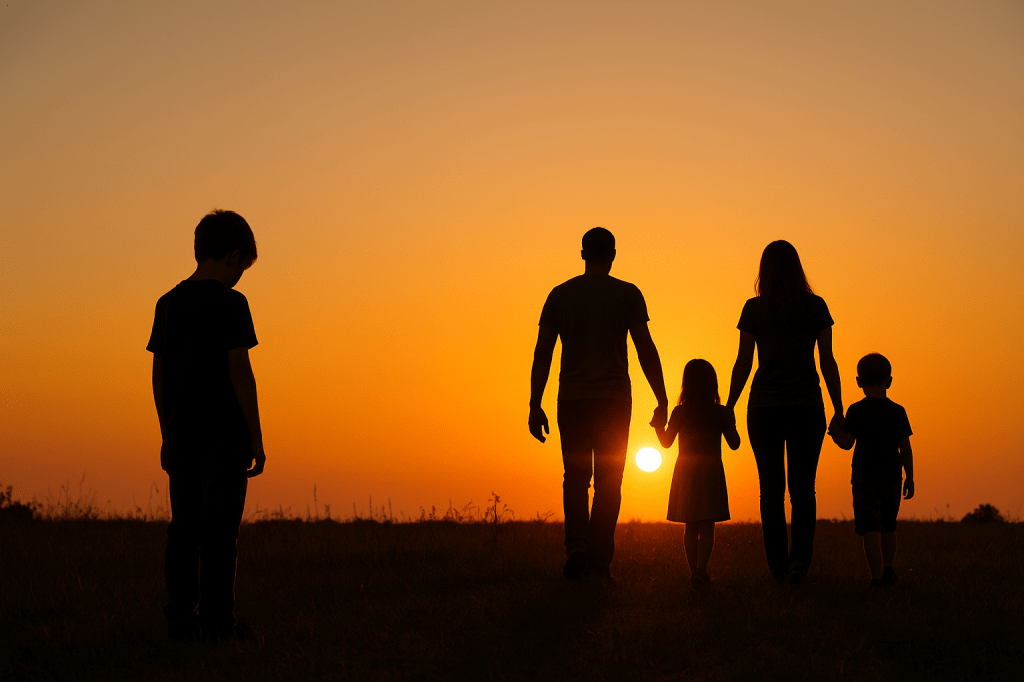
Not every child is born into a home filled with love, support, and comfort. Some children come into the world already carrying the weight of their parents’ hardships, mistakes, or absence. These children grow up too fast, forced to understand pain before they ever get to feel joy fully. Their days are often shaped by struggle—not just the kind that comes with life, but the kind that starts right at home.
Some children grow up in households where their cries are unheard, where their needs are ignored, and where their dreams are dismissed before they even begin. Their parents, for many reasons—poverty, trauma, addiction, immaturity, or simply neglect—fail to provide the emotional or physical support a child needs to feel safe and valued. In such families, love may be conditional, inconsistent, or entirely missing. The result is a child who grows up doubting their worth, always searching for validation in a world that doesn’t owe them anything, and often doesn’t give much either.
These children learn quickly that not all homes are safe, and not all parents are capable. They witness fights, feel the sting of cold shoulders, or perhaps the bruises of more direct harm. Sometimes, they become caregivers themselves, looking after younger siblings or even their own parents. Their childhood is sacrificed, stolen before it could be enjoyed. And yet, many of these children survive. Some of them even thrive later in life, using the pain as fuel. But not all make it through. Some carry the scars forever, hiding behind masks of strength or falling into the same cycles that hurt them.
On the other hand, there are children born into families that seem blessed from the start. Their parents are present—not just physically, but emotionally. These parents listen. They teach, they guide, they protect, and they invest their time, money, and love into raising good human beings. These children know security. They don’t have to worry about their next meal or whether someone will be there to pick them up after school. They grow up with support, opportunity, and a sense of being deeply wanted. In such families, children are told that their voices matter, their feelings count, and their futures are worth investing in.
But even here, the outcome isn’t guaranteed. Some children, despite all the love and resources given to them, take a different path. They ignore advice, disrespect the people who raised them, and waste the opportunities laid at their feet. There are parents who work tirelessly—sometimes day and night—sacrificing their own happiness, rest, and health, just to give their kids everything they didn’t have. They pour their savings into education, pay for lessons, holidays, gadgets, and more, only to watch their children drift into bad company, entitlement, or laziness. It’s not always easy to understand why this happens. Is it rebellion? A desire to find their own identity? Or just the belief that what’s given will always be there?
It can break a parent’s heart to see their child take the path of destruction despite being raised in a home full of care. It feels like betrayal—not of rules, but of love. Parents who give so much often do it with a silent hope: that their children will make it all worth it. That they’ll be proud, kind, respectful, and responsible. That they’ll build on the foundation given to them. So when that doesn’t happen, it doesn’t just disappoint—it wounds.
Then there are children who have the worst of both worlds. They grow up without love, without guidance, and without financial support. These children are left to navigate life with nothing but their own instincts. They are the forgotten ones, slipping through cracks in the system and often in society’s concern. But even among them, some rise. They claw their way up with determination most people never need to find. They hustle, they learn, and they grow. And when they become parents themselves, they sometimes choose to break the cycle. To be better than what they had. That takes a special kind of strength—the strength to give what you never received.
On the opposite end are children who have both love and support and choose to honor it. They grow up respecting the effort behind every meal, every gift, every bedtime story. They understand that their privileges come from sacrifice. These children may stumble, as all humans do, but they don’t forget where they come from. They make mistakes, yes, but they own them. And more importantly, they try to do better. Their gratitude is not just in words, but in how they live. These are the kids who make their parents proud, not just by succeeding, but by being decent human beings.
And yes, sometimes, it’s the parents who fail. Some parents expect obedience without explanation. They confuse control with care. They want their children to live out dreams that aren’t theirs, pushing them into paths they never chose. In these situations, children may grow up feeling like tools, not individuals. They may have the house, the meals, the toys, but not the freedom to be themselves. And freedom, after all, is a kind of love. When that’s missing, even wealth feels hollow.
Some parents were never meant to be parents. They see children as burdens, accidents, or mistakes. Their love is transactional: good behavior earns affection; bad behavior earns punishment, silence, or worse. Children raised in such homes often carry a deep loneliness, even when surrounded by people. It’s a loneliness born of being unseen.
And yet, life isn’t black and white. Sometimes, bad parents try to become better. Sometimes, rebellious children grow into kind adults. Sometimes, healing is possible. People change. Time teaches. But not always. And not for everyone.
It’s easy to judge from the outside. To look at a spoiled teen and say, “Their parents must be too soft.” Or to see a struggling child and think, “Where are their parents?” But family stories are rarely simple. What looks like failure might be survival. What seems like privilege might come with pressure. What appears like rebellion might be pain in disguise.
There are also parents who have given everything, not in money, but in love—and still lose their children to choices they can’t control. Addiction, peer pressure, mental health struggles, or the sheer complexity of growing up can pull kids into places parents can’t reach. In such cases, blaming the parents is easy. But pain doesn’t always have a cause. And love doesn’t always win in the short term.
The truth is: there are lucky kids and unlucky kids. Lucky parents and unlucky parents. But luck isn’t just about money. It’s about love, presence, effort, and understanding. A poor parent can be rich in love. A rich parent can be bankrupt in care. A child raised in a small home with hugs and laughter can be luckier than one in a mansion filled with silence.
Some children inherit more than wealth—they inherit wounds. Some parents pass down more than rules—they pass down fear. But some families manage to rewrite the script. They fight for each other, grow together, and forgive. And that’s the real miracle—not being lucky, but choosing to love better.
At the end of the day, being a parent is not just a role—it’s a responsibility. And being a child is not just a phase—it’s a foundation. Both sides have power. Both sides can hurt or heal. And while no family is perfect, every family has the chance, however small, to try again.
That’s what makes family both beautiful and heartbreaking. We don’t choose where we come from. But sometimes, we can choose what we become. And in those choices—of kindness, of gratitude, of understanding—we find the pieces of what it means to be truly lucky.