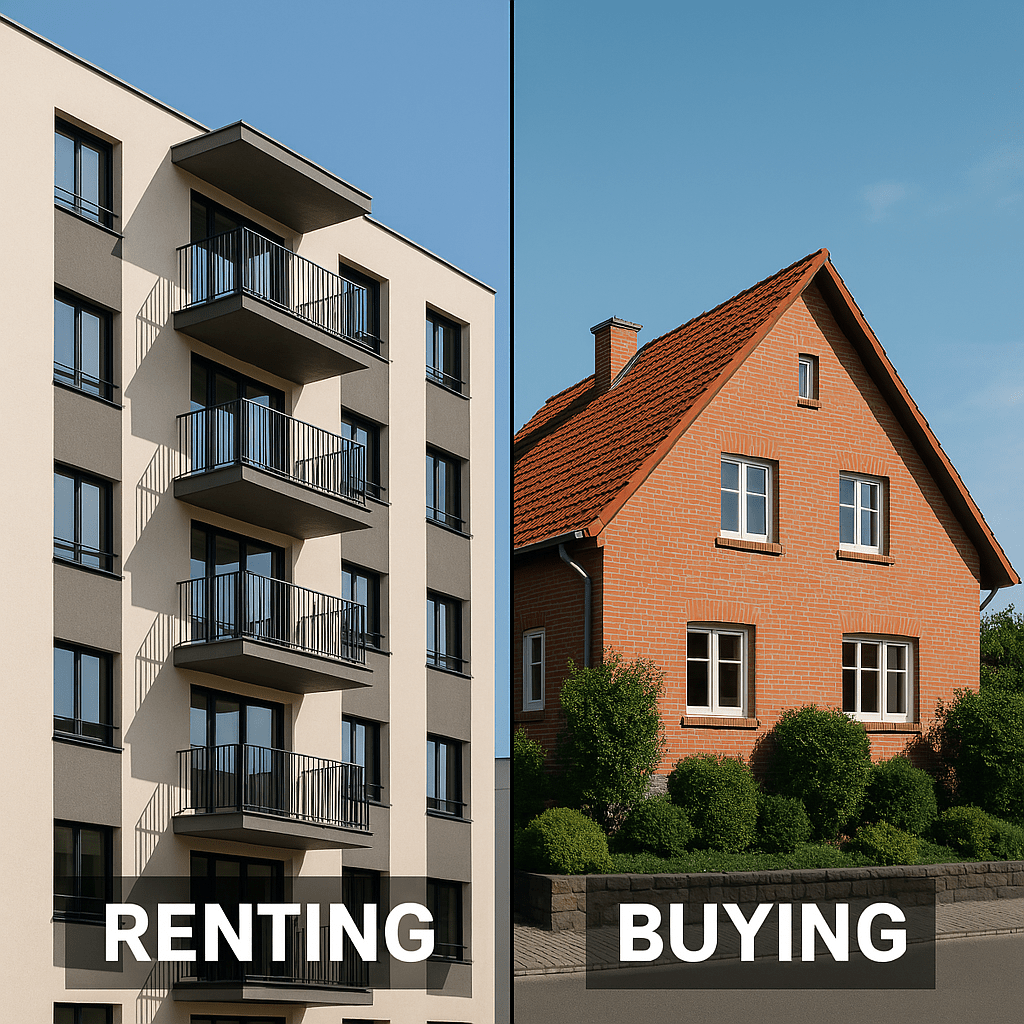
The decision to rent or buy a home is one of the most important financial choices a person can make. In Germany, this question is especially relevant because the housing culture is quite different from many other countries. While in places like the United States or the UK buying a home is considered a key life milestone, in Germany, renting is not only common—it’s the norm. But does that mean renting is better? Or is buying still the smarter long-term move?
Renting a home in Germany is easy and very tenant-friendly. The rental market is regulated in a way that favors stability and fairness. Long-term rental contracts are typical, and landlords cannot evict tenants easily or raise rents excessively. Most leases are open-ended, and tenants have the right to stay in the property as long as they want, as long as they meet the terms of the lease. Because of this legal protection, renting is not seen as temporary or insecure. Many Germans rent their whole lives and do so comfortably.
Renting also offers unmatched flexibility. If your job changes, if you want to live in another city, or if your family grows or shrinks, it’s much easier to adjust when you rent. You don’t need to sell property or wait for the right time to buy again. You can move without stress, and without worrying about the real estate market. For students, professionals with mobile careers, and people who simply prefer variety or change, renting allows them to live their lives with fewer commitments and risks.
Another benefit of renting is that many of the costs of housing are handled by the landlord. When something breaks—like a boiler, a window, or a roof—it’s usually not your responsibility to repair it. Property taxes, building insurance, and renovation costs are not your concern. This keeps your expenses more predictable and often lower in the short term. Renters also don’t need to save a large sum of money to get started. A deposit of two to three months’ rent is usually enough.
Still, renting has its downsides. First, no matter how many years you pay rent, you don’t own anything at the end. That money is essentially gone. You are paying to live in a place, but you’re not building equity. Over decades, that can mean you’ve spent hundreds of thousands of euros with nothing to show for it. That’s money that could have been used to invest in property, which might grow in value. If property prices rise in your area, renters see no benefit, while owners build wealth.
There’s also the issue of customization and control. Renters are limited in how much they can change their homes. Renovations usually need landlord approval. Painting walls, changing flooring, or upgrading the kitchen may not be allowed. And even with strong tenant protections, there can be some uncertainty—if the landlord wants to sell the building, convert it into condos, or move in themselves, tenants can eventually be forced to leave. Though rare, this does happen.
Now let’s talk about buying. Buying a home in Germany has become more popular in recent years, especially as interest rates dropped and rental prices in cities went up. When you buy a property, every payment you make is a step toward owning it fully. Instead of just paying to live somewhere, you’re investing in something that can increase in value. When the home is paid off, you live rent-free, except for maintenance costs, taxes, and insurance.
Buying also gives you full control. You can renovate your home however you like. Add a room, change the layout, install a new kitchen—there’s freedom in ownership. And if the market goes up, the value of your home rises too. If you eventually sell, you could earn a profit. Homes in Germany tend to hold their value well, especially in stable areas. In many cases, mortgage payments can be the same or even less than rent, especially over time as rent rises and your fixed mortgage stays the same.
But buying comes with significant challenges. The biggest one is the upfront cost. In Germany, you typically need at least 20–30% of the home’s value in savings to qualify for a mortgage with good terms. Then there are additional costs: property transfer tax (which varies by state but is usually between 3.5–6.5%), notary fees, legal fees, and sometimes real estate agent commissions. These extra costs can total up to 10–15% of the purchase price. So buying a €400,000 home might require close to €100,000 in cash just to get started.
Another major downside is the risk and responsibility. When you buy a home, you’re responsible for everything—repairs, maintenance, and unexpected costs. If the roof leaks, the heating system fails, or the foundation has issues, you pay for it. You also have to handle insurance, property tax, and service charges. Owning a home ties you down, both financially and emotionally. Selling a home can take time, especially in less desirable locations, and property values can drop, meaning you might lose money if you need to sell quickly.
If your job situation changes, or if you want to move, owning a home can make things harder. Renting it out is possible but not always easy, and becoming a landlord comes with its own complications. So while buying gives long-term security and investment potential, it also limits your freedom and carries more financial risk in the short term.
Let’s also talk about savings. Which option actually helps you save more money over time? It depends on how long you stay in one place. If you plan to stay in a city or town for less than 5–7 years, renting is usually cheaper overall. The upfront buying costs are so high that they don’t pay off unless you remain in the home for many years. But if you stay in the home for a decade or more, buying can become the better financial decision. Mortgage payments stay relatively stable, while rents keep rising. And once the mortgage is paid off, you stop paying for housing altogether—something renters never get.
However, there’s a smart argument in favor of renting, too: if you invest the money you would have spent on a down payment and home maintenance, and those investments perform well, you can build wealth without owning property. But that takes discipline, good knowledge of investing, and a strong financial strategy—things many people don’t have or don’t want to manage themselves.
Location also plays a big role. In major cities like Berlin, Munich, Hamburg, and Frankfurt, buying property is extremely expensive. High prices and high taxes make it hard for many people to afford a home. In these areas, renting often makes more financial sense. But in smaller cities or rural areas, where homes are more affordable and rents are still rising, buying becomes more attractive.
Also, in Germany, there are no significant tax breaks for homeowners like in some other countries. You don’t get to deduct mortgage interest or property taxes unless the home is rented out. So buying doesn’t come with big tax advantages unless you’re an investor. For many people, that tips the balance back toward renting, at least for now.
In the end, the better option depends on your personal situation. If you value flexibility, low responsibility, and mobility, renting is likely the better choice. It’s easier to manage, requires less money upfront, and is legally safe in Germany. If you’re settled, financially stable, and ready to stay put for at least 10 years, buying might save you more in the long run and help you build wealth through property ownership.
Both choices have pros and cons. There’s no one-size-fits-all answer. But one thing is clear: the smartest choice is the one that fits your goals, your finances, and your life—not just the numbers on paper.