Responsibility is a big word, but it starts small. With children, especially toddlers, it begins in the simplest of places—like handing over a tiny chore that seems like play. For my toddler daughter, helping around the house is more than just participation—it’s a game, a joy, and something she does with pride. The way she responds to “Let’s wash” or “Let’s clean” shows me that responsibility can be planted early, gently, and joyfully. And the results are beautiful.
When I say, “Let’s wash,” she doesn’t need to ask what I mean. She immediately starts gathering her dirty clothes, walking to the laundry machine with her small arms full, treating it like an important mission. She’s so involved, so focused, and always ready. I don’t have to convince her, bribe her, or repeat myself. She just does it. It’s a little moment that might seem simple, but it’s packed with meaning. It shows that she understands what needs to be done—and she wants to do it.
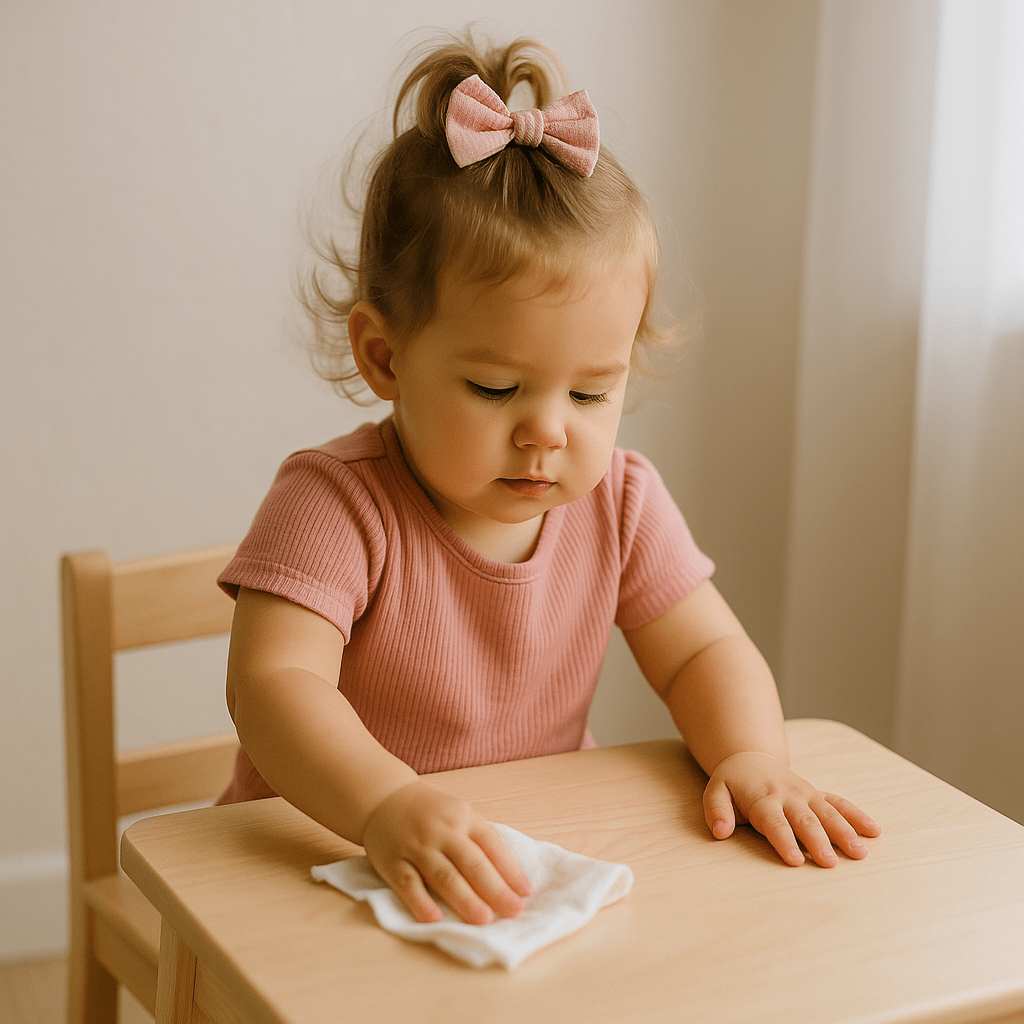
The same thing happens when I say, “Let’s clean.” She goes straight for the broom or grabs a cloth for wiping. There’s no hesitation. Sometimes I’ll catch her wiping her table, other times she’s sweeping imaginary crumbs from the floor. She doesn’t just copy my actions—she mimics my mindset. She sees care in what I do, so she puts care in what she does. That’s the beginning of responsibility: caring for your space, your things, and your actions.
There’s no pressure, no checklist. I don’t give her tasks like a manager would an employee. I invite her to help like a teammate. That makes all the difference. Children are observant and responsive to tone. If they feel like they’re being ordered, they may resist. But when we create an atmosphere of fun and togetherness, they jump in with enthusiasm. Chores, when introduced as shared moments, become memories. They feel good doing them, and that feeling becomes tied to the task itself.
At this age, everything is learning. Toddlers are little sponges, picking up not just what we say but how we say it. If I sigh while folding clothes, she might think laundry is boring. But if I hum a tune and smile while sorting socks, she senses that this is a happy time. She mirrors not just the action, but the attitude. That’s why I try to keep chores light and playful. A cheerful “Let’s go!” can open the door to joyfully learned habits.
I never expected her to love helping with chores, but she truly enjoys it. There’s no dragging of feet, no need for rewards. The satisfaction is in the doing. She loves being included. That’s something I’ve realized about young children—they crave involvement. They want to be where you are, doing what you’re doing. When you let them in, they rise to the occasion. They feel big, capable, proud. That confidence builds over time.
By letting her help, I’m showing her that her contribution matters. Even if it’s a small thing—like placing socks in the washing machine or wiping the corner of a table—she’s learning the rhythm of responsibility. It’s not about perfection. Sometimes the socks miss the machine. Sometimes the cloth leaves smudges. That’s okay. The point isn’t to have a spotless house—it’s to raise a child who understands that helping is part of living together.
This early involvement also builds a sense of ownership. When kids participate in caring for the home, they begin to feel that the space belongs to them too. They treat it with more respect. They put things away more often. They notice messes and try to fix them. And all of this happens naturally, without lectures or punishment. It comes from that early joy of being part of something meaningful.
As a parent, it’s tempting to do everything yourself. Letting a toddler help can slow things down. Sometimes it means more mess, not less. But when you zoom out and look at the bigger picture, those small, slow moments are the building blocks of future responsibility. You’re planting seeds. They may not grow perfectly straight or bloom overnight, but they will root deeply and grow in time.
I’ve found that consistency matters more than intensity. It’s not about having a chore chart or strict schedule. It’s about making helping a regular, expected part of everyday life. If your child hears “Let’s do this together” often enough, they start to believe that this is just what we do. There’s no need for nagging or rewards. The reward is in the shared experience.
Sometimes, people think chores are for older kids, or they fear that making young children help will take away their childhood. But chores don’t need to be a burden. When introduced gently and joyfully, they are just another way to learn and play. For my daughter, helping with laundry is as much fun as playing with blocks. She’s not losing anything—she’s gaining confidence and learning life skills.
Responsibility doesn’t come all at once. It’s a slow layering of small habits and positive reinforcement. When we notice and praise effort instead of just results, we encourage them to keep going. I always tell her, “You did a great job helping today!” even if her wiping missed a few spots. She beams with pride, and that feeling stays with her. That emotional connection matters more than a clean surface.
Letting kids help also builds trust. I’m showing her that I believe she can do it. And because I believe it, she believes it too. That belief becomes a self-fulfilling prophecy. Children live up to what we expect of them, especially when those expectations come with love and support. We don’t need to push—we just need to invite, guide, and cheer them on.
There are other hidden lessons too. Chores teach order, patience, and problem-solving. She learns that things take time. That effort is part of life. That even if something spills or breaks, we can clean it up and try again. These are powerful ideas, wrapped in the simplest tasks. Washing a shirt becomes a lesson in care. Putting away toys becomes a lesson in responsibility for personal space.
The process also strengthens our bond. Doing things together—no matter how small—creates moments of connection. These chores become rituals. Shared laughter while folding towels. A high five after wiping the table. These are small things, but they build something big: a sense of togetherness. A sense of teamwork. A sense that she belongs, not just in our home, but in its upkeep.
Over time, this foundation will grow. As she gets older, the tasks will change. She might start helping with setting the table, watering plants, or feeding a pet. But because she started early, she won’t see these as new responsibilities. She’ll see them as a natural part of life. She’ll know that contributing to a home isn’t a chore—it’s a privilege. It means she’s capable, trusted, and valued.
Some days, she’s more enthusiastic than others. That’s normal. Just like adults, kids have moods. If she’s not in the mood to help, I don’t push. I simply invite her again another time. The goal is not to make chores a fight—it’s to make them a familiar part of the day. Over time, they blend into the background, becoming second nature.
I also let her take the lead sometimes. If she grabs the broom without being asked, I follow her lead and praise the effort. If she invents her own little cleaning game, I join in. These moments matter. They tell her that her initiative is noticed and appreciated. That makes her want to do it again.
Responsibility learned through chores isn’t about getting things done faster or better. It’s about raising a child who feels connected to her environment and confident in her ability to care for it. It’s about helping her see that she has the power to make a difference, even in small ways.
There’s something magical about watching a child grow into that mindset. To see her feel proud after helping. To see her eyes light up when she completes a task. It’s not just about having a tidy home—it’s about having a child who feels capable, trusted, and included.
It starts with simple words. “Let’s wash.” “Let’s clean.” And it grows with patience, praise, and presence. You don’t need a system or a book or a long plan. You just need to welcome your child into the rhythm of everyday life. Let them help. Let them learn. Let them shine.
Because when responsibility starts young, nurtured with kindness and joy, it becomes part of who they are. Not something to be forced or feared—but something they carry with pride.