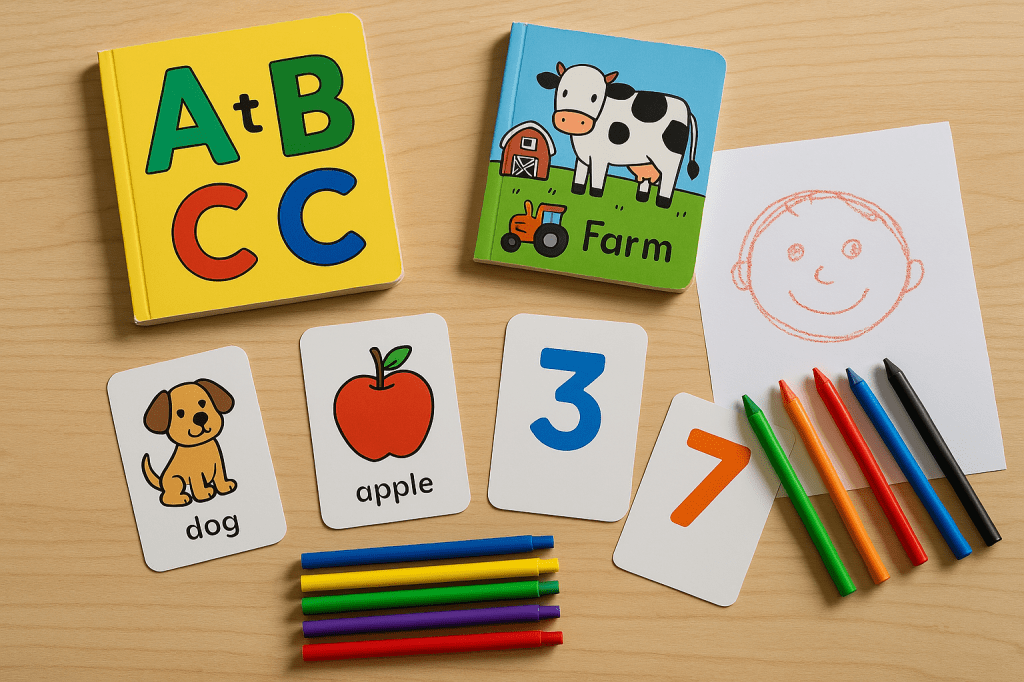
My daughter just turned two, and every single day, she continues to amaze me. From the moment she could walk, she’s been showing signs of a sharp, observant mind. At just 14 months old, she already knew how to identify animals in pictures, especially during one of our favorite games. We’d hold up different cards—maybe a pizza, a cat, a zebra—and ask, “Where’s the pizza?” and without hesitation, she’d point straight at it. Her reaction was quick, confident, and accurate. We started with flashcards early, and she absolutely loved them. I noticed she could recognize animals from the farm, the wild, and even pets in books. She seemed to memorize them effortlessly. I couldn’t help but wonder if all toddlers are secretly this smart—or if she was just uniquely focused.
Now at two years old, she’s solving 15-piece puzzles designed for three-year-olds. She doesn’t just finish them—she enjoys the challenge. We’ve even bought puzzles meant for older kids, and though they’re more complex, she dives in without hesitation. The way she twists pieces around in her little hands, studies where they might go, or even sets them aside when they don’t fit, shows me that she’s thinking critically—even if she doesn’t yet know what that means. She’s patient, persistent, and totally unafraid of trying again when something doesn’t work the first time.
It’s hard not to be proud, but more than that, I feel a responsibility. I want to support her mind, her imagination, and her ability to think through things, not just memorize. She already knows over 200 words, and she can count from one to ten in both English and German—although she always skips number four. I’m not entirely sure why. It’s become a funny little mystery between us. She likes to chant “A-B-C-D,” and while it’s still early for her to know all 26 letters, she recognizes quite a few. When she draws, most of her scribbles are random lines or swirls, but now she’s started describing her drawings. She’ll say, “eyes,” “nose,” “ears,” and “face,” even if the picture doesn’t quite look like one. She’s creating, imagining, and thinking through her world, one colorful marker stroke at a time.
Our afternoons usually begin when she comes home from her Kita at 2:45 p.m. My husband and I still work until five, so during that time, she often plays while the TV is on in the background. I used to feel a bit guilty about the screen time, but I’ve noticed she learns a lot from it, too—especially programs like Baby Shark, which she adores even more than dinosaurs or spiders. She used to love Miss Rachel, but now she’s outgrown it and prefers Pinkfong. Once work ends, though, we try our best to shift gears and focus on her. We turn off the screens and start asking questions, playing games, and just being present with her.
These little interactions are where I believe critical thinking begins. It’s not about sitting her down with lessons or worksheets—it’s about creating moments where she feels safe, heard, and curious. When we ask, “Do you want the blue cup or the red one?” and she quickly chooses, she’s practicing decision-making. When we follow up with “Why did you choose that one?” even if she doesn’t answer, we’re planting the idea that her thoughts and reasons matter.
She hasn’t reached the “why” phase just yet—that phase where toddlers ask endless questions about the world around them. I know it’s coming soon, and honestly, I’m excited for it. I want to be the kind of parent who welcomes those questions, not just answers them. I want to ask her what she thinks, to create space for her to guess, imagine, wonder. Right now, even though she doesn’t ask many questions herself, she listens very closely to ours. Her eyes pause on whatever we’re pointing at, and you can see her little mind at work, figuring things out.
One of the most helpful things I’ve learned is the importance of not rushing in to help too soon. When she’s trying to open something, balance blocks, or stack toys, I hold back. I watch, I wait, and I let her struggle just a bit. If it’s safe, I don’t interfere. That small space—between challenge and solution—is where thinking really grows. When she figures it out on her own, you can see the pride on her face. And when she doesn’t, and frustration builds, we work through it together. She’s learning patience, resilience, and problem-solving in those small everyday moments.
Reading together has become our quiet anchor. She brings books to me often, and we sit, cuddle, and flip through the pages slowly. I don’t rush through the story; instead, I point things out and ask questions like, “Where’s the bird?” or “What’s the monkey doing?” Sometimes she answers. Sometimes she just listens and points. But I know she’s processing. These shared moments invite her to look deeper, connect images to words, and think about cause and effect in the simplest terms.
Pretend play is just beginning to take shape in her world. While she’s not into tea parties or stuffed animals—despite having so many of them—she’s finding her own way into imagination. She prefers sharks, water play, and anything to do with sand. Sometimes, she pretends to fish and invites me to join her, handing me a stick or a cup as if we’re casting lines together. She’s also started playing gently with her doll, offering it a pacifier or pretending to feed it. These small acts might seem simple, but they’re her early steps into role play, nurturing behavior, and creativity. Through these little scenarios, she’s beginning to explore empathy, decision-making, and the foundations of critical thinking in a way that feels natural and fun for her.
One small but meaningful thing I do is involve her in simple daily choices. When it’s time to get dressed, I hold up two shirts and let her pick. At snack time, she chooses between an apple or a banana. These aren’t huge decisions, but they show her that her preferences matter and that she can make decisions with confidence. Even if her reasoning isn’t verbalized yet, the act of choosing is a tiny building block of independent thinking.
We’ve started using open-ended phrases like, “What do you think will happen if…?” or “Let’s try it and see!” when playing together. These kinds of prompts are simple but powerful. They invite curiosity and exploration. If something spills, instead of reacting quickly, I’ll say, “Hmm, what can we use to clean this?” or “Do you think it will dry by itself?” It’s not about putting pressure on her to answer—it’s about showing her that problems can be solved, and her input is valuable.
I’m also learning to give her time. Toddlers don’t always answer right away. It’s easy to fill the silence, to repeat the question, or even to answer for them. But I’m learning the power of waiting. When I pause, she often surprises me. She might smile, point, or say a word I didn’t expect. That quiet space is where she’s figuring things out in her own rhythm, without rush or interruption.
Another thing I’ve become more conscious of is modeling my own thinking. If I misplace something, I say out loud, “I wonder where I put my phone. Let’s think… was it in the kitchen?” By narrating my thought process, I’m showing her that adults think, guess, and make mistakes too. If she sees me working through problems calmly and creatively, she’ll feel encouraged to do the same.
And of course, I talk to her—a lot. I talk about what we’re doing: “We’re washing the grapes,” or “Let’s put the socks on your feet.” This might sound like everyday chatter, but it’s actually building her vocabulary, helping her make connections, and strengthening her ability to process the world. The more language she absorbs, the more she can express what she’s thinking.
When things don’t go her way—which happens, especially at this age—I try to help her name her feelings. “You’re upset because the toy broke. That’s okay. Let’s fix it together.” Emotional awareness is a key part of critical thinking. When she understands her emotions, she can begin to regulate them, and when her mind is calm, it’s freer to think clearly and creatively.
There are days when I feel like I’m doing it all wrong—days when I’m tired, or she’s cranky, or everything feels rushed. But I remind myself that critical thinking isn’t about one big moment. It’s built in the small, everyday exchanges. It’s in the pauses, the questions, the smiles, the eye contact. It’s in the times I stop what I’m doing just to listen to her, even when the answer is just one word.
We’re still at the very beginning of this journey, and I know the best is yet to come. There will be so many questions—about the stars, and bugs, and why people cry, and how things work. And when those questions come, I’ll be ready—not with perfect answers, but with an open heart. I want to be the kind of parent who doesn’t just answer questions but invites new ones. Who doesn’t just teach facts but sparks wonder.
So for now, I keep doing what I can—talking, listening, playing, waiting, guiding. I’m helping her learn that thinking is fun. That it’s okay to try, to make mistakes, and to keep going. I’m helping her understand that her thoughts matter and that she can trust her own mind. And when the “whys” finally come—whether it’s tomorrow or months from now—I’ll be right here, wondering alongside her.
Because raising a thinker isn’t about knowing everything. It’s about discovering the world together, one question at a time.