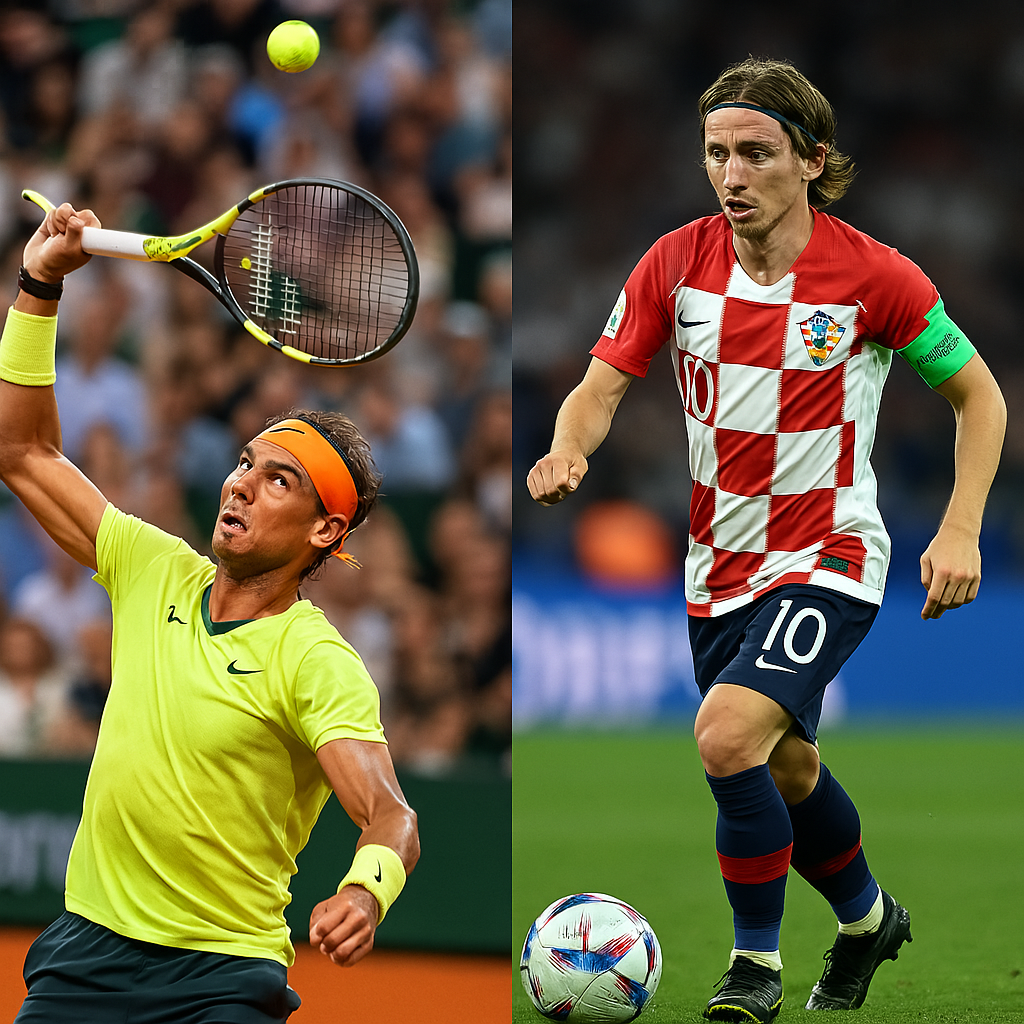
When the Olympics come around every four years, it brings with it a kind of magic that only sports can create. It’s more than just a series of games; it’s a moment where the world comes together, all eyes fixed on the same goals, the same passions, and the same sense of pride. For me, two sports stand out more than the rest when the Olympics are on: tennis and football, or soccer as some call it. These are the two sports I find myself emotionally invested in, the ones that make me drop everything and stay glued to the screen.
Tennis, especially, has a special place in my heart. It all started because of Rafael Nadal. He wasn’t just a great player; he was someone you couldn’t take your eyes off. The way he moved, the energy he brought to the court, and even the small, almost obsessive rituals before each serve or return made watching him an experience. I remember watching him play on TV during Roland Garros (the French Open), the Australian Open, US Open, and Wimbledon and being mesmerized. I don’t even recall seeing him in the Olympics since I started watching, to be honest, but I didn’t need to. What he did on the clay courts of Paris was enough to hook me for life. It’s because of Nadal that I started watching tennis seriously. Even when he wasn’t playing, I began to understand the game better, learn about other players, and appreciate the strategies and mental strength involved.
What made Nadal so captivating wasn’t just his skill. It was how every match seemed like a battle, not just against the opponent, but against the limits of his own body and mind. And those little habits he had – lining up his water bottles just so, adjusting his hair, his shirt, touching his nose and ears before each serve – they became a rhythm, a performance in themselves. They showed his focus, his need for control, maybe even his nerves. But above all, they made him human. And as a fan, that connection, that humanity, is what pulls you in.
So when the Olympics feature tennis, I watch, hoping to see that same fire in others. It doesn’t always happen, but that’s what makes those moments when it does even more special. The Olympics adds another layer too – playing not for individual glory or prize money, but for your country. There’s a different energy, a deeper sense of pride. It’s raw and real.
Then there’s football. Soccer. Whatever name you prefer, it’s a sport I’ve loved for as long as I can remember. Club football is a huge part of my life, and Real Madrid has been my team for years. I still think back to my visit to the Santiago Bernabéu Stadium in 2015. Walking through those stands, seeing the field, the locker rooms, the trophies—it was surreal. It made the game feel even bigger, more real. I could picture the greats walking through those halls, the roar of the crowd, the intensity of El Clásico matches, Champions League nights.
So when Olympic football comes around, I watch with that same passion. It’s different from club football, sure. The squads are younger, the rules around who can play are a bit different, and it doesn’t always have the same star power. But it still has heart. It still has that magic. Seeing young players stepping up, some of them making a name for themselves for the first time, representing their countries with pride—it’s inspiring. And when a country you support goes far, it’s even better.
When it comes to national teams, I usually root for France or Croatia. France because they’ve had some truly exciting squads in recent years. Their style of play is fun to watch—fast, technical, unpredictable. And Croatia, well, that’s mostly because of Luka Modrić. What a player. Even now, as he gets older, he still controls the midfield like few others can. He’s calm, intelligent, always one step ahead. It’s beautiful to watch. He’s not flashy in the way some players are, but he doesn’t need to be. He makes the game look effortless, and that’s a rare gift.
Watching Modrić play for Croatia in major tournaments is a reminder of what football is about—passion, dedication, and love for the game. He gives everything for his country, and it shows. That kind of commitment resonates with fans, especially those who know what it feels like to be proud of where they come from.
In a way, both Nadal and Modrić have influenced the way I view sports. They both bring a level of professionalism, focus, and humility that I admire deeply. Watching them compete, you learn that success isn’t just about talent. It’s about consistency, discipline, and staying grounded no matter how high you rise.
That’s what makes the Olympics special, too. It strips away the glamour and brings athletes back to their roots. You see raw emotion, honest effort, and a level of sportsmanship that often gets lost in the commercial side of professional sports. Whether it’s a tennis player diving for a volley or a young footballer scoring their first international goal, those are the moments that stick with you.
Of course, I enjoy watching other Olympic events too—track and field, swimming, gymnastics—but tennis and football are the ones that mean the most to me. They’re the sports that I understand the best, the ones I have a personal connection to. They remind me of the joy of being a fan, of feeling like a part of something bigger.
So every four years, when the Olympic flame is lit and the world turns its attention to the Games, I find myself right there, watching with wide eyes and a full heart. I cheer, I gasp, I sometimes yell at the TV. But more than anything, I feel grateful—grateful for the players who inspired me, for the memories tied to these sports, and for the chance to witness greatness, even from my living room.