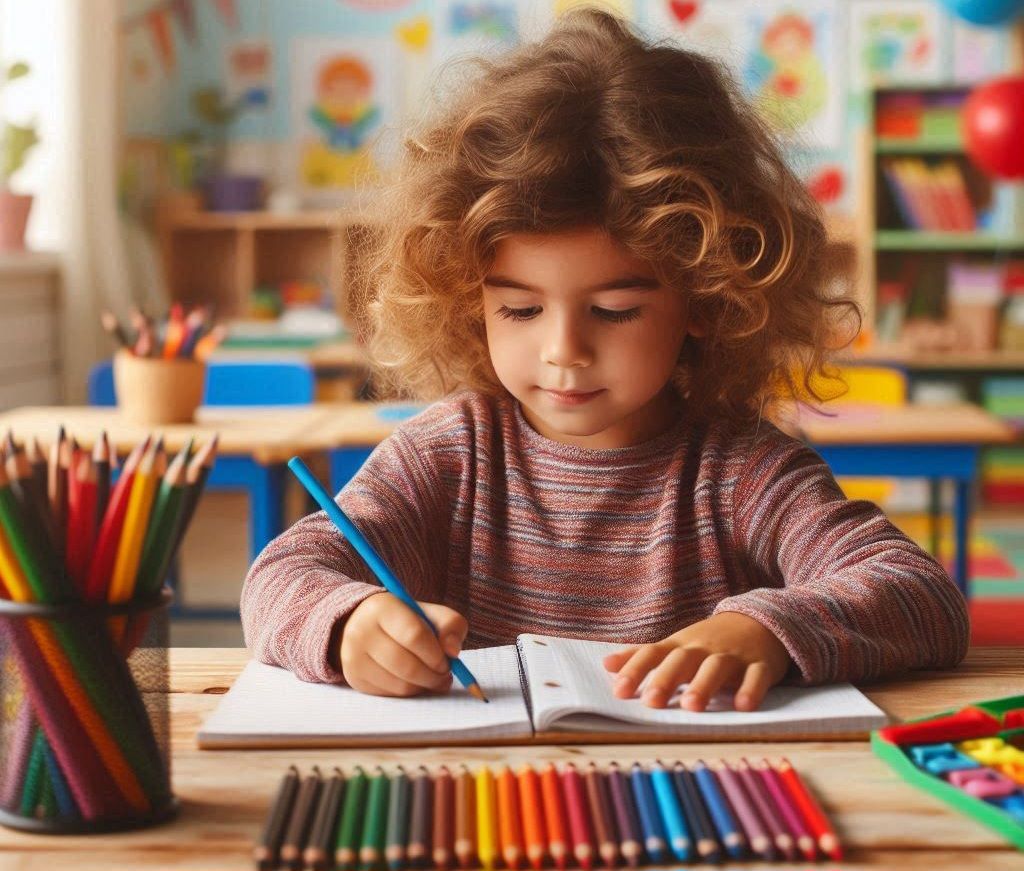
Watching our daughter grow has been a fascinating journey, full of little surprises and questions we never thought we’d ask. One of those questions has been whether she is left-handed or right-handed. Even now, we still don’t have a clear answer. She writes with both hands, sometimes favoring one and then switching to the other. When she eats, especially when using just a fork, she mostly uses her left hand—but then, as if remembering something, she switches to her right.
Hand dominance, or handedness, usually refers to the preference for using one hand over the other for activities like writing, eating, or throwing a ball. Most people naturally develop a dominant hand by the age of four or five, but for some children, it takes longer. In fact, some kids may continue to use both hands equally well even into their early school years. It’s not unusual for parents, like us, to wonder when a clear preference will emerge.
Research suggests that handedness is influenced by a mix of genetics and environment. If one or both parents are left-handed, there’s a higher chance that their child might be left-handed too. But that’s not always the case—some left-handed children are born to right-handed parents, and some right-handed children come from left-handed families. There’s no strict rule, which is part of what makes it so interesting.
In our daughter’s case, we’ve noticed that she doesn’t seem to have a strong preference yet. Some days, she seems to lean toward her left hand more; other days, she appears more comfortable using her right. It’s fascinating to observe because it’s like watching her brain figure things out in real time. When she picks up a crayon, she might start drawing with her left hand, then switch to her right if she gets tired. If she’s holding a spoon, she might begin with her left hand, but halfway through the meal, she casually moves it to her right.
Experts say that it’s common for young children to experiment with both hands before establishing a dominant one. Some children are truly ambidextrous, meaning they can use both hands equally well, but this is rare. More often, kids who seem ambidextrous early on eventually settle on one hand as their dominant side. This process can take time, and there’s no rush to figure it out.
Hand dominance isn’t just about preference—it’s linked to how the brain is wired. The left side of the brain controls movements on the right side of the body, while the right side of the brain controls movements on the left. Most people have one hemisphere that is slightly stronger when it comes to fine motor skills, leading to a natural hand preference. But for some children, this balance takes longer to establish.
Some studies suggest that external factors, like how objects are placed in front of a child, can influence which hand they use. For example, if a parent or teacher tends to put crayons or utensils on one side, a child may be more likely to use that hand out of habit rather than true preference. This makes us wonder if, without realizing it, we’ve been encouraging her to use one hand more than the other.
It’s reassuring to know that there’s no need to worry. Whether she ends up being left-handed, right-handed, or even ambidextrous, she will naturally adapt to what feels best for her. Schools and society today are much more accommodating of left-handed children than in the past, so there’s no pressure for her to “choose” a hand too soon.
For now, we’re simply observing and letting her explore. If she continues using both hands equally, that’s perfectly fine. If she eventually settles on one, that’s great too. The most important thing is that she feels comfortable and confident in whatever she does.
Every child develops in their own unique way, and handedness is just one small piece of that journey. It’s exciting to watch her grow, knowing that one day she might naturally favor one hand over the other—or maybe she’ll always be able to use both with ease. Either way, we’re happy to support her, one hand—or two—at a time.