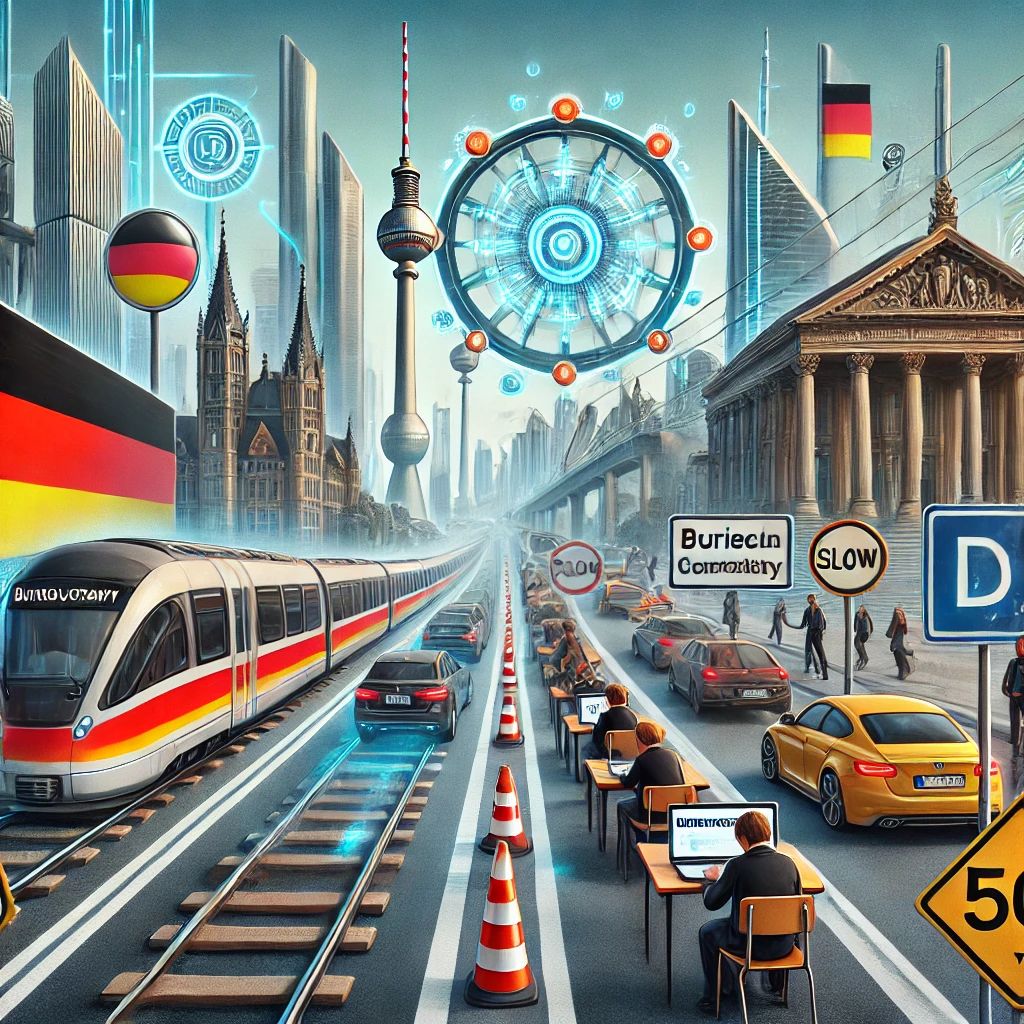
Germany is often seen as a global leader in industry, engineering, and innovation. However, in several important areas, the country is struggling to keep up with other nations. While its economy remains strong, there are clear signs that Germany is lagging behind in fields such as digitalization, infrastructure, and education.
Digitalization: A Slow Transition
One of Germany’s biggest weaknesses is digitalization. Despite being home to major tech companies and a highly skilled workforce, the country still relies heavily on paperwork and outdated systems. Many government services are not available online, and slow internet speeds in rural areas make it difficult for businesses to compete in the digital economy.
In contrast, countries like Estonia have embraced digitalization, making nearly all government services accessible online. Even France and the UK have made faster progress in modernizing their digital infrastructure. Germany’s slow adoption of new technologies is hurting its competitiveness.
Public Transport and Infrastructure Challenges
Germany is known for its well-connected train system, but in recent years, the country’s infrastructure has been showing signs of decline. Trains are frequently delayed, and many roads and bridges are in desperate need of repair. Meanwhile, other countries, such as Switzerland and the Netherlands, have invested heavily in improving public transportation and maintaining their infrastructure.
The slow pace of infrastructure modernization is making daily life more difficult for Germans and affecting businesses that rely on efficient transport systems. Without significant investment, Germany risks falling even further behind.
Education System Struggles
Germany’s education system has a strong reputation, but it faces major challenges. Schools often lack modern equipment, and the country is struggling with a shortage of teachers. Additionally, the system places a heavy emphasis on traditional learning rather than digital skills and creativity.
In comparison, Scandinavian countries like Finland have reformed their education systems to focus more on innovation and adaptability. As a result, their students are better prepared for the jobs of the future, while Germany risks producing a workforce that is not ready for the digital age.
Bureaucracy Slowing Progress
One of Germany’s most frustrating issues is bureaucracy. Businesses and individuals often struggle with excessive paperwork and slow decision-making processes. Setting up a new company, getting construction permits, or even registering a simple change of address can take weeks or months.
Other European countries, such as Denmark and Estonia, have made their systems more efficient by reducing red tape and offering more digital services. Germany’s slow bureaucracy discourages investment and innovation, making it harder for the country to stay competitive.
Time for Change
Germany remains a strong and influential country, but it needs to act quickly to stay ahead in the modern world. Faster digitalization, better infrastructure, education reform, and reduced bureaucracy are essential for future success. While Germany has the resources and talent to fix these problems, it must embrace change before it falls even further behind.
If the country takes bold steps now, it can regain its position as a leader in innovation and progress. But without action, Germany risks being overtaken by nations that are moving faster and adapting better to the challenges of the 21st century.