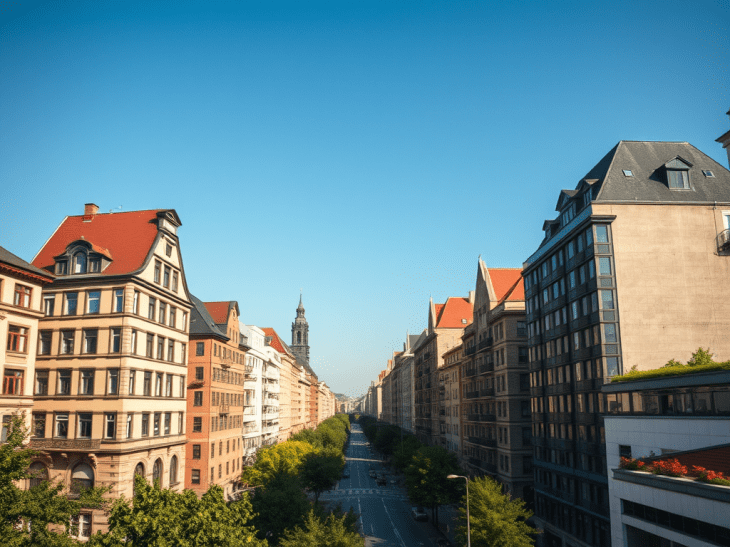
Germany is one of the most developed countries in the world, yet it has surprisingly few high-rise buildings compared to other major economies. While cities like New York, Shanghai, or Dubai are filled with skyscrapers, German cities mostly have mid-rise buildings and historic architecture. There are several reasons for this, ranging from cultural preferences to strict regulations and urban planning policies.
One of the main reasons is Germany’s focus on preserving history. Many German cities were destroyed during World War II, and after the war, efforts were made to rebuild them in a way that maintained their traditional charm. Cities like Munich, Dresden, and Cologne have strict rules to protect their historic skylines, making it difficult to construct very tall buildings.
Another important factor is Germany’s decentralized economic structure. Unlike countries where one or two cities dominate the economy, Germany has multiple strong business hubs, including Berlin, Frankfurt, Munich, Hamburg, and Düsseldorf. This spreads development more evenly, reducing the pressure to build upwards in a single financial center.
Zoning laws and building regulations also play a big role. German cities often have height restrictions to ensure that buildings do not overshadow historic sites or disturb the cityscape. Additionally, planning policies prioritize sustainability, livability, and green spaces over dense high-rise developments. As a result, most German cities have well-planned layouts with wide streets, parks, and low to mid-rise buildings rather than towering skyscrapers.
Despite these restrictions, some high-rise buildings can still be found in certain areas. Frankfurt is the exception, often called “Mainhattan” due to its skyline filled with skyscrapers. As Germany’s financial hub, Frankfurt is home to many banks and international companies that require high-rise office buildings. Berlin, while not as dense as Frankfurt, also has some tall buildings, especially in Potsdamer Platz and around Alexanderplatz. Other cities like Hamburg and Düsseldorf have a few high-rises, but they are not nearly as dominant as in other global metropolises.
Germany’s approach to urban development prioritizes a balance between modern infrastructure and historical preservation. While high-rise buildings exist, they are carefully planned and limited to specific areas. Instead of competing with the tallest skyscrapers, Germany focuses on creating well-structured, sustainable, and livable cities where people can enjoy both modern amenities and historic charm.