In November 2018, my husband and I took a journey we had talked about for months. It was the kind of trip we’d dreamt of on cold evenings, wrapped in blankets, wondering where the sun might be shining at that very moment. That’s what drew us to Seville, Spain. We had heard the weather there was warm almost all year round, and with the chill of November already creeping into our days, we found ourselves chasing the sun. It turns out, we were never wrong to follow it—it led us to something truly beautiful.
From the moment we arrived in Seville, we felt its embrace. The air was soft and golden, the sky clear and full of promise. There was something comforting in the way the city moved—unhurried, graceful, full of little surprises. We didn’t need much to feel at home there. Just the quiet hum of the streets, the smell of oranges that lingered on every breeze, and the warmth that seemed to come not just from the weather but from the city itself.
We started exploring right away, eager to take in as much as we could without rushing. One of the first places we walked to was the Royal Alcazar of Seville. We had seen photos and read about its incredible beauty—its history, its gardens, its intricate tilework. But when we arrived, the line to get in was long. Very long. It wrapped around the outer wall and didn’t seem to move at all. We stood there for a while, thinking maybe it would be worth the wait, but the longer we stood, the more we realized we didn’t want to spend the day like that. So, we let it go. We left the line, and instead of feeling frustrated, we felt light. It was okay. There was still so much more of Seville waiting for us.
Not far from the Alcazar stood the grand Seville Cathedral. We didn’t go inside, but just being outside of it was something else entirely. It towered above us with its ornate details, as if it had been drawn from a different time. The plaza in front was full of energy—locals and tourists blending together, horse-drawn carriages passing slowly, street musicians filling the air with gentle melodies. We stood and took it all in, our heads tilted back, completely in awe. Even without stepping through its doors, the cathedral left an impression that stayed with us.
One afternoon, we wandered into the Mercado. We didn’t have a plan—we just wanted to see what was inside. It turned out to be one of those quiet highlights of the trip. There was something intimate about it, like walking into someone’s daily life. The stalls were full of fresh fruits and vegetables, cured meats, seafood displayed on crushed ice, wheels of cheese, small pastries in rows. It felt honest and unpolished in the best way. Vendors called out to each other, kids ran ahead of their parents, and the smell of spices, coffee, and fresh bread filled the air. We stopped to taste a few things here and there, exchanging smiles with the people behind the counters. It reminded us that travel isn’t just about landmarks—it’s also about the simple joy of watching people live their everyday lives.
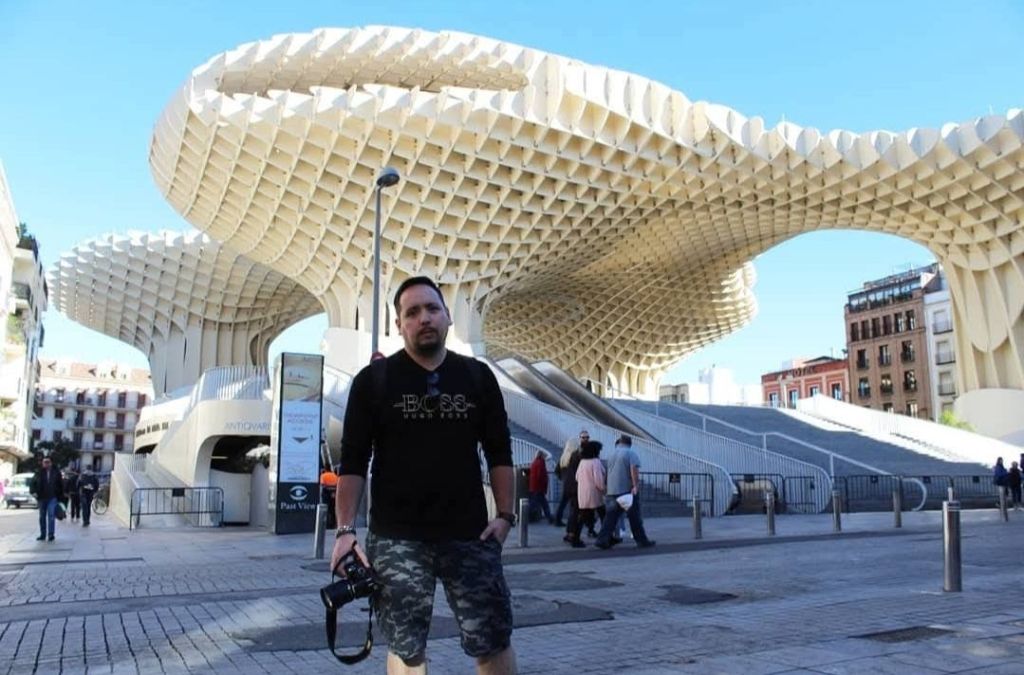
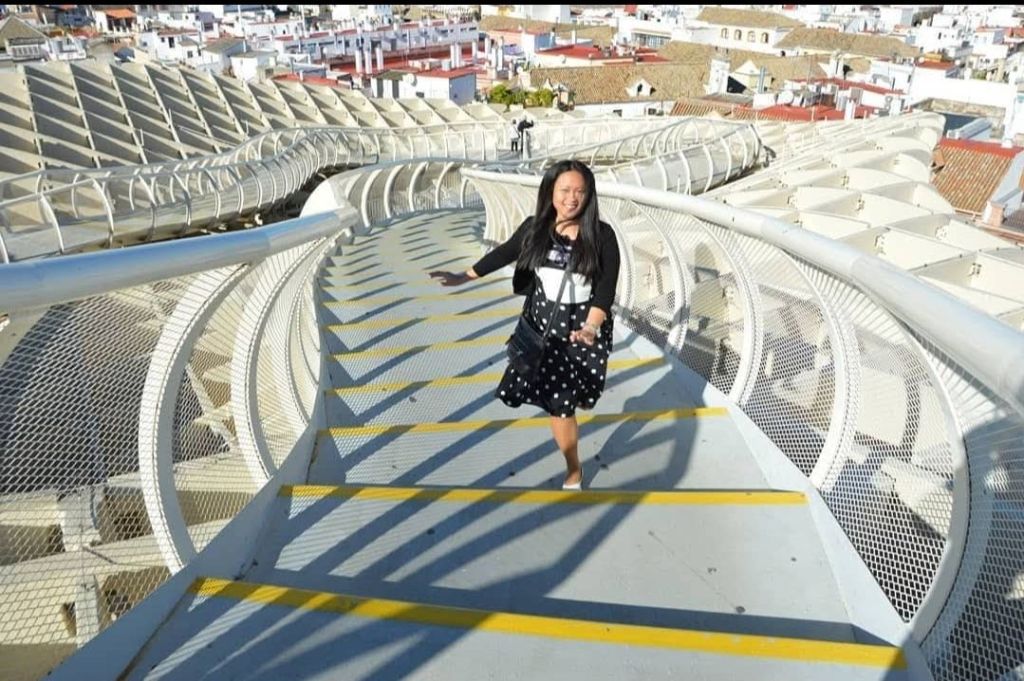
Right above the Mercado stood the Metropol Parasol—locally known as Las Setas. After exploring the market, we went up to see the structure from above. It was such a striking contrast to everything around it—a bold, modern canopy of curved wooden panels rising above the old town. We took the elevator up and wandered along the winding walkways, pausing often to look out over the rooftops of Seville. The views stretched far and wide, bathed in golden afternoon light. There was a quiet buzz up there, with families, couples, and solo travelers all soaking in the moment. It felt playful, lighthearted, and full of wonder. A reminder that Seville wasn’t stuck in time—it was still dreaming, still building, still inviting you to see it from new angles.
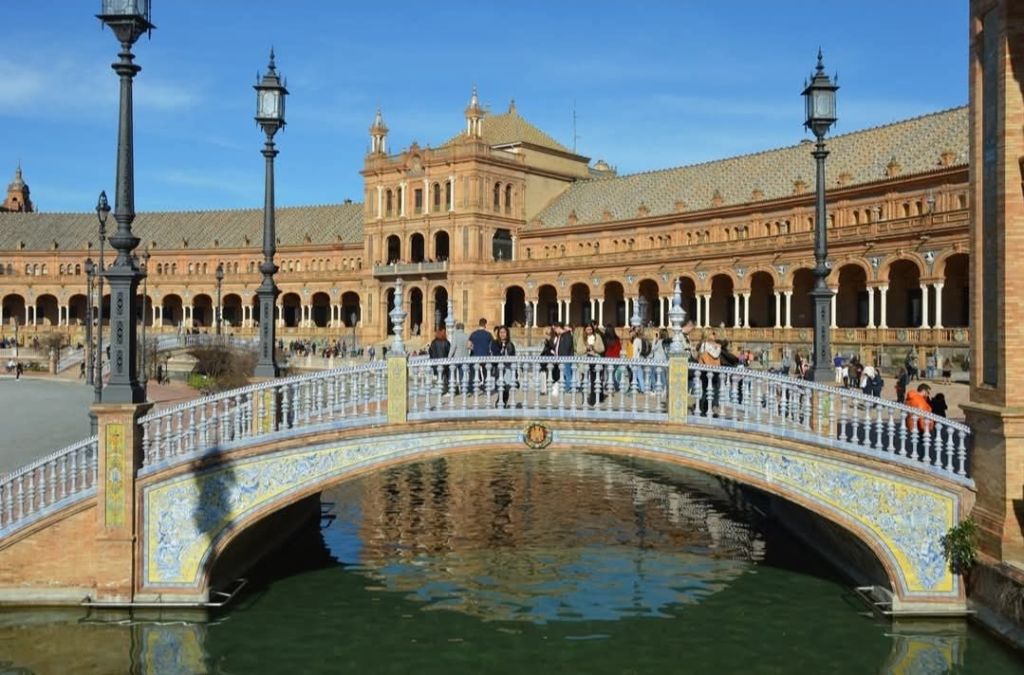
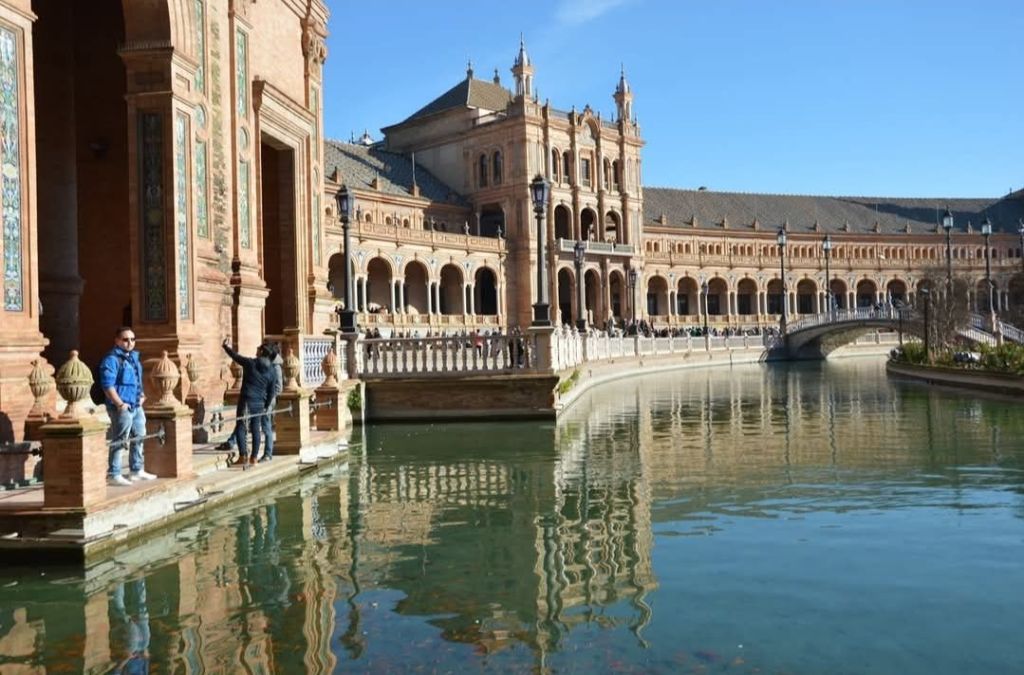
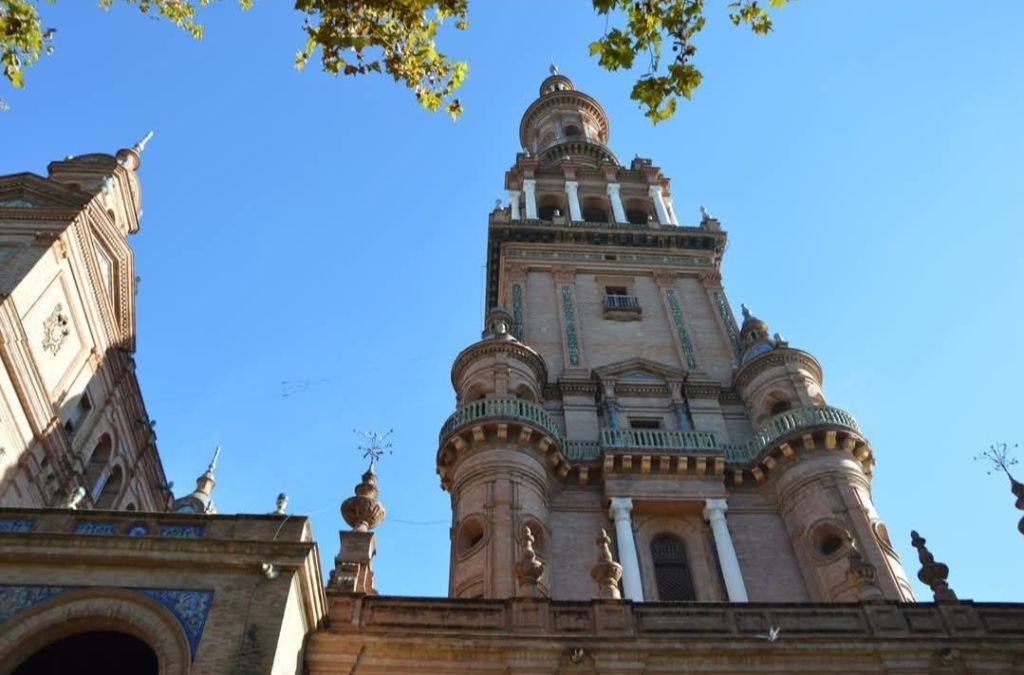
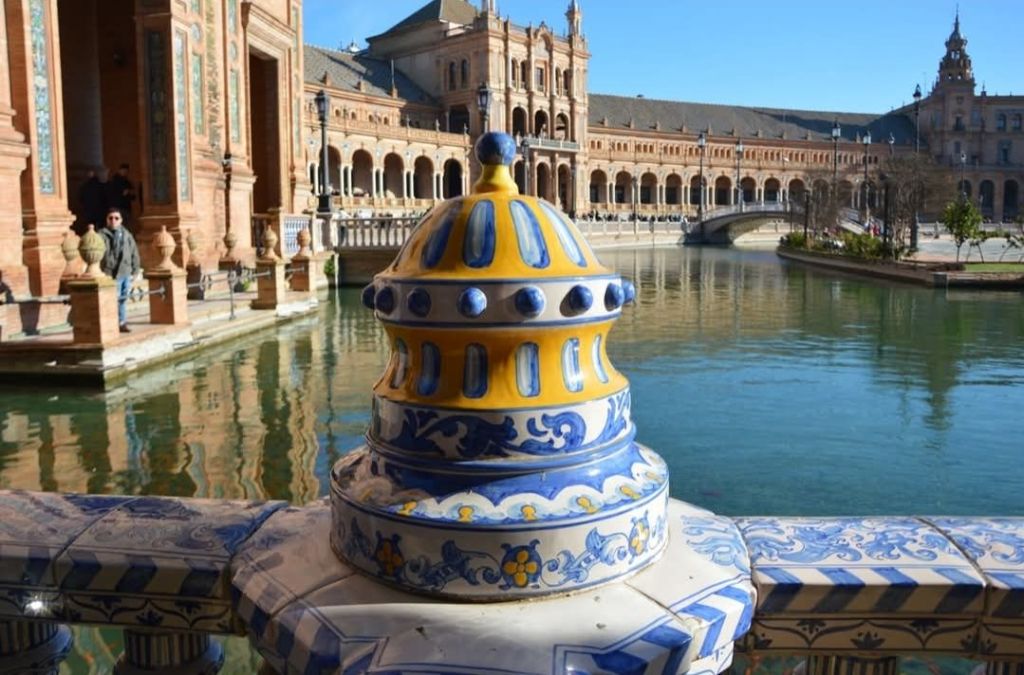
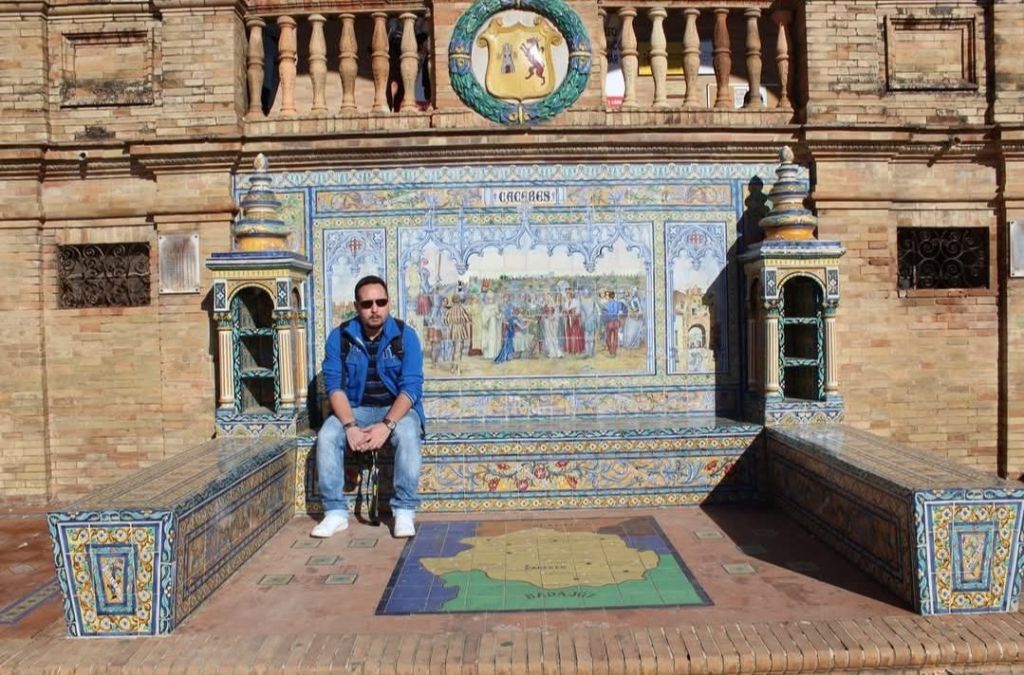
Walking through Barrio Santa Cruz, we found ourselves at the Plaza de España. It felt unreal—like stepping into a painting. The colorful ceramic tiles told stories of Spain’s provinces, and the bridges that arched over the canal looked like they had been built for fairy tales. It’s one of Seville’s most iconic landmarks, originally built for the Ibero-American Exposition of 1929. Its grandeur and beauty have made it famous around the world, and it’s even been featured in films like Star Wars: Episode II – Attack of the Clones and Lawrence of Arabia. We wandered slowly, stopping often just to admire the little details. At one point, we sat by the water, watching the boats drift by and feeling the sun on our skin. Time seemed to slow down, giving us permission to breathe a little deeper and smile a little more.
Seville had this gentle way of making even the smallest things feel special. One of the things we loved most were the orange trees. They were everywhere—lining the streets, nestled in courtyards, standing tall in the parks. Their bright green leaves and round, vibrant fruit lit up every corner. And the smell—sweet, just a little bit bitter, and completely unforgettable. That scent seemed to follow us wherever we went. Now, whenever we catch a whiff of oranges, we’re taken right back to those walks, hand in hand, with the city quietly unfolding around us.
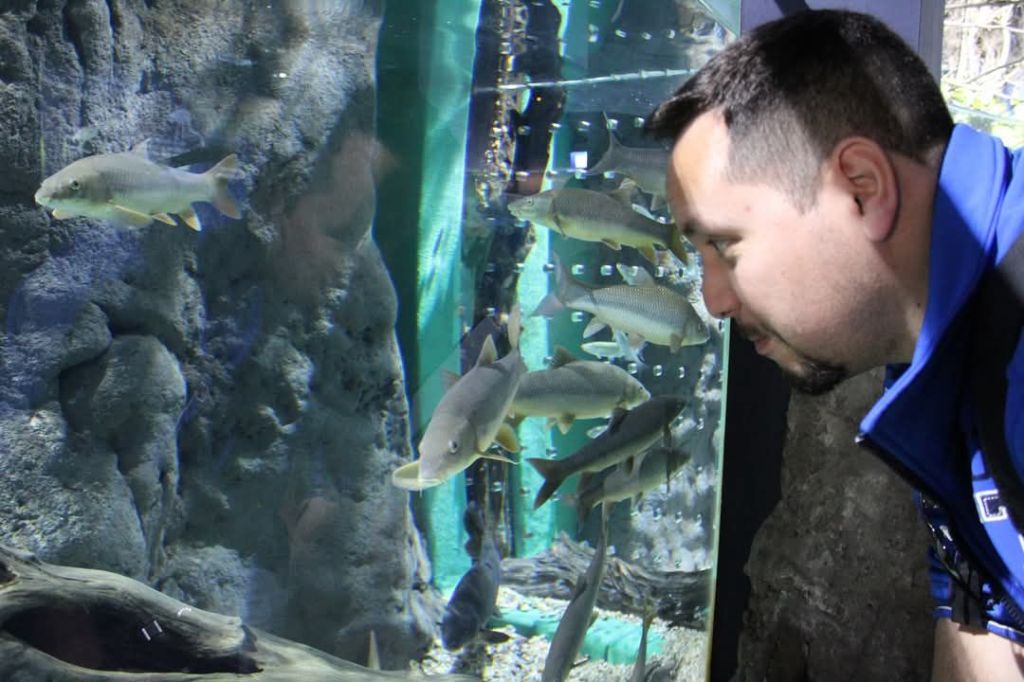
On another afternoon, we visited the Aquarium of Seville. It was quiet inside, dimly lit, with the kind of hush that makes you slow down and look closely. We wandered through the exhibits, passing tanks full of shimmering fish and coral in soft pinks and blues. In one part, we walked through a tunnel with glass on all sides, surrounded by sea creatures gliding effortlessly through the water. Sharks passed above us, stingrays moved like silk beside us, and for a little while, it felt like we had stepped out of time. There was something peaceful about it, something childlike and full of wonder. We didn’t speak much—just took it all in, side by side.
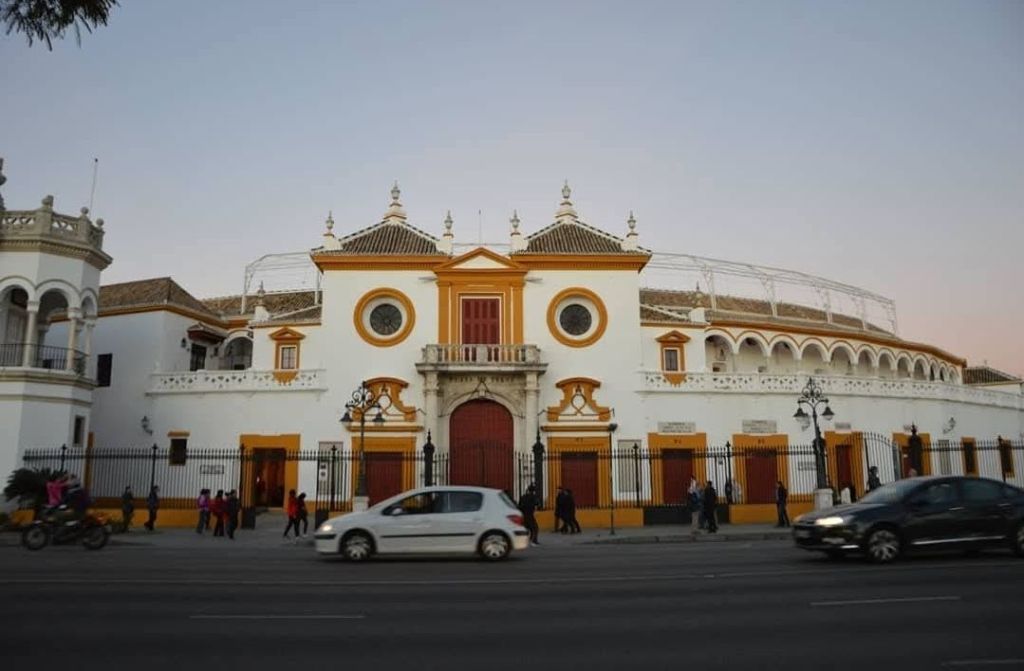
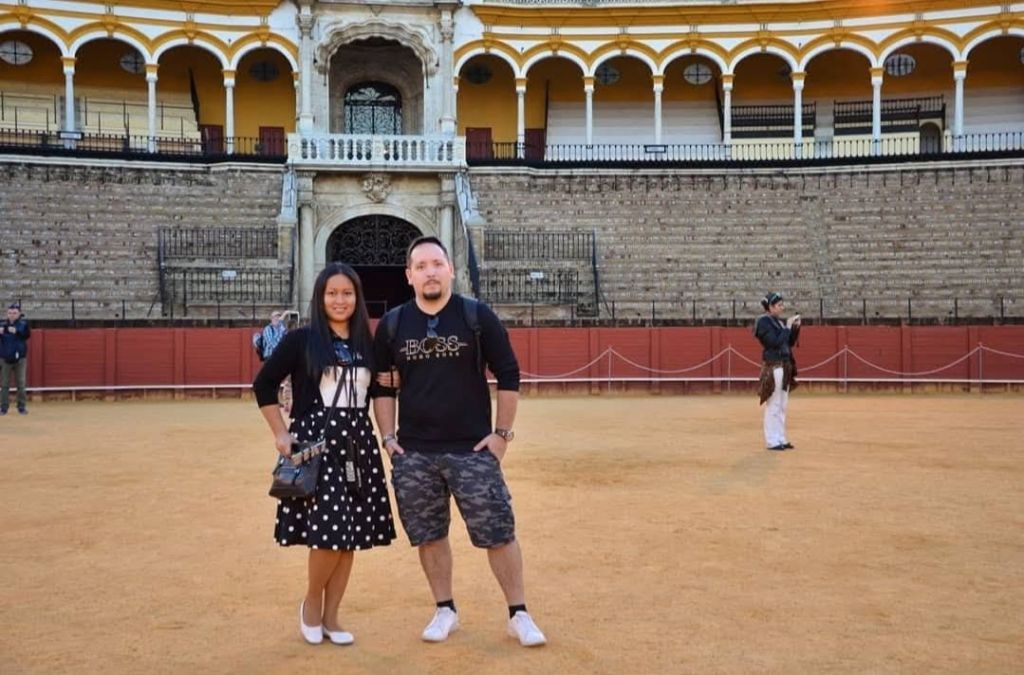
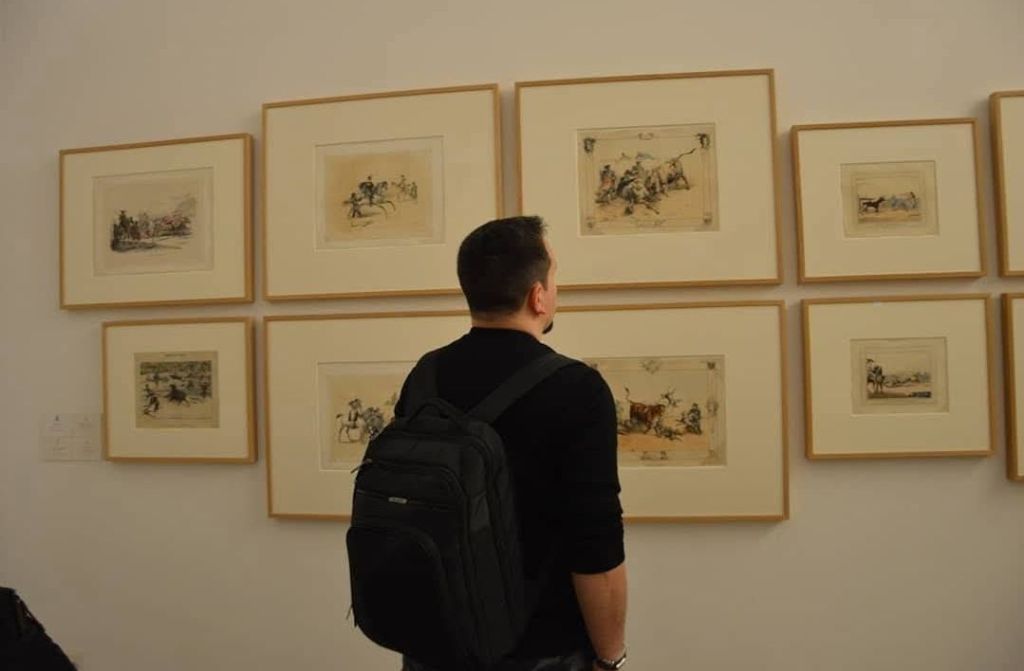
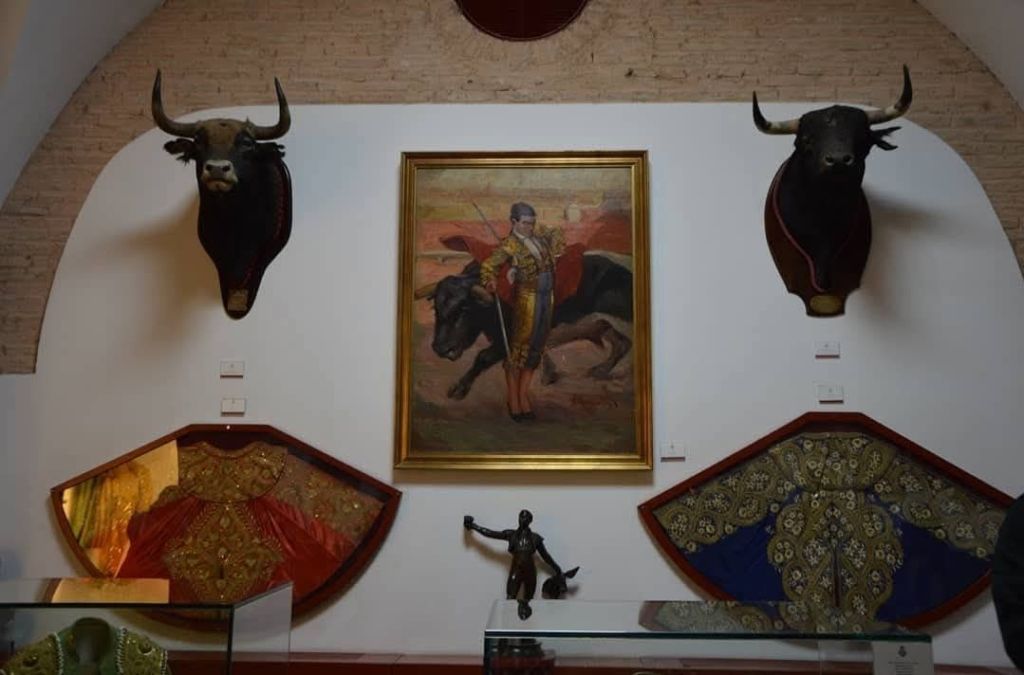
We also stopped at the Plaza de Toros de la Maestranza. We weren’t there for a bullfight, but we wanted to understand the place, the history, the role it had played in Spanish culture. The arena was striking—full of arches and golden light, with stories echoing off the stone walls. We walked slowly, listening to our guide, feeling the weight of the past settle quietly around us. Bullfighting is complicated, layered with meaning and tradition, but being there helped us see it more clearly. It made us reflect on how history isn’t always easy, but it’s always worth knowing.
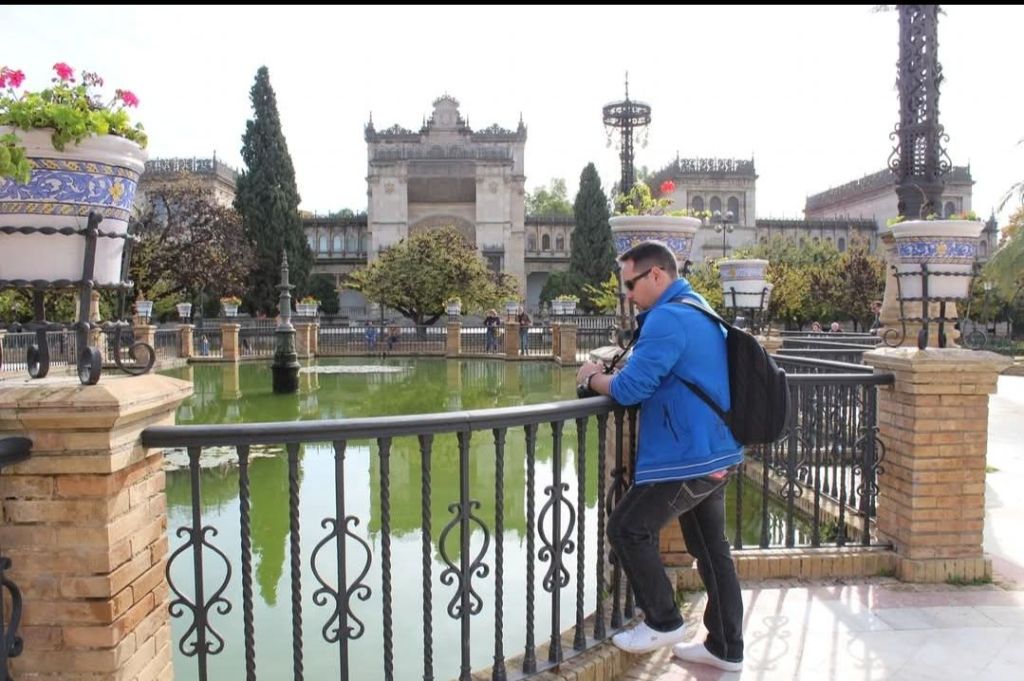
Another beautiful part of our trip was Parque de María Luisa. We spent hours there, wandering along its shaded paths, past fountains and tiled benches. We came across doves and, like two kids, started tossing them crumbs and watching them flutter down. There was joy in those moments—pure, simple joy. We didn’t need anything more than the sound of the breeze through the trees and the warmth of each other’s company.
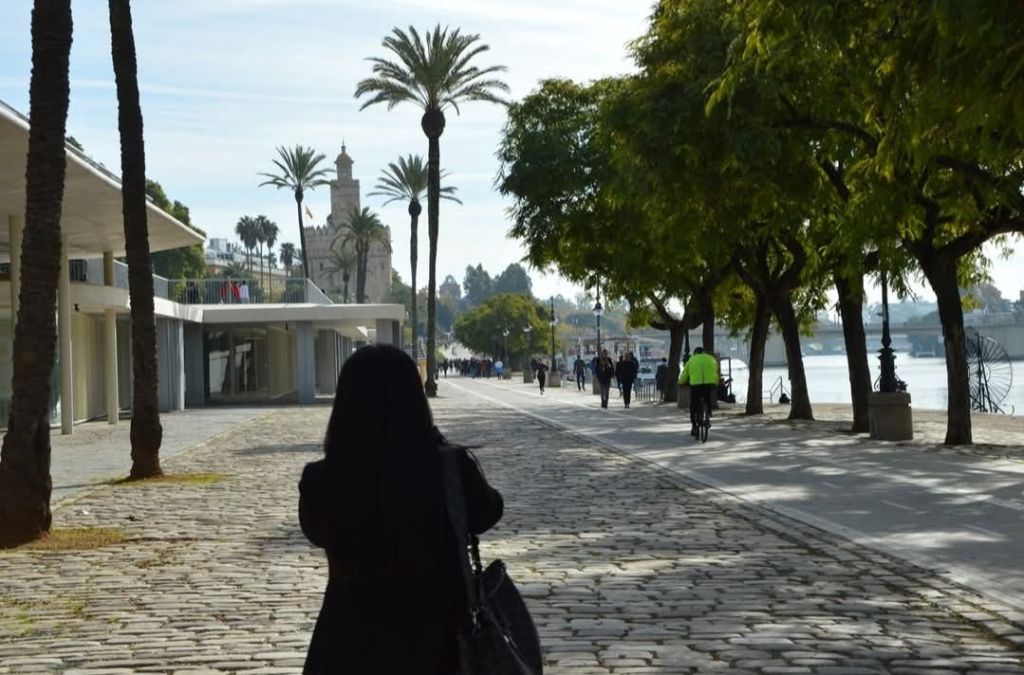
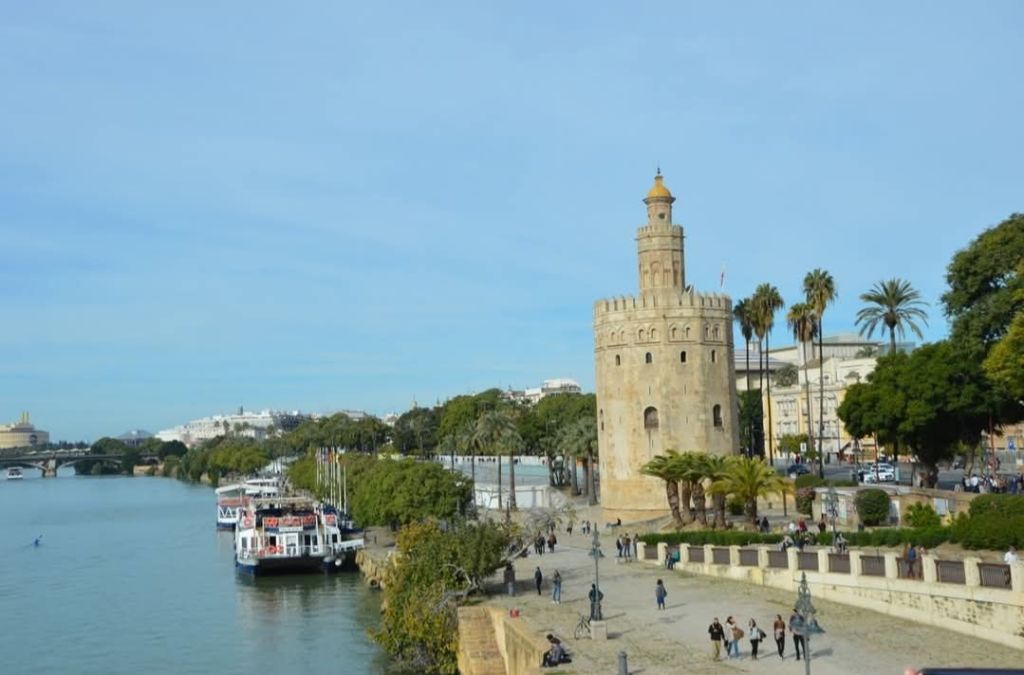
On one of our walks by the Guadalquivir River, we came across the Torre del Oro. It stood quietly, watching over the water like it had for centuries. We paused and just admired it—its golden stone glowing in the late afternoon sun. We didn’t go inside, but we didn’t need to. Its presence, its quiet strength, was enough. Sometimes just being near something old and storied is its own kind of gift.
And then there was the Basilica de la Macarena. It was beautiful in a way that was hard to explain—peaceful, almost sacred. We stepped inside and felt something shift. The air was still, the light was soft, and there was this deep sense of reverence all around. The statue of the Virgin Macarena stood quietly, surrounded by flowers and candles. People came and went, some in prayer, some just watching, and no one rushed. We lingered there, grateful for the calm, for the feeling of being part of something timeless.
Each evening, we found ourselves wandering again—no destination, just following the sounds, the lights, the feeling of the city around us. We’d end up at a small café or bar, share a drink, and talk about everything and nothing. Those moments, tucked in between the big sights, are the ones that stayed with us the most. Seville didn’t just show us places—it gave us feelings. Quiet joy. Curiosity. Connection.
We kept thinking about how much our daughter would love it here. We imagined her running through the Plaza de España, chasing doves in the park, tugging on our hands to show us a new tile she had spotted. We thought about how the orange scent would cling to her clothes, how she would laugh at the fish in the aquarium tunnel, how she might press her forehead against ours as we watched the sunset over the river. That thought—a simple one—filled our hearts. It gave the trip a sense of promise, like this was just the beginning of our story with Seville.
When our last day arrived, we packed slowly. We weren’t ready to go. But we knew we were taking something with us—something more lasting than souvenirs or photos. We were bringing home the memory of soft mornings and golden afternoons, of cobblestone streets and quiet churches, of orange trees and shared silence. Seville had given us a piece of itself. It had wrapped us in its rhythm and gently sent us back out into the world.
Even now, we talk about it. Not just the places we saw but the way it all made us feel. The warmth, the wonder, the sense of being held by a city that didn’t rush us, didn’t overwhelm us—just welcomed us, exactly as we were. We didn’t do everything we set out to do. We didn’t go inside the Alcazar. We didn’t climb the Giralda. But somehow, it doesn’t matter. What we found was enough. More than enough.
Seville isn’t just a destination. It’s a feeling. A soft golden glow that settles into your memory and stays there. For us, it’s a part of our story now. And one day, when we return—this time with our daughter—we’ll let her write her own chapter in that story too.